The smell of Haleem begins to waft through the streets of Hyderabad, the city’s iconic food industry is suffering what I am calling existential distress. A sudden cap on commercial Liquified Petroleum Gas (LPG) supply has left thousands of places like restaurants and hotels across Telangana scrambling to hold their own, during the busiest month of Ramzan.
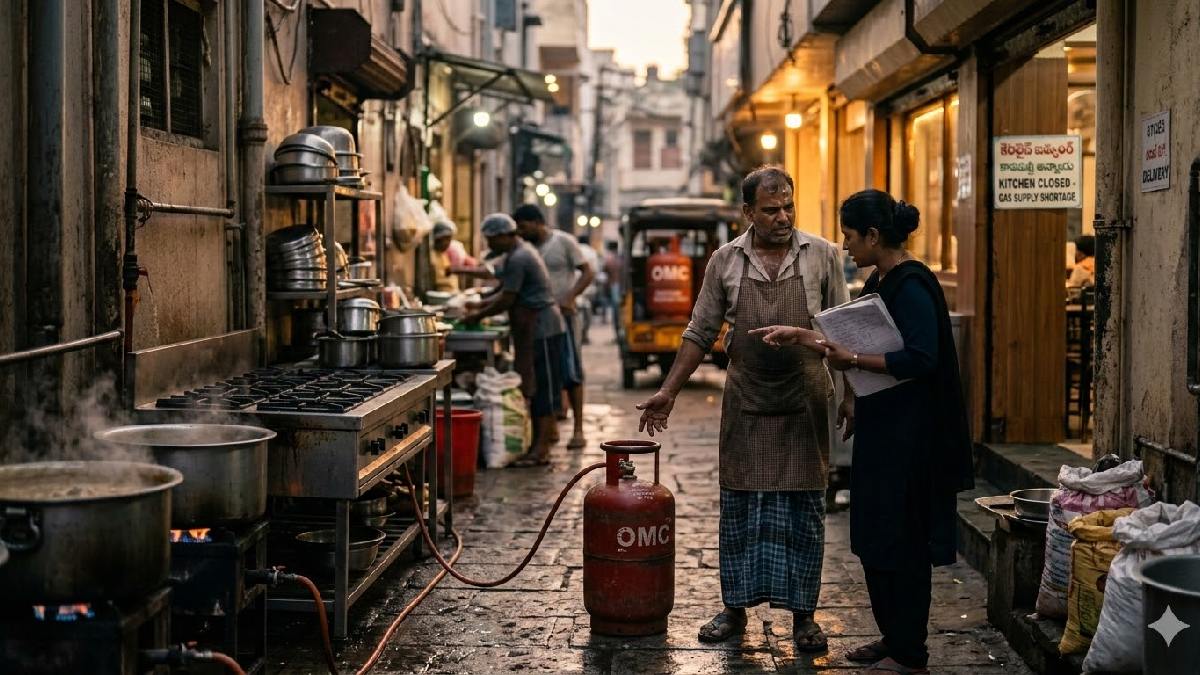
The Root of the Shortage
The disruption is a direct consequence of the upsurge conflict in West Asia that has effectively shut the Strait of Hormuz a transit point for almost 85–90 percent of India’s LPG imports. While the Central Government has invoked the Essential Commodities Act to secure domestic households’ continued supply, commercial and industrial users have seen their quotas eroded.
IOCL, BPCL, HPCL and other Oil Marketing Companies (OMCs) have been ordered to focus on the 14.2-kg domestic cylinders. Consequently, 19-kg commercial cylinders employed by restaurants are becoming increasingly scarce for food and drink. Some sellers have even stated that they don’t even own any units that are not really indispensable.
Double Hinder: Capped Supply, High Prices
It’s not only about running out of gas; there’s a cost for what remains. The cost of a commercial LPG cylinder in Hyderabad has shot up ₹115 since March 6, which had taken it to over ₹2,100 and more in the meantime. "Ramzan is the peak season for us," says one member of the Telangana State Hotels Association.
“With Haleem bhatties needing continuous high-pressure fuel, a supply cap is definitely the biggest thing that can happen. Indeed, many small-scale eateries are planning to bring about their own switch back to firewood or coal, again this presents a host of other issues.
Key Impacts on the Sector
- Prioritization: Supply is being diverted to what are essentially "essential" commercial sectors, such as hospital kitchens and student hostels, cutting restaurants to the bone.
- Operational Strain: Nearly 40,000 Telangana eateries (20,000 in Hyderabad alone) will be affected
- Black marketing: If the shortage continues, concerns rise that will motivate commercial users to illegally access subsidized domestic cylinders which will further stretch the domestic supply chain.
Government Response
In an effort to alleviate the increasing panic, the Ministry of Petroleum and Natural Gas has also created a committee of Executive directors from the OMCs to review the situation regarding the supply of the hospitality industry. Although the government contends that no overall ban exists, the current rationing is a measure taken to avoid a domestic fuel crisis.
But with the West Asia conflict continuing to disrupt worldwide energy markets, the "City of Pearls" may be forced to find new, and, potentially, more original, ways to ensure that its culinary heritage continues this festive year.