The video on social media purporting to depict a factory producing, or at least making “fake eggs,” has also been debunked by fact-checkers as misleading. The video has stirred up concerns among consumers that artificial eggs are being created and sold to the market. But no proof is there.
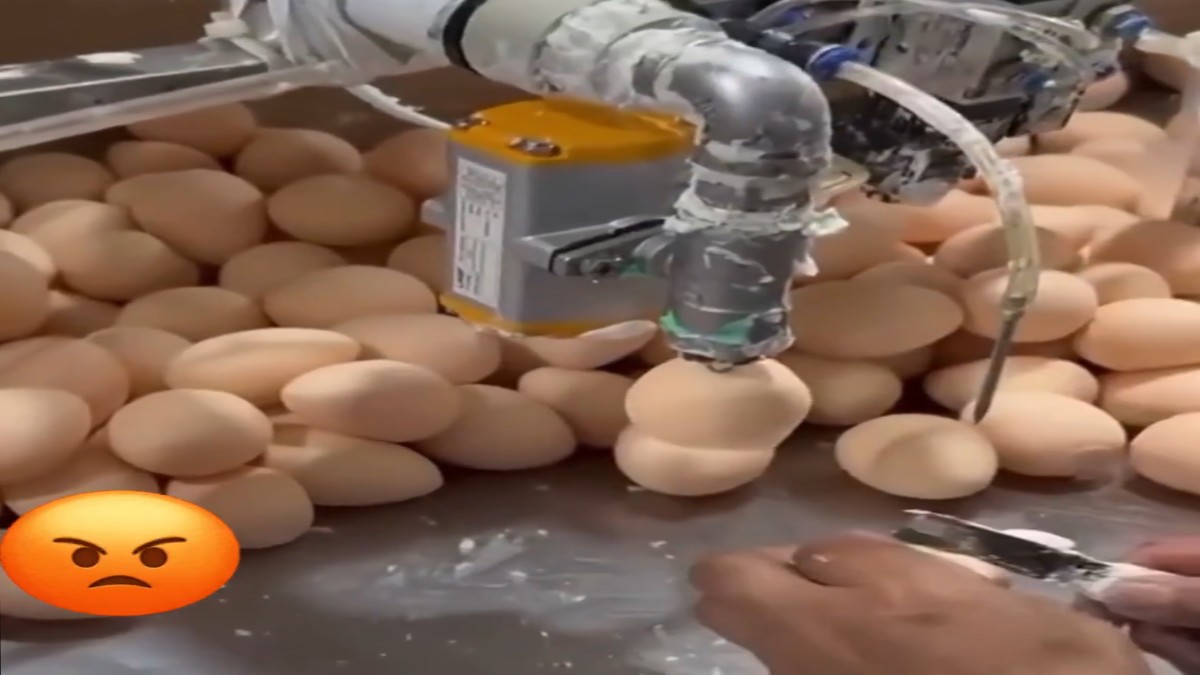
The viral footage has spread on many social media sites, with photos implying that the factory in the video is producing counterfeit eggs for the public and has thousands of views.
What does the viral video claim?
The video shows an industrial production line as egg-shaped objects are made and packaged. Twitter users have argued that the footage is proof of a factory manufacturing artificial eggs using chemicals or synthetic materials.
Some posts have gone further and warned people not to eat eggs, but rather, that “real eggs no longer exist” or that markets are flooded with fake products.
Fact Check Findings
The claim is false, as independent fact-checkers and experts have found out. There is no evidence that the video shows the production of fake eggs intended for sale as genuine chicken eggs.
Similar videos have been circulated for many years online and often taken out of context or misrepresented. In most cases, the footage has been related to demonstrations, novelty products, food-processing equipment, or unrelated manufacturing activities, rather than counterfeit egg production.
Experts say that producing convincing artificial eggs at a scale and cost lower than real eggs would be economically impractical, and so such claims are most unlikely without evidence.
Are fake eggs being sold?
Food safety authorities in many countries have repeatedly stated that there is no widespread evidence of fake eggs being sold through legitimate retail markets.
Food fraud can occur in isolated cases with different products, but there is no verified evidence that counterfeit eggs are being mass-produced and distributed on a large scale.
Consumers should buy eggs from trusted retailers and licensed vendors, who are subject to food safety regulations and inspections.
How Misinformation Spreads
Videos with sensational captions can spread quickly on social media, especially when they are associated with food safety problems. In many cases, for example:
Old videos are reshared with false claims. Footage is taken out of context. Captions exaggerate or misrepresent what is shown. Users share content without checking the authenticity.
Eggs are not protein in today’s world😭 pic.twitter.com/IudQutR4jV
— Bhakt Prahlad🚩 (@RakeshKishore_l) July 1, 2026
This can lead to unnecessary panic and confusion among the public.
How can you verify viral claims?
Before believing or sharing alarming videos, consumers should:
- Check if credible news agencies have reported the claim.
- Look for fact-checks from credible sources.
- Check whether government food safety agencies have issued any alerts.
- Don’t rely only on social media posts without evidence.
As a result, responsible sharing of information will curb misinformation and the spread of misinformation.
Conclusion
The video, which purported to show a factory producing fake eggs, has been debunked as false. There is no evidence that the footage shows the mass production of artificial eggs for consumers.
Like with any viral claim, you need to verify the data with trusted sources before drawing conclusions and sharing it online. Knowledge is valuable, as well, and evidence-based reporting is the best way to prevent misinformation from spreading.