A video on social media that has been circulating says a domestic worker did an extremely dangerous job in a high-rise residential building is a story that has inspired concern about workplace safety, individual responsibility, and whether dangerous behaviour is being filmed and shared online simply to generate views and engagement.
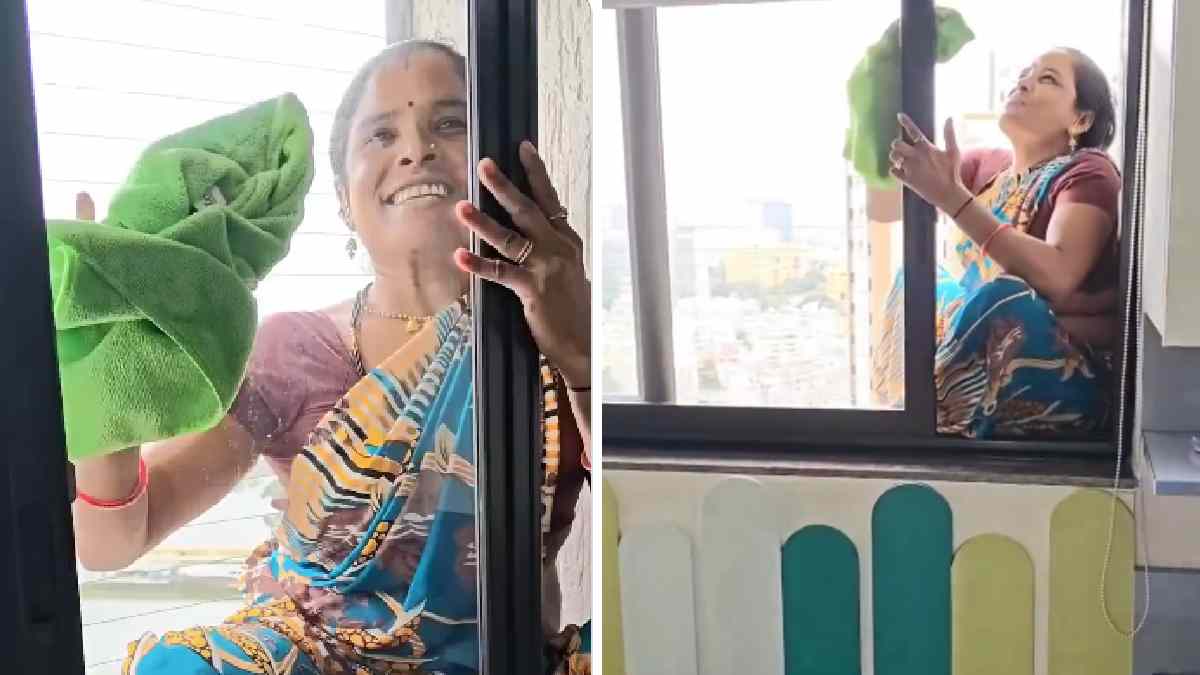
According to the description of the viral video, the woman was located around the 23rd floor of a building, with three parking levels below, which is the equivalent of 26 levels high. The video appears to show her doing a job at a very high height, and an invisible or difficult-to-see safety grill appears.
The apparent lack of visible safety equipment has caused concern among viewers. Even a small error by a worker at such a height might result in serious injury or death.
Social media users question the purpose of the act
Because of the video, it has also raised questions about whether it was simply a routine household event or if it was done to bring attention to the video in a social-media way.
The caption for the clip asks whether this is an unusual level of confidence and fearlessness or just another example of content being created solely to create engagement.
Short videos and reels have become a huge part of the entertainment landscape on social media. Most videos are innocent, but the huge popularity of viral content has caused some people to try to gain attention to them with extremely dangerous behaviors.
In this case, viewers have asked why anyone would voluntarily expose themselves to such a potentially dangerous situation in the first place.
Concerns Over Workplace Safety
It’s also brought attention to the safety of domestic workers and other staff members who have to work in high-rise buildings.
Domestic workers are sometimes told to clean windows, balconies, or surfaces that are outside. It is hazardous when there is no safety equipment and/or protective equipment nor supervision or protective systems in place to do so.
Working at great heights is generally very risky, and much of the risk is evaluated and taken into account. Depending on the circumstances and any regulations, responsibility for a safe working environment can be on the part of the employer, building management, and everybody else.
However, the precise circumstances behind the video are not quite clear. It is not clear from the available material whether the woman was told to perform the act or chose to do it herself, and whether the recording was made specifically for social media.
Calls for Accountability If It Was a Deliberate Stunt
One of the central questions that emerge from the incident is whether the act was deliberately staged for social-media views.
If the video were created as a dangerous stunt, then there could be questions about the responsibility of everyone involved. The employee, employer, property management and content creators could be liable based on the facts and legalities.
But any legal responsibility would depend on the actual circumstances, evidence, and laws applicable to the incident. A viral video alone does not establish that a crime or legal violation has occurred.
Even though the episode does not show that dangerous behaviour is encouraged and even encourages it simply because it’s something which can attract attention online, it does make it clear that we should not encourage dangerous behaviour.
The growing problem of Engagement-Driven Content
Social media may reward content that elicits strong emotional reactions. Videos that are bizarre, shocking, or dangerous can get out there quickly because of curiosity or disbelief of viewers.
That creates a vicious cycle. A risky act may receive millions of views, and other people are encouraged to do the same thing. What might start as a single person’s attempt to gain attention may end up becoming a bigger safety issue.
Experts and safety advocates have repeatedly warned that online popularity should not come at the cost of physical safety. A stunt that appears entertaining on a phone screen can have permanent consequences in real life.
Rare breed of maid in this generation… or just another case of views and engagement farming? 🤦🏻♀️
— Krishnan Gaur (@Mercedes5494) September 15, 2026
23rd floor + 3 levels of parking (technically 26 floors high) + an invisible grill + unlimited confidence + ZERO fear = me losing my mind! 😵💫
How can anyone in their right mind… pic.twitter.com/gusFT9QjEq
‘Views Are Temporary, Life Is Not’
The viral video’s response has been to convey a key message: social-media engagement should never be considered more valuable than human life.
Whether the incident was an ordinary household activity with no safety precautions or an intention to generate viral content, the video has shown us that work at high heights is dangerous without visible protection.
The incident also serves as a reminder that viewers should not imitate dangerous online stunts. Sharing such content without context may sometimes contribute to its spread and encourage further attempts.
But the video still raises questions that nobody can answer, and questions are still being asked about the circumstances behind it, so the focus is on workplace safety and responsible social-media behaviour. If safety rules or other applicable laws were broken, according to the authorities, then action would need to be taken based on the findings.
For now, the viral incident has led to a broader discussion about how far people should go for online attention. Views, likes, and engagement can disappear quickly, but the consequences of a serious accident can last a lifetime.