One woman was arrested in Pune after she was seen on CCTV apparently rudely approaching a Chhatrapati Shivaji Maharaj statue and allegedly insulted it in an incident that led to anger in the local community and drew a lot of attention after videos of the incident were posted on social media.
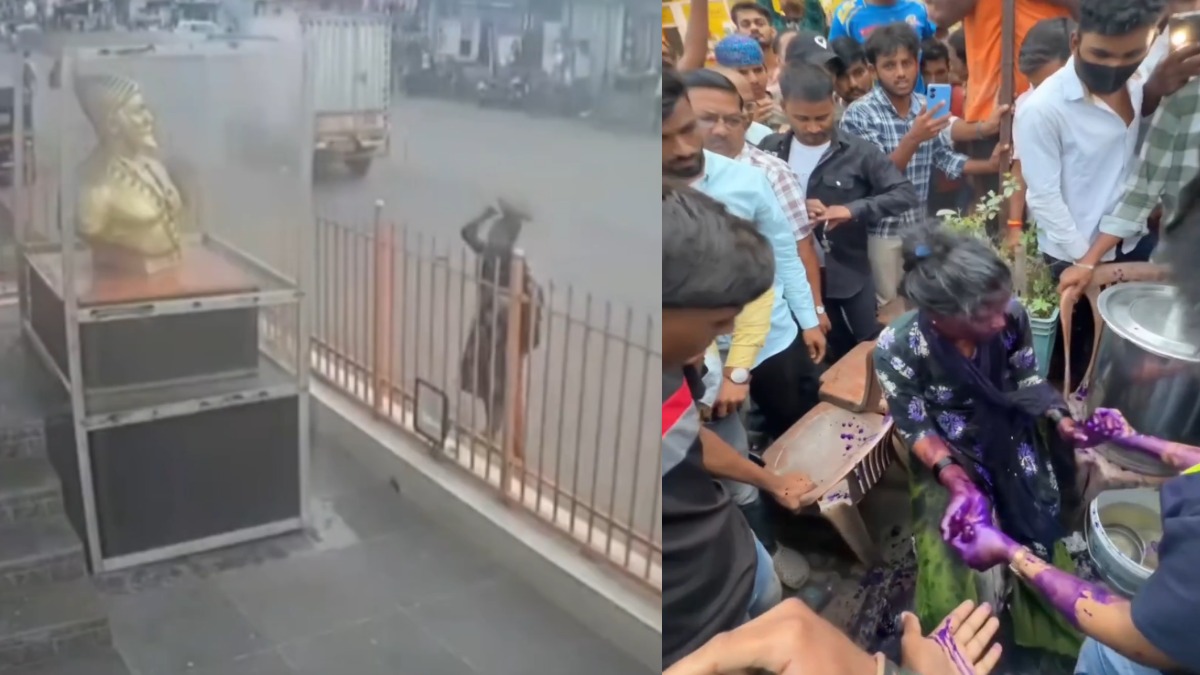
The incident has given rise to a debate on respect for public monuments and the need to respect public order and due process in dealing with allegations.
The incident took place in Pune and was captured by a CCTV camera located in the vicinity, and the footage showed the woman in front of a statue of Chhatrapati Shivaji Maharaj and doing something some people might find offensive, according to reports. Local people were also reported to have confronted the woman once they came to know about the incident, and locals applied ink to her during the confrontation before police arrived and took her into custody. Details of this part of the incident should be taken as reported and not reported separately by police.
The incident further gained some sympathy because Chhatrapati Shivaji Maharaj is very significant in Maharashtra and monuments are built around him. They are prominent in cities, towns, and villages, and monuments to him are everywhere. A disrespectful or damaging act to such monuments will elicit strong emotions from the public.
The CCTV footage is expected to become a huge part of the police investigation. Video evidence can help investigators clarify the sequence of events, determine who was present, and determine whether or not the conduct was the way it was alleged. Witnesses to the incident might also provide evidence, and other witness statements will be collected and evidence will be sought if there is a claim of other evidence before legal action is taken.
The reported arrest does not by itself establish guilt. An arrest means police have taken action in connection with an alleged offence, but the facts and legal responsibility must ultimately be established through the investigation and judicial process. Due process is necessary, and any allegations against the woman will need to be addressed by law.
Local response has also been a big part of the story. Public anger can quickly boil over when a historical figure has deep cultural significance, but it is the law that people and groups have to respond to. Local residents say that the woman was “inked” by locals, and the police and courts should be able to handle the alleged offence, and not individuals or groups to take the punishment.
Public monuments and statues are widely regarded as symbols of our collective heritage. Shivaji Maharaj’s achievements in administration, military formation, and state-building are still very important in Maharashtra’s culture and history. His name and image are so associated with Maharashtra’s cultural identity that any statue of the Maratha ruler is especially sensitive.
The Pune incident also represents how surveillance footage is more and more being used in investigations. CCTV cameras are increasingly common in urban areas and can provide authorities with evidence of the crime when incidents occur in public places. But as soon as the video appears on social-media platforms, those reactions can be rapid before investigators have finished their work.
Social media users often share short clips with no background on the situation before or after the recorded event. It causes confusion and sometimes claims to spread faster than the truth. Therefore, the authenticity, completeness, and context of any CCTV recording should be established by investigators before definitive conclusions are drawn.
When people are alleged to be targeting public property and monuments of culture, how do they respond? The police, it is to be noted, are the ones who are investigating complaints, gathering evidence, and deciding if there has been an offence. The courts are then to decide guilt or innocence on evidence.
For residents, the episode is a reminder that public monuments are meant to be protected and disputes must be reported to the authorities instead of fought over in the street. When public anger is understandable, retaliation can create more legal friction and perhaps escalate an otherwise settled matter.
Pune is a large and diverse population, and it is up to local authorities to maintain public order and safety. Events involving culturally significant symbols can attract crowds and generate tension. Police support for early intervention will prevent those situations from escalating, and the investigation will run in an orderly manner.
The reported arrest will now be followed by further investigation of the incident. Police can view CCTV footage, question witnesses, and determine if the statue got damaged. The legal provisions will be determined as evidence is gathered.
The controversy has also reignited the debate about the responsibility of people in public spaces. Freedom of expression does not mean we should not enforce laws protecting public property and public order, and, equally, allegations should be fairly handled and the accused of wrongdoing should be given the opportunity to respond through the legal system.
The case has captured attention beyond the immediate locality because of the CCTV footage, public reaction, and the historical importance of Shivaji Maharaj. What happened and what action has been taken is going to be the question authorities will have to answer as the video is being circulated in the media.
Such is the case, the central facts are still to be investigated. The woman has been arrested, and the CCTV recording and witness testimony should be able to establish the situation. Any further claims about motive, intent, or legal responsibility should be based on confirmed information from investigators or court proceedings.
The incident serves as another reminder of the strong emotions surrounding historical and cultural symbols in Maharashtra. It also underlines the importance of responsible public behaviour, accurate reporting, and respect for due process.
A woman abused and threw slippers at the statue of Chhatrapati Shivaji Maharaj in Pune.
— Team Hindu United (@TeamHinduUnited) August 11, 2026
Locals caught her, other women blackened her face, and handed her over to the police. pic.twitter.com/tQY1tI5aRw
Residents may be happy to protect monuments that have been built to commemorate historical figures, but the correct response to an alleged offence is to alert law-enforcement authorities and wait for the courts to make their decision.
As the investigation continues, more details about the woman’s arrest, the allegations, and the legal proceedings that follow might emerge. So until then, the CCTV footage and comments about the incident should be seen as part of an ongoing investigation rather than a final verdict for guilt.