Indian Railway Catering and Tourism Corporation (IRCTC) users booking train tickets on the internet frequently talk about the difficulty of CAPTCHA questions with regard to ticket-booking.
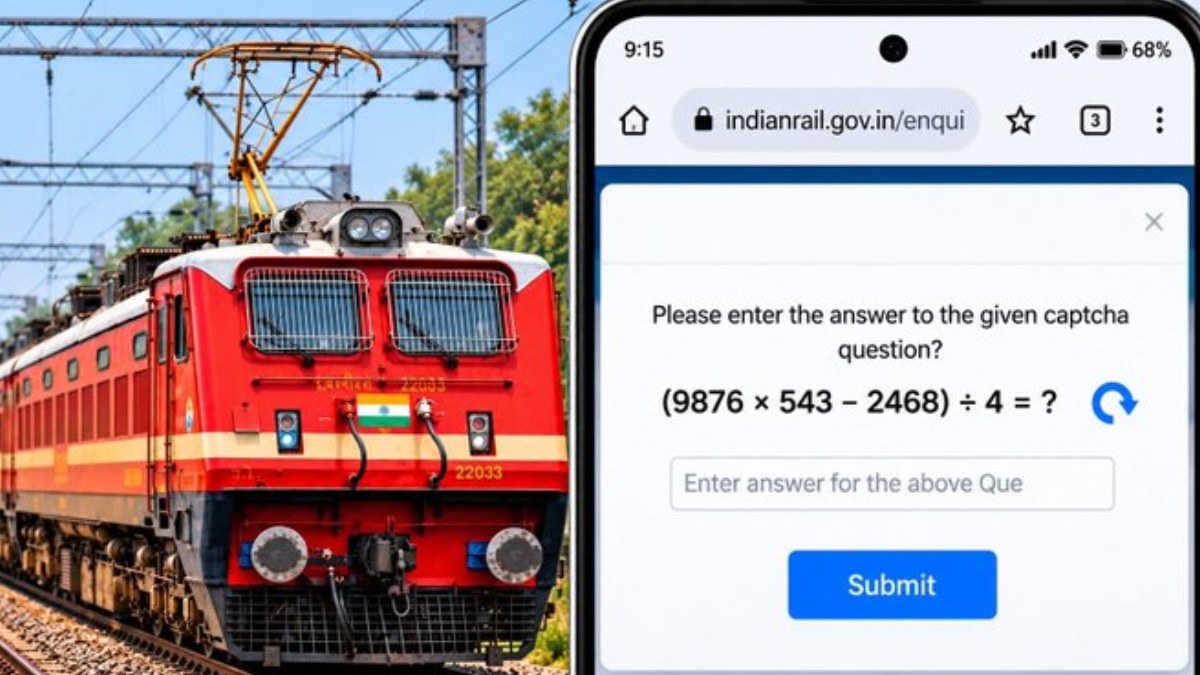
CAPTCHA (the security tool to distinguish genuine users from automated bots) is one of the key components of online railway ticketing, but when the questions or visual puzzles are not clear at face value, the booking process may be more time-consuming, especially when there is a lot of demand.
IRCTC has a number of security measures on its online ticketing platform to secure the reservation system from automated activity, fraud and misuse. CAPTCHA verification is one of these security measures. Users may need to complete a CAPTCHA before booking-related activities. The system is built to ensure that the user is a real user and not just an automated tool to be able to book tickets in bulk.
But the effectiveness of a CAPTCHA is also dependent on how clearly the challenge can be understood and completed for passengers as well. Problems with distorted characters, visual confusion and/or complex patterns or questions that need to be examined and answered will require multiple attempts to get through it before the users are able to complete it. People are also tired of having to wait for multiple attempts to get tickets for many popular routes during peak travel times.
The problem is more pronounced for travellers trying to book tickets as soon as reservations open. High-demand trains, festival-season services, holiday routes and travel dates can see huge numbers of passengers accessing IRCTC at the same time. In such instances, a small delay in authentication could add to the pressure for those who want to complete their booking.
CAPTCHA systems are commonly introduced as a security measure rather than as a barrier to genuine passengers. Online ticketing platforms need to balance security requirements with ease of use. If a verification challenge is too easy for an automated system to get around, then it will be easier for the automation to be bypassed. If it gets too hard for the average users, then, in all likelihood, the user experience will suffer.
For IRCTC passengers, completing the CAPTCHA correctly is important because an incorrect verification may prevent them from getting to the next stage of the booking process. Users may have to read the instructions displayed on the screen before submitting their response. If the CAPTCHA doesn’t make sense or the challenge isn’t working properly, refreshing the challenge may be another possibility for verification, depending on the system used.
The debate over difficult CAPTCHA questions also reveals a larger issue facing online public service platforms. Website users dealing with high-value or high-demand transactions should protect themselves from bots, automated scripts and fraudulent activity while ensuring that legitimate users can access the service without unnecessary obstacles.
IRCTC's online reservation system is used for a large volume of railway ticket bookings and related activities. Therefore, security measures are vital to maintaining the integrity of the reservation platform. CAPTCHA is only one aspect of a larger digital security model that will regulate access and reduce automated misuse.
Passengers should also look for the IRCTC website or other authorised applications when booking railway tickets. Security of accounts, avoiding any suspicious links and not sharing login credentials or one-time passwords are must-do things for the online users of railway.
🚨 IRCTC is making the captcha questions difficult. pic.twitter.com/XKa2I2SkIx
— Indian Tech & Infra (@IndianTechGuide) September 25, 2026
Even if users may describe CAPTCHA challenges as increasingly difficult, the difficulty may depend on the type of verification provided, device, browser and other technical aspects. Such claims that IRCTC is intentionally making CAPTCHA questions harder should be distinguished from those that are more about individual users' experiences, unless the railway ticketing authority officially confirms such a change.
The main point for passengers is that CAPTCHA is still a key part of IRCTC’s process to protect its online reservation system. As digital ticket booking expands, the challenge is to remain robust against automated misuse of those tickets and keep verification simple enough that genuine passengers can complete it.