Women’s safety is an important issue for India, and not just from the physical security side. Women and girls are often challenged in the public domain, work environment, home, and online, and are not free, have no confidence, and no way to participate fully in society. And to tackle this, a better framework of laws and enforcement is necessary, as well as better support and social change.
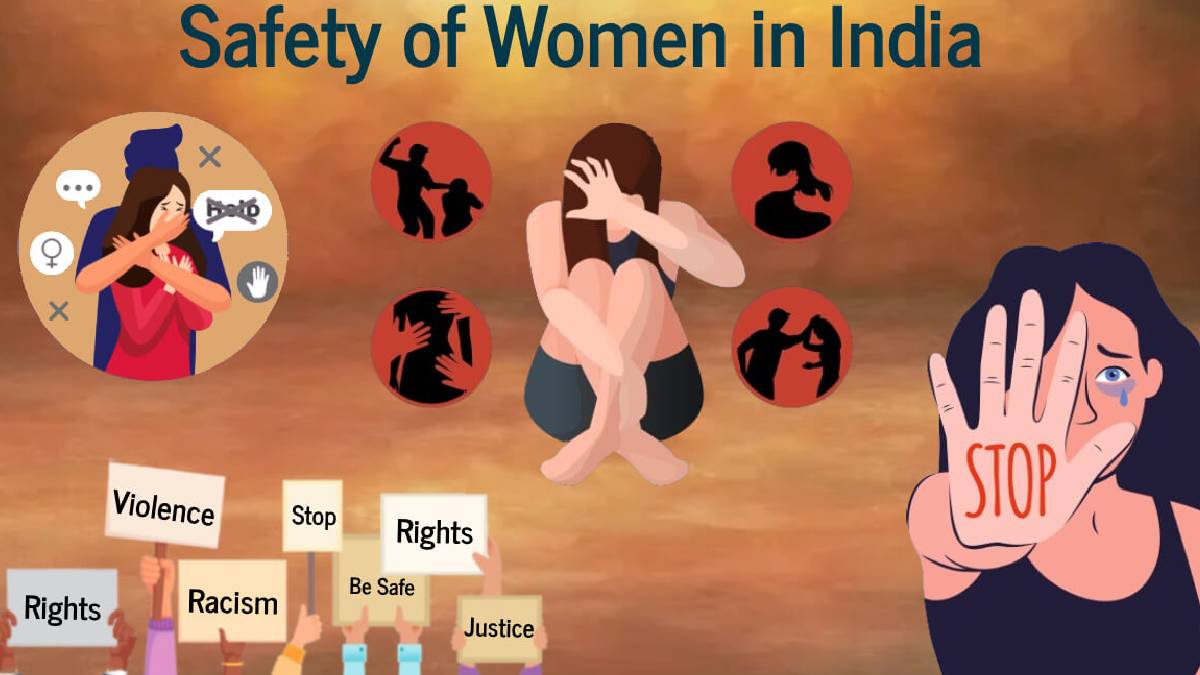
Harassment on the street and public transport and inappropriate behaviour in offices and educational institutions are some of the concerns women have about their everyday lives. Safety should allow women to travel, work and study and go about their work without constantly paying attention to what happens to them.
Women’s safety is also closely connected to domestic environments. Violence and abusive behaviour in families can take different forms, such as physical, emotional and financial abuse. For women experiencing such situations, access to support, legal assistance, counselling and safe spaces may be crucial. Awareness of the available support mechanisms can help to make sure women do not feel isolated in seeking help.
The digital world has created another area of concern. Online harassment, abusive messages, stalking, threats, impersonation and the misuse of personal information can affect women’s sense of security even when they are physically at home. Digital safety and responsible online behaviour have become more central to the conversation about women’s safety as internet and social media use have grown.
But safety is not only about preventing crimes or responding to incidents. It is also about dignity and the way women are treated in society. Women are often subjected to questions and judgments about what they wear, where they travel, whom they meet, the careers they pursue and the personal choices they make. In some situations, attention can shift away from inappropriate behaviour and towards scrutinising the woman’s choices.
Such attitudes can make women feel they can't even do simple things and change them for protection, not because they want to be harassed but because they have to. Women need not be held accountable for harassment because freedom is not to be taken away.
Equality is also just as essential in women’s safety. Women deserve equal opportunities in education, employment, leadership and other areas of public and private life. Unfair treatment at home, in workplaces or within communities can limit independence and serve as barriers to women’s participation.
Workplaces, for example, have to create environments where women can work without discrimination or harassment and be able to do so. Policies and complaint mechanisms in place, well-defined policies, transparent complaint processes, responsible leadership and awareness programmes can help in creating safer workplace environments. Educational institutions can also help in that regard by teaching students about consent, respect, equality and responsible behaviour.
Safer public spaces are equally important. Appropriate lighting, reliable public transport, well-maintained roads and walkways, responsive authorities and emergency support can give people a better feeling of security. And communities must also help to encourage people to act when they witness harassment and to support those who report it.
Laws are still part of the solution, but legislation cannot solve all social problems. Effective implementation, timely investigations, accountability and knowledge of legal rights are equally important. Support services must also be available to women regardless of their background or circumstances.
And in the end, in order for India to be safer, we need to work together as families, schools, workplaces, communities, government and people. The aim should not be to tell women to live smaller or more restricted lives to be safe. But rather to create conditions in which women have the freedom to choose when to study, when to work, when to travel, and in what way.
Women’s safety is therefore inseparable from dignity and equality. A society becomes safer when wrong behaviour is challenged, victims are supported, accountability is enhanced, and respect becomes common sense and not an exception.
Ceasing to talk and move and communicate and to come of age in a safe and inclusive society is our responsibility and an important step in that direction.