Every year on May 5, the world observes World Hand Hygiene Day, a global awareness campaign led by the World Health Organization to encourage proper hand hygiene in healthcare settings and everyday life. The campaign carries a simple yet powerful message — clean hands save lives.
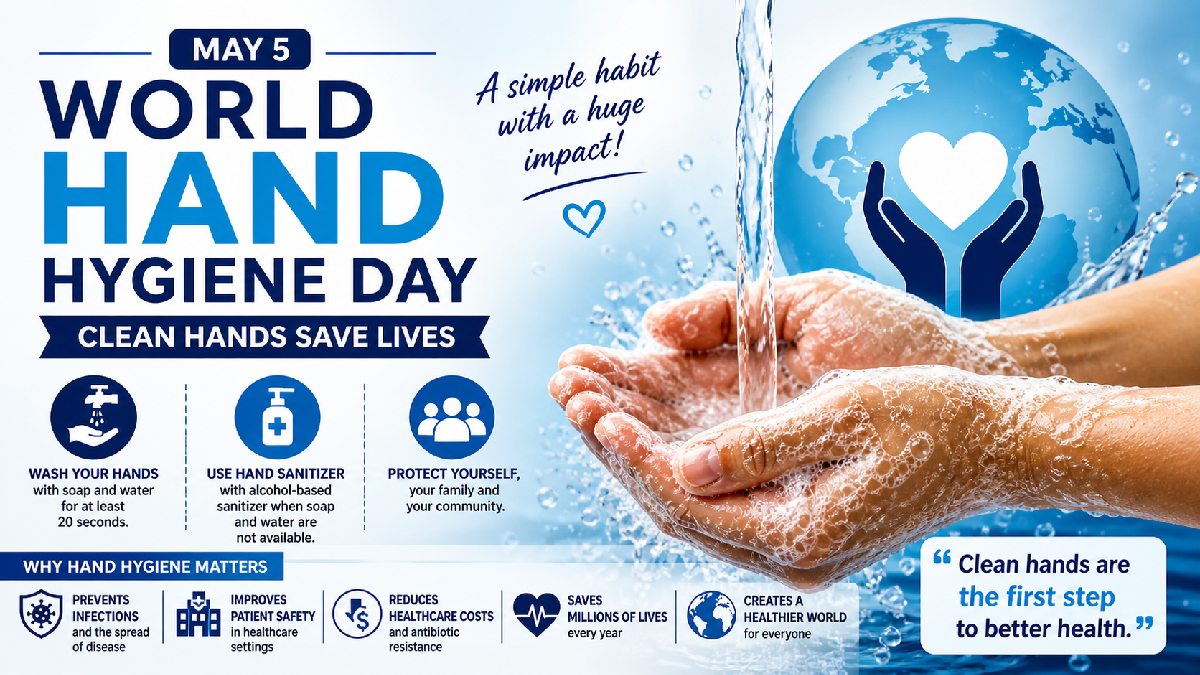
The date May 5 (5/5) symbolizes the five fingers on each hand, making it a memorable reminder of the importance of hand hygiene. Though washing hands may seem like a small daily habit, it plays a major role in preventing infections, protecting communities, and improving public health worldwide.
History and Origin of World Hand Hygiene Day
World Hand Hygiene Day was officially launched in 2009 by the World Health Organization as part of its global campaign called “Save Lives: Clean Your Hands.” The initiative was designed to improve hygiene practices in hospitals, clinics, and communities across the world.
The campaign was inspired by the groundbreaking research of Ignaz Semmelweis, a 19th-century Hungarian physician who discovered that proper handwashing significantly reduced the spread of infections in hospitals. His findings became the foundation of modern infection prevention and patient safety practices.
Over the years, the awareness day has grown into a worldwide movement involving healthcare workers, governments, schools, organizations, and millions of individuals.
Importance of Hand Hygiene
Hand hygiene is one of the simplest, most effective, and most affordable ways to stop the spread of infectious diseases. Germs can easily spread through physical contact, contaminated surfaces, food handling, and daily activities.
Regular handwashing with soap and water or the use of alcohol-based sanitizers helps prevent illnesses such as:
- COVID-19
- Influenza (flu)
- Common cold
- Diarrheal diseases
- Foodborne infections
- Healthcare-associated infections
According to global health studies, proper hand hygiene can reduce healthcare-associated infections by nearly 50 percent, helping save countless lives every year.
Global Significance and Healthcare Impact
Healthcare workers depend heavily on proper hand hygiene to protect patients and themselves from dangerous infections. Doctors, nurses, and caregivers follow strict hygiene protocols before and after patient care to reduce contamination risks.
The World Health Organization promotes the “Five Moments for Hand Hygiene,” encouraging healthcare workers to clean their hands:
- Before touching a patient
- Before medical procedures
- After exposure to bodily fluids
- After touching a patient
- After touching patient surroundings
These practices improve patient safety, reduce healthcare costs, and strengthen infection control systems worldwide.
Campaigns and Awareness Activities
Each year, the World Health Organization announces a special theme for World Hand Hygiene Day focusing on infection prevention and public health awareness.
Governments, hospitals, schools, and organizations participate through:
- Public awareness campaigns
- Handwashing demonstrations
- Educational workshops
- Hygiene drives
- Social media campaigns
- Community outreach programs
The campaigns encourage people to wash their hands properly, especially:
- Before eating
- After using the restroom
- After coughing or sneezing
- During food preparation
- While caring for patients
Why Hand Hygiene Matters Today
In a world still recovering from global health crises like COVID-19, the importance of hand hygiene has become clearer than ever. A simple habit such as washing hands regularly can help prevent outbreaks, protect vulnerable populations, and reduce pressure on healthcare systems.
Despite global progress, many communities still lack access to clean water, sanitation, and proper handwashing facilities. This makes awareness campaigns even more important in improving public health worldwide.
World Hand Hygiene Day is not only for healthcare professionals — it is a reminder for everyone that small actions can create a big impact.
Conclusion
World Hand Hygiene Day highlights the life-saving power of clean hands. By practicing proper hand hygiene every day, individuals can protect themselves, their families, and their communities from harmful diseases.
As the world observes May 5 each year, the message remains simple yet powerful: clean hands are the first step toward better health and a safer future.