A language controversy has erupted in Bengaluru as a Zomato warehouse supervisor was accused of asking local employees to learn Hindi or leave their jobs after a video went viral on social media. Ashok, who is reportedly from Andhra Pradesh, later apologised in Kannada, saying that he regretted his remarks and would not repeat the mistake.
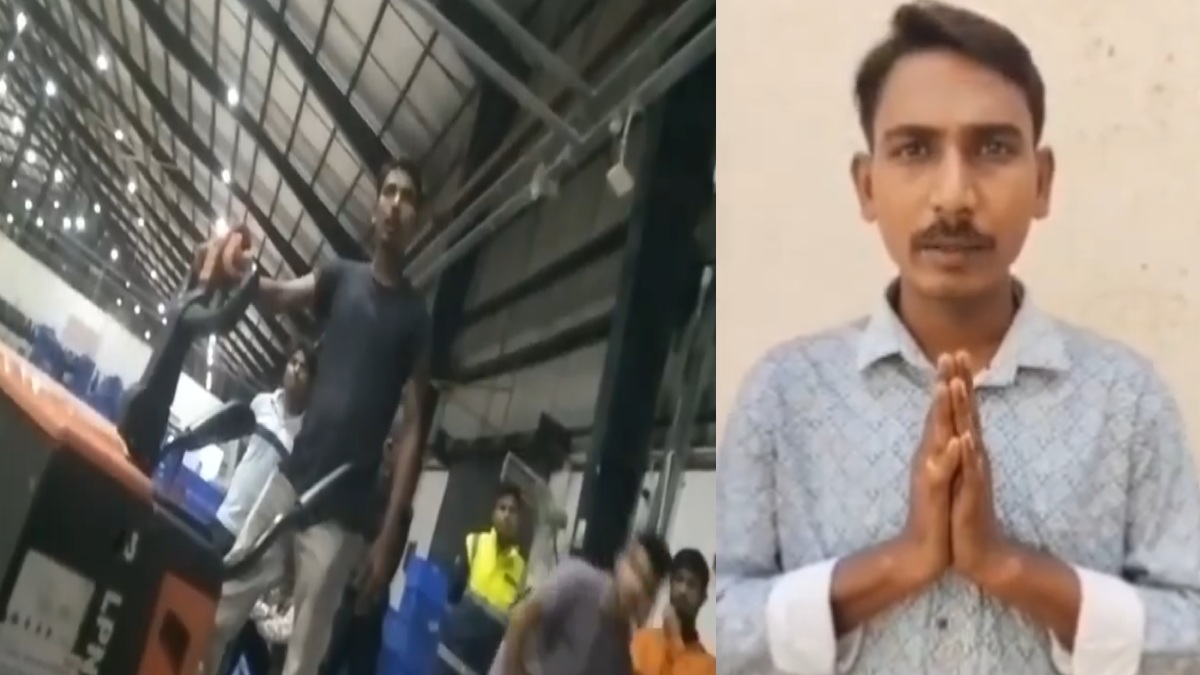
According to the video online, Ashok told employees he doesn't know Kannada and would only communicate with the team in Hindi. When workers asked the supervisor if Hindi would not be used in Karnataka to use the language, he said he would continue speaking Hindi in the future. He also said to employees who wished to continue working with the organisation they would have to learn Hindi and that he would not object if anyone left if anyone wanted to do so.
The video spread on social media quickly and was criticized by pro-Kannada groups and others who were critical of the reported remarks. Activists questioned why workers in Karnataka should be pressured to communicate in a language other than the state’s official language.
After the incident, pro-Kannada activists gathered outside the warehouse on Monday and asked for actions against the supervisor, according to the news media. Activists also sought his removal and demanded further action for the alleged remarks. A petition and complaint were also submitted to the Madanayakanahalli police and a non-cognisable report (NCR) was registered, sources said.
Police also took Ashok into custody for a short time in the tense situation, but details of any further legal proceedings or action are unclear. Any such allegations should therefore be treated as allegations unless and until they are established through an official investigation or legal process.
Ashok later released a video apologizing in Kannada. In the clip, he appeared with folded hands and said sorry for what he said. He said his comments were a mistake and that they would not happen again.
The apology has added a layer of controversy to the situation, though it is unclear whether it has been able to resolve the concerns of the activists and employees. There is not a public statement from Zomato in any of the reports from that incident, nor is it clear whether Ashok is still employed by the company or has been disciplined internally.
The episode takes place in a context of a growing workforce in Bengaluru, where people are diverse in the city and the city is the place of work of people from different parts of India and a lot of people from different countries are employed there.
Hindi and English are spoken in many professions, but language is a very sensitive issue throughout Karnataka, where Kannada activists have long sought to address the issue of Kannada and use of Kannada in public and in many workplaces.
The debate also raises broader questions about how companies should communicate in multilingual environments. Those working in Bengaluru are often the same people with different linguistic backgrounds, so inclusive communication is an important workplace issue as well. Workplace instructions and local linguistic and cultural norms need to be communicated to employees, and we need to make sure that employees know what the rules of business are as well as the culture of the place.
The Zomato warehouse incident is still an evolving issue at present, and the police complaint and supervisor’s apology are the most important developments. But the incident has reignited the discussion about language relations in Bengaluru, particularly between Kannada, Hindi, and workplace communication, and how quickly language-related disputes can escalate when comments are recorded and posted online.
As authorities and the company if they choose to do so clarify the matter, more information regarding the complaint, the reported NCR, and any internal action could emerge. But the incident serves as a reminder to Bengaluru’s increasingly multicultural workplaces that respectful and inclusive communication is key.