
Devotees lined up on the banks of Yamuna River in Noida, Uttar Pradesh on November 15 to celebrate Chhath Puja despite the visibly polluted water. Thick layers of white foam floated on the river as devotees entered it to perform religious rituals.
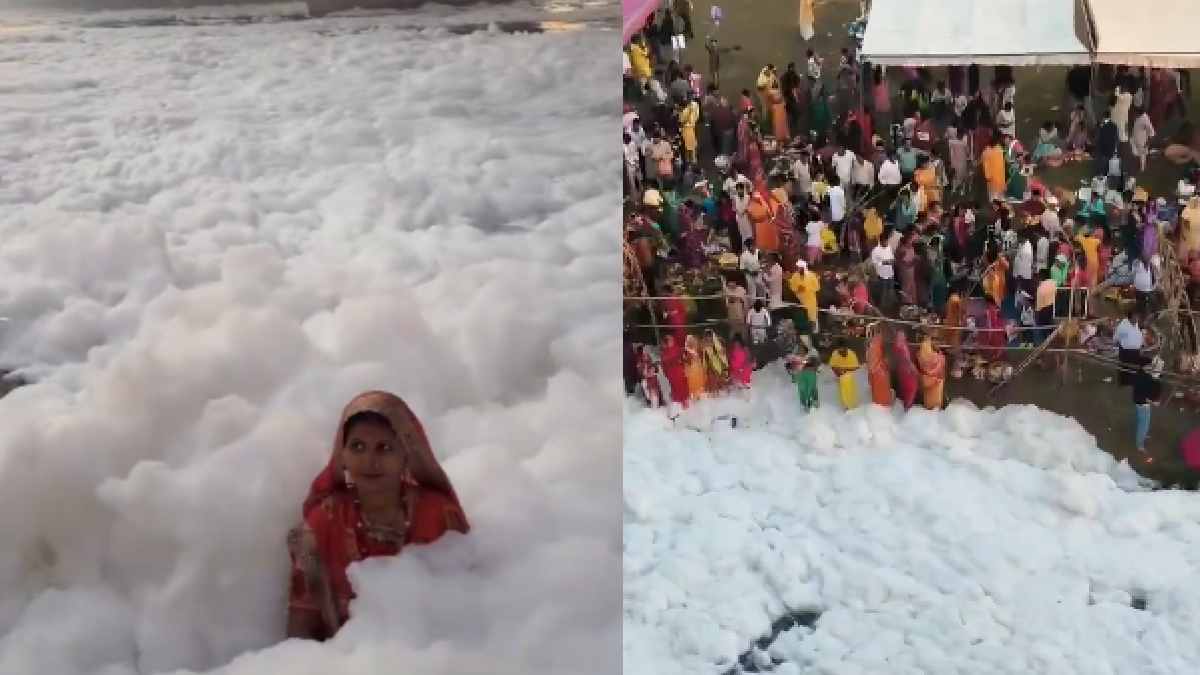
The celebrations showed how starkly people’s religious faith contrasted with the growing environmental concern around one of India’s most important rivers.
Chhath Puja is a major Hindu festival dedicated to the Sun God Surya and Chhathi Maiya. It is observed with great devotion over four days during which fasting, prayers and offerings are made to rising and setting sun. Devotees believe that rituals bring happiness, prosperity, good health and well-being into their families.
Devotees gathered on Yamuna riverbank on Sunday evening (15 Nov) for Sandhya Arghya the ritual in which prayers and offerings are made to the setting sun. Women fasting as part of the traditional fast entered the river and offered prayers even though foam was covering some parts of the water.
🚨 Devotees celebrate Chhath Puja along the Yamuna River despite polluted water in Noida, Uttar Pradesh. https://t.co/aWmMsR47yh
— Indian Tech & Infra (@IndianTechGuide) November 16, 2026
The sight of people performing religious rituals in visibly polluted water once again brought to light the deteriorating condition of Yamuna River.
White foam was floating across sections of the river near Noida ghats. This raises questions about water quality and health risks for devotees coming into contact with it. Foam is usually associated with pollutants (detergents, untreated wastewater etc.). But what exactly this foam at that location would be made up of would need scientific testing.
The pollution issue was more visible because Chhath Puja traditionally involves devotees standing in rivers or other water bodies while praying. The situation has prompted discussions about cleaner and safer arrangements for religious gatherings.
Noida ke Yamuna ghat pe Chhath Puja. Kalindi Kunj aur Sector-94 mein pure white toxic foam tair raha hai. Log usi jhaag ke bilkul paas khade hokar arghya de rahe hain. Har saal yahi scene. Har saal yahi foam. Har saal yahi “Yamuna saaf ho gayi” wale bade-bade daave. Ab poochna chahiye — Manoj Tiwari ji aur unke saathiyon se ki Yamuna kab saaf hui thi? Kyunki aaj bhi wahi zehariila jhaag hai. Agar Yamuna itni saaf ho gayi hoti, to Chhath pe log is jhaag ke beech mein khade nahi hote. Visuals khud bol rahe hain. Baaki daave paper pe reh jaate hain.
— anuj Jaiswal (@Amuj29Anuj) November 16, 2026
The Yamuna has always been a polluted river untreated sewage, industrial discharge and waste have all degraded its condition over the years. Repeated attempts to clean water quality haven’t worked so far; visible pollution is still a major problem in many stretches of the river.
The festival celebrations in Noida also showed that the ghats should have suitable arrangements. Clean water facilities, waste management and regular monitoring of water quality are needed during festivals where large gatherings take place.
Meanwhile Chhath Puja celebrations continued with traditional fervour in different parts of the country. Devotees gathered along riverbanks and specially prepared water bodies to offer prayers to the setting sun. The festival will end on November 16 with Usha Arghya when devotees offer prayers to rising sun.
The scenes from Noida have again highlighted the need for Yamuna conservation. Devotion of Chhath worshippers continued but polluted river was a reminder that protection of India’s rivers is not easy it requires sustained action, effective pollution control and greater environmental responsibility.




Comments