
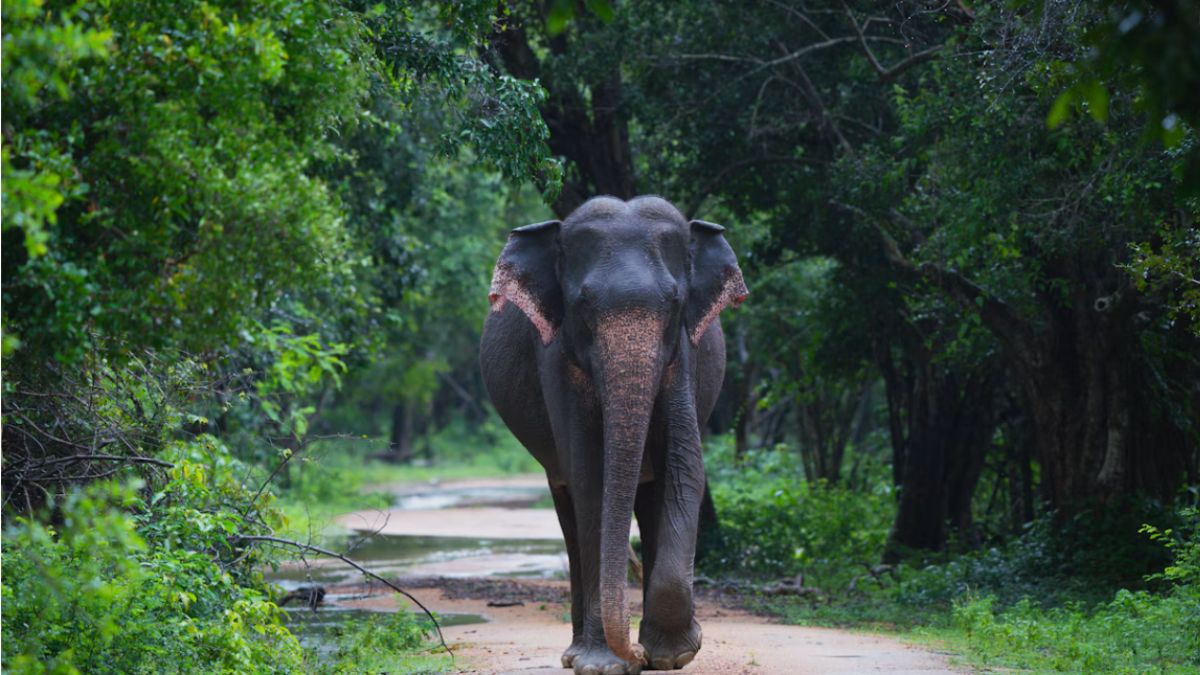
More than 100 forest officials, veterinary doctors, trained elephants and drone teams have been deployed in northern Chhattisgarh to track a 3,000-kg wild elephant ‘Kabra Kaan’. The about 20-year-old tusker has allegedly killed at least 16 people over the past six to seven months.
Chhattisgarh Forest Department has been given permission to tranquilise the elephant and carry out a rescue operation but locating and isolating the animal is difficult as it has reportedly joined a herd of elephants.
The operation is going on in forest areas of Korea, Surguja, Surajpur and Balrampur districts.
Why Is the Elephant Called Kabra Kaan?
The elephant is locally called Kabra Kaan because of the pigmentation on its ear.
Forest officials say the tusker is 20 years old and weighs three tonnes. It has reportedly been moving in a radius of 75 kilometres in dense forests of northern Chhattisgarh.
Officials say the elephant has entered musth phase, which is a biological state in male elephants that increases testosterone levels and aggression.
Over the last six to seven months it is alleged that the animal has trampled at least 16 people to death and injured several others.
Why are 100 forest officials tracking the elephant?
The forest department has sent more than 100 personnel (senior forest officers) to find and safely catch the tusker.
Three vets have been put on different teams and drones are being used to track the elephant as it moves through difficult forest terrain.
Forest officials say Kabra Kaan can cover 35 to 40 kms overnight so tracking teams have a hard time keeping up with it.
Hathi Mitra Dal (the group which alerts villagers of elephant movements) is also part of the operation to reduce further human casualties.
Why Has Capturing Kabra Kaan Become Difficult?
One of the biggest challenges is that the elephant has reportedly joined a herd of other tuskers.
Officials say the animal may be hiding behind the group so that it is not identified and isolated; it has also reportedly been involved in fights with other elephants.
Forest teams are waiting for an opening when Kabra Kaan breaks from the herd. Tranquilising an elephant surrounded by other animals is more risky still.
Another problem is the size of the animal. Once tranquilised it will be semi-conscious so very difficult to move through dense forest terrain.
Two Trained Elephants Deployed for the Operation
The forest department has brought two trained Kumki elephants to help in the operation.
These elephants were brought to Chhattisgarh from Karnataka more than a decade ago and trained for wildlife rescue and management activities.
Once Kabra Kaan is safely tranquilised, the trained elephants are expected to lead it to a specially prepared loading area.
Officials have reportedly dug a large pit and placed an eight-wheel truck so that its rear half is lowered into the ground. A ramp will then be used to help carry the semi-conscious elephant onto the vehicle.
The operation needs to be carried out in such a way that the animal and personnel are not injured. Veterinary teams and trained elephant handlers need to work together so injuries do not occur.
Where Has Kabra Kaan Been Spotted?
The tusker has been moving through forest areas in four northern Chhattisgarh districts:
- Korea
- Surguja
- Surajpur
- Balrampur
The forest department has been monitoring its movements in areas including Pingla coal mine forest region.
Officials said some of the reported deaths took place in the early morning or evening. Many of them were forest dwellers living in settlements or visiting forests for produce or daily needs.
Human-elephant conflict in Chhattisgarh: What do the numbers tell us?
The Kabra Kaan operation also reflects the wider challenge of human elephant conflict in Chhattisgarh.
In total, 737 people were killed and another 91 injured in elephant-related incidents in the state between 2000 and 2023, a Wildlife Institute of India report cited by The Indian Express said.
218 elephants died in Chhattisgarh during the same period. Electrocution was the leading cause of death (77).
Figures presented before Chhattisgarh Legislative Assembly in January 2026 also showed that more than 340 people had died in elephant attacks across the state during the previous five years.
The figures show that better early-warning systems are needed, habitat protection and coordination between forest officials and communities living near elephant habitats.
What Will Happen to Kabra Kaan After Capture?
The immediate aim is to safely tranquilise the elephant and move it away from areas where it is a risk to human settlements.
The forest department’s operation is being planned around the safety of the tusker, other elephants, veterinary teams and nearby villagers.
Capturing and relocating animals will depend on finding a good opportunity to isolate the animal (and administer the tranquiliser safely) first.
Final Thoughts
The Kabra Kaan operation is one of the toughest wildlife management operations going on in Chhattisgarh now. More than 100 forest officials, vets, trained elephants and drone teams are involved in the capture — handling a big wild animal on difficult terrain is not easy.
At the same time, it is part of a wider human elephant conflict in forest fringe communities. Protecting villagers while protecting wildlife is still a major challenge for forest authorities.




Comments