European football is heading toward a serious governance crisis following a very angry FIFA President Gianni Infantino’s proposal to reform the commercial foundations of the sport’s most prestigious global tournaments. At the same time, the huge budget that will help to monetize those major assets by reaching out for outside equity has triggered a thunderous response from the Union of European Football Associations (UEFA) and has brought the international game to the brink of an unparalleled institutional civil war.
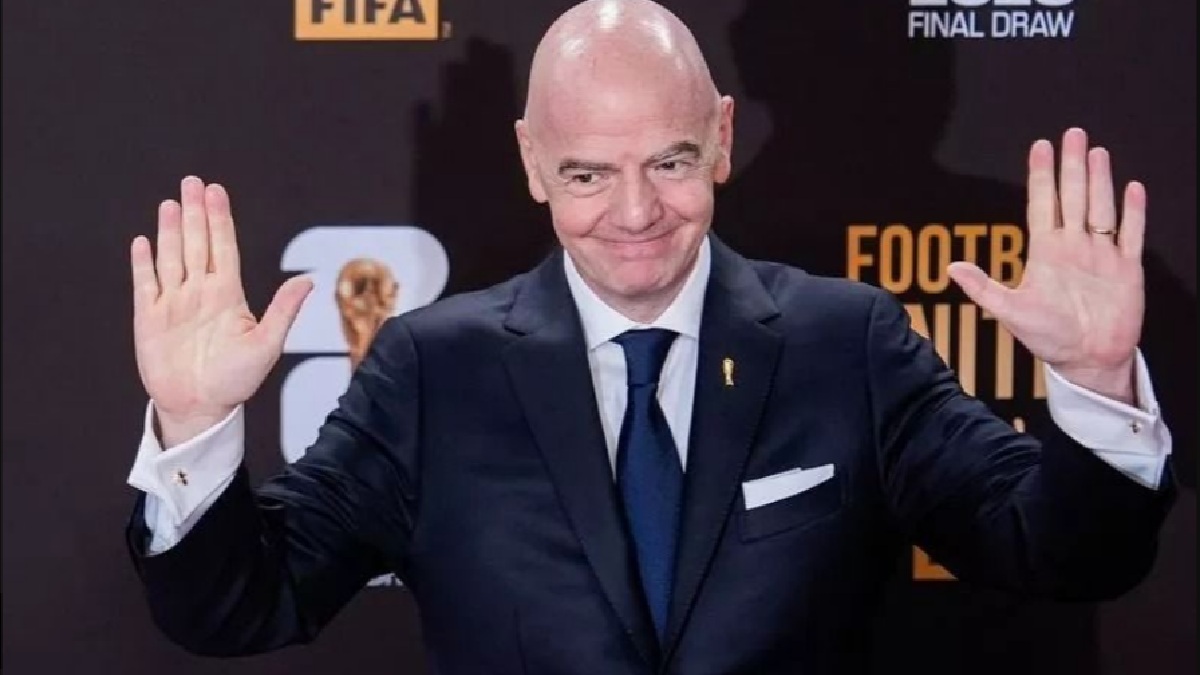
The dispute is centered on FIFA’s plan to create a new commercial entity, a newly established entity to be called FIFA Forward Enterprise (FFE), which would have the authority to organise and manage major events like the FIFA World Cup and the new Club World Cup, which is estimated at $20 billion worth of equity. FIFA will raise up to $4.2 billion in the form of minority non-controlling stakes to external private investors including J.P. Morgan and Thrive Eternal, a private investment company founded by Joshua Kushner. Infantino sought to bring that to the national federations, and had discussed a one-off profit for each of FIFA’s 211 member federations to fund grassroots infrastructure and domestic programmes.
The announcement immediately triggered a hostile response from European football corridors. UEFA saw the partial privatization of the world’s game as an intolerable crossing of a red line and blasted the move in a blistering statement. The European governing body argued that football’s very governance and its cultural soul are public trusts and not corporate commodities for sale and that the World Cup is not FIFA's to sell. UEFA held an emergency meeting in the middle of the day with its member associations to discuss how to respond, with sources saying that a boycott of all the FIFA games is being discussed.
That high-stakes clash is a continuation of the long-standing tension between Infantino and European leaders over the expansion of commercial power. The FIFA chief had already made such proposals—for example in 2018 of a $25 billion global tournament package with SoftBank and Middle Eastern capital, later on to create a biennial World Cup cycle—and UEFA had vehemently opposed them, in a long-running battle with Infantino over the dilution of traditional competitions like the Champions League. Infantino has tried to make the Club World Cup bigger and more closely aligned with international partners in the past, but this new move to put private equity into the sport’s biggest asset has taken him into uncharted territory.
FIFA has vigorously defended the pivot and has portrayed the restructuring as a necessary step to democratize wealth distribution and make sure that the enormous commercial heights achieved by events like the 2026 World Cup can be reached out to the developing football nations around the world. Proponents say that the new commercial vehicle opens up new revenue streams. But critics and European stakeholders remain profoundly concerned about the opacity of financial beneficiaries and the growing influence of private capital. The chasm between Zurich and European headquarters continues to grow, and the international tournament calendar and the political system for football in general are going to change forever, inching the world of football closer to that of this kind of world.