India registered a narrow two-run victory against Japan in a rain-affected five-over T20I at the Sano International Cricket Ground, but the result was bigger than the score. India's 200th victory in T20 internationals, including Super Overs, helped the two-time world champions overcome a tense match against the hosts.
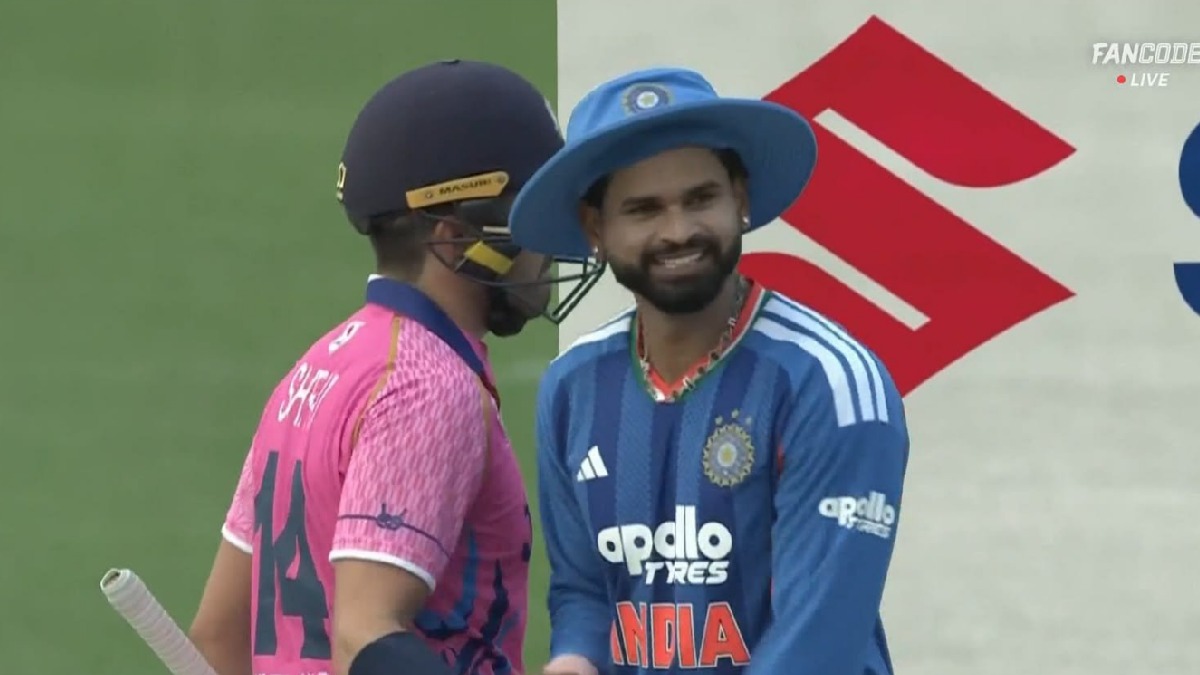
The match was reduced to five overs per side after a nearly two-and-a-half hour delay due to wet outfield. Shreyas Iyer, the Indian captain, won the toss and chose to bat first, but Japan’s bowlers made the best use of the conditions to keep the Indian line-up under pressure throughout the shortened innings.
India managed just 32/4 in their five overs, with Iyer as their top scorer. The Indian team made 16 runs from 12 deliveries and provided some much needed stability after the visitors lost wickets at regular intervals. Sanju Samson contributed nine runs from seven balls and Ishan Kishan was dismissed for three.
India suffered an early setback when Abhishek Sharma was bowled off the first ball of the innings without scoring. Kishan departed for three and India was stuck with a bad momentum. Iyer tried to rebuild the innings, while Tilak Varma remained unbeaten on 1. Shivam Dube also came to the crease for the last delivery but was unable to make contact.
Japan's bowling effort was led by Charlie Hara-Hinze, who took two wickets for 17 runs. Ibrahim Takahashi and Benjamin Ito-Davis took one wicket each as Japan restricted the visitors to a relatively modest total.

Japan faced a lot of pressure against the experience of India’s bowling attack with just 33 runs to chase. The hosts needed 33 runs from their five overs and came very close to completing what would have been a major upset.
Japan’s batters kept their cool during the chase, with Kendel Kadowaki-Fleming scoring 12 runs and Benjamin Ito-Davis nine. Their efforts kept Japan in contention until the last part of the innings.
Washington Sundar played a key role for India and took two wickets for 13 runs and disrupted Japan at a crucial point in the chase. Axar Patel, with his experience and control, also made scoring difficult for the Japanese batters.
Japan ultimately ended up on 30/3 after five overs and just two runs short of India’s target. The narrow defeat, however, demonstrated Japan’s ability to compete against a top international side in a shorter format, especially with the Asian Games ahead.
The contest also had a controversial moment in the fourth over of Japan's innings. Axar Patel’s delivery was initially called a wide, but when Axar and Iyer pointed out that the batter had tried to reverse sweep, the decision was overturned. The delivery was therefore considered a legitimate one, providing more drama to an already tight contest.
For India, the result was their fourth T20I victory by exactly two runs. Their previous two-run wins were against Sri Lanka in 2023, South Africa in 2012, and Bangladesh in 2016. So this result added one more close finish to India’s T20I record in the process.
More importantly, the victory took India to the landmark of 200 wins in T20 internationals, counting Super Over victories. It was an unusual way to reach such a milestone, with India scoring only 33 runs and then defending the total in a five-over game.
Despite the defeat, the performance for Japan was positive. India had a low total, and Japan could take the chase down to the last stages and showed its competitiveness. The team can take the performance as confidence in its preparation for the Asian Games.
India will also have their work to do after an uncharacteristically hard-luck batting display. It was a rain-hit game, but India’s narrow victory clearly illustrates the depth of bowling and experience in pressure situations.
Brief Scores
India: 33/4 in 5 overs— Shreyas Iyer 16, Sanju Samson 9; Charlie Hara-Hinze 2/17, Ibrahim Takahashi 1/13.
Japan: 30/3 in 5 overs— Kendel Kadowaki-Fleming 12, Benjamin Ito-Davis 9; Washington Sundar 2/13.
Result: India won by 2 runs.