
Asia has some of the world’s most beautiful lantern festivals streets, rivers and night skies become colourful displays of light. Thousands of glowing paper lanterns rising above Thailand’s Chiang Mai; elaborate decorations illuminating China’s historic streets culture, spirituality, traditions and community gatherings all come together.
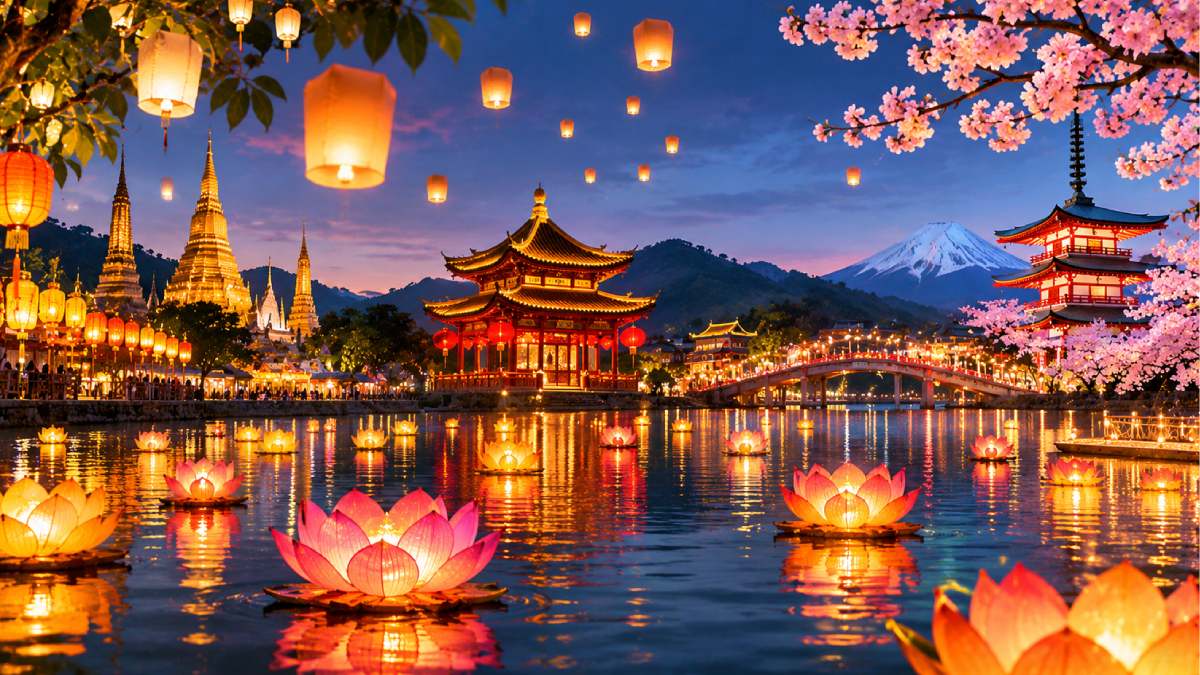
Although each festival has its own history and customs, lanterns often stand for hope, prosperity, good fortune and new beginnings.
For travellers who want to see Asia beyond its beaches and shopping malls these festivals are a chance to experience the culture of the region through night time celebrations.
Here are five amazing lantern festivals you need to see in Asia.
1. Yi Peng Festival, Thailand
Yi Peng Festival in Thailand is one of the most recognisable lantern celebrations in the world. It takes place mostly in Chiang Mai but comes from traditions of the Lanna people of northern Thailand.
Its biggest draw is the release of Khom Loi (traditional paper lanterns) into the night sky using hot air generated by a small flame. Hundreds of lanterns light up the darkness and the city presents a stunning visual spectacle.
The lanterns have spiritual meaning in Buddhism: when released they are a way of paying homage to the Buddha, letting go of misfortune and welcoming good beginnings.
Traditional performances are also part of the celebrations; decorative lanterns, temple activities and illuminated streets.
2. Yuan Xiao Jie, China
Yuan Xiao Jie (Chinese Lantern Festival) in China is the first full moon of the lunar year and traditionally closes Spring Festival celebrations.
The festival has a history of more than 2,000 years. Streets, parks and public spaces are decorated with lanterns of various shapes, colours and sizes (often animals, flowers, mythical characters and traditional Chinese symbols).
One of the most interesting customs is solving lantern riddles. Riddles are written on small pieces of paper and attached to lanterns for visitors to solve and enjoy the festivities.
Another important tradition is to eat Tangyuan or Yuanxiao (round glutinous rice balls usually filled with sweet stuff like sesame, peanuts or red bean paste). Their round shape symbolises family togetherness harmony reunion.
Cities like Shanghai and Beijing have elaborate lantern exhibitions, cultural performances and festive markets for travellers to enjoy.
3. Pingxi Sky Lantern Festival, Taiwan
Taiwan’s Pingxi Sky Lantern Festival is another spectacular celebration that draws visitors from all over the world.
Unlike traditional lantern exhibitions this festival is famous for the release of sky lanterns with handwritten wishes. People write messages about health, happiness, prosperity and personal hopes before releasing their lanterns into the night.
The tradition is linked to the history of Pingxi: villagers used lanterns signalling it was safe to return after danger and bandit attacks.
Over time the practice turned into a celebration of peace, safety and good fortune.
The festival usually has organised lantern-release sessions, cultural performances and large illuminated displays. Visitors can also take in the mountain scenery and historic railway settlements around the area.
4. Hoi An Lantern Festival, Vietnam
Hoi An in central Vietnam is famous for its historic architecture, riverside streets and colourful silk lanterns.
The town’s lantern tradition is the result of Chinese and Japanese traders who brought lanterns-making customs to the town centuries ago.
Hoi An’s ancient streets are lit up by hundreds of colourful lanterns in the monthly lantern festival. Electric lighting is turned down in some parts of the old town so that traditional lanterns and candlelight become the main attraction.
Visitors can stroll through the historic streets, visit lantern-making workshops and enjoy the atmosphere along Hoai River.
One of the most memorable experiences is floating small illuminated offerings on the river and making a wish. Boat rides and traditional performances also contribute to the festive atmosphere.
Hoi An is not for everyone. Photographers, heritage architecture and evening walks are what Hoi An is about (unlike the large scale sky lantern releases in Thailand and Taiwan).
5. Nagasaki Lantern Festival, Japan
Japan’s Nagasaki Lantern Festival brings Chinese New Year traditions to the streets of Nagasaki.
The celebration started among Chinese residents of Nagasaki's Shinchi Chinatown as a way to celebrate the Lunar New Year. It gradually developed into a major winter festival that draws visitors from all over Japan and abroad.
During the festival thousands of colourful Chinese lanterns are displayed in the city’s streets, parks and public spaces. Traditional Chinese designs are used as well as elaborate decorative installations and illuminated sculptures.
The festival is also famous for its cultural performances dragon dances, lion dances, Chinese acrobatics and traditional parades.
Minato Park and the Shinchi Chinatown area are two of the major locations for experiencing celebrations.
For visitors Nagasaki is an interesting mix of Japanese city life and Chinese culture heritage so the lantern festival is unique compared to other celebrations in Asia.
Why Lantern Festivals Are Special Across Asia
Although these festivals share the use of illuminated lanterns, their cultural meanings and traditions are different.
- Thailand’s Yi Peng: Buddhism devotion, prayers and releasing misfortune.
- China’s Yuan Xiao Jie: Celebrates the first full moon of the lunar year and family reunion.
- Taiwan’s Pingxi: Lanterns are released with personal wishes and messages of good luck.
- Hoi An in Vietnam: Traditional lantern making with riverside celebrations and historic town culture.
- Nagasaki, Japan: Lanterns and cultural performances reflect Chinese New Year traditions.
These celebrations show how a simple source of light can have different meanings in communities and generations.
Best Time to Plan a Lantern Festival Trip
Most of the major lantern festivals in Asia are lunar calendars so dates change every year. Travellers should check official festival schedules before booking flights and accommodation.
November is a good time to visit northern Thailand for Yi Peng. February and March are good times to experience celebrations in China, Taiwan and Japan around Lunar New Year.
Hoi An is different because its lantern festival takes place on the 14th day of each lunar month so travellers have several opportunities throughout the year.
From glowing skies to illuminated rivers and historic streets, Asia’s lantern festivals are memorable travel experiences that marry culture with tradition.






Comments