
The Bengaluru–Vijayawada Economic Corridor, a big highway project costing around ₹14,000 crore, will enhance the connectivity between Karnataka and Andhra Pradesh. The six-lane, access-controlled corridor will reduce travel times and congestion and enable people and goods to move between the two cities.
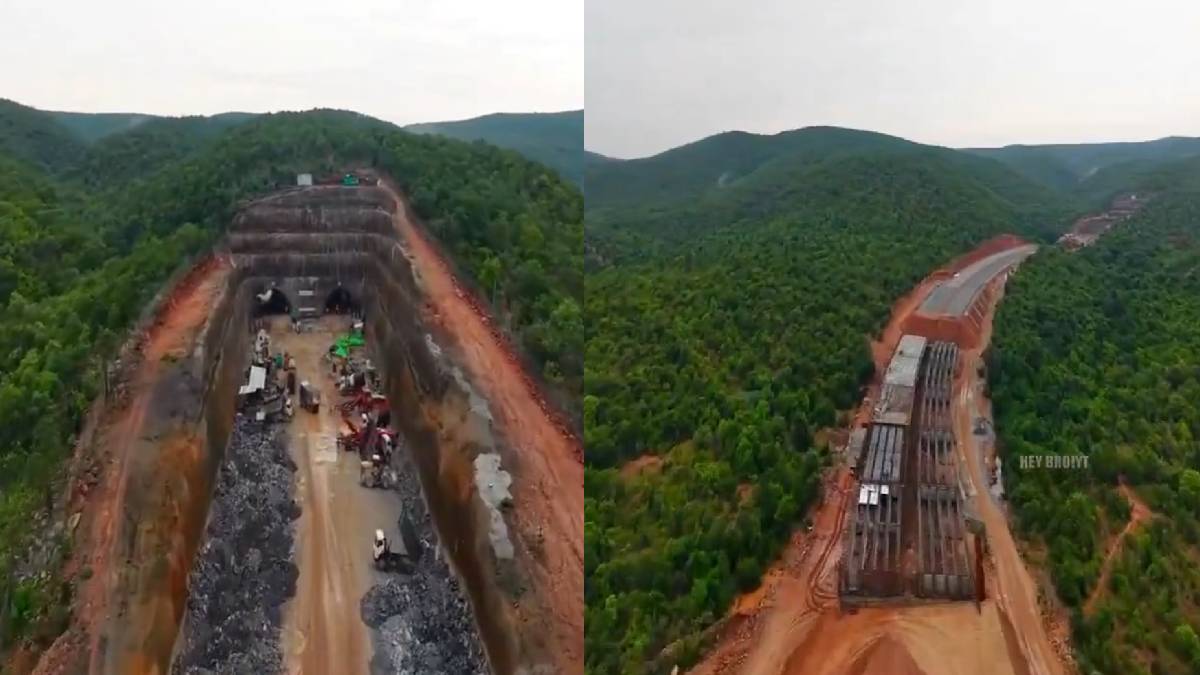
The project is expected to be completed by 2027. Although it promises a quicker journey, the path through forest areas has also raised questions about its potential impact on wildlife and the environment.
A faster route between Bengaluru and Vijayawada.
The Bengaluru-Kadapa–Vijayawada Economic Corridor, or NH-544G, is part of the highway development programme of the Centre. Its greenfield part is approximately 343 km long from Kodikonda, close to Karnataka-Andhra Pradesh border to Muppavaram near Addanki in Andhra Pradesh. The wider route also includes road improvements.
The National Highways Authority of India (NHAI) says the completed corridor will reduce the Bengaluru-Vijayawada road distance from around 635 km to approximately 535 km. Travel time is expected to fall from about 12 hours to around 8 hours, though some project-based estimates put it at 6 to 7 hours depending on the route and driving conditions.
The distinction is important: the six-lane greenfield highway is only one part of the journey and the final travel time will depend on the connecting roads and upgrades being completed.
Connecting regions and bypassing congested towns.
The corridor is supposed to help to connect Bengaluru, the Rayalaseema region and coastal parts of Andhra Pradesh. Better connectivity would be good for businesses, freight operators, farmers and industrial centres to be able to send goods faster and more efficiently.
The access-controlled design is also intended to reduce traffic through busy towns and older roads. Instead of the current route through each settlement, the new alignment bypasses some built-up areas to make the journey quicker.
The greenfield section passes through several districts in Andhra Pradesh, and the wider corridor connects with Karnataka's existing highway network. The entire route should therefore be considered as a combination of new construction and upgrades, rather than a single new road passing through all the districts between the two cities.
The 21-km forest stretch raises concerns
One of the major environmental concerns is the 21-km stretch of the corridor that passes through forest areas. The official project documents also describe forest land and wildlife-related aspects along the route, including an area in the border between Nagarjuna Sagar Tiger Reserve and Sri Venkateswara National Park.
Highway construction in forested areas can fragment habitats, disrupt animal movement and increase the risk of wildlife collisions. Construction activity, noise and increased traffic may also affect animals living near the alignment.
These are not the same as the project necessarily causing wildlife damage; environmental protections will be necessary. Forest clearance and wildlife protection measures and crossing structures may help mitigate some risks. The effectiveness of those measures and how well they will be implemented will be critical as construction progresses.
Construction moves ahead
Work on the corridor has been ongoing in different construction packages. In January 2026, NHAI announced that the project had achieved Guinness World Records for continuous bituminous concrete laying and paving. In September 2026, the government also reported a breakthrough in the excavation of a 3.68-km tunnel on one section of the corridor, with this tunnel package expected to be completed by mid-2027.
Andhra Pradesh has set a 2027 target for the wider corridor, but the completion of individual packages and connecting road upgrades remains important to delivering the full travel-time benefit.
Faster connectivity, with environmental responsibility
Bengaluru–Vijayawada Economic Corridor would make road travel a lot easier, improve trade links and access to industrial and agricultural markets. For regular travellers, saving a few hours on the journey would be a big deal.




Comments
Leave a Comment