Rajasthan is associated with grand forts. Amer Fort in Jaipur and Mehrangarh Fort in Jodhpur are among the state’s most famous heritage landmarks.
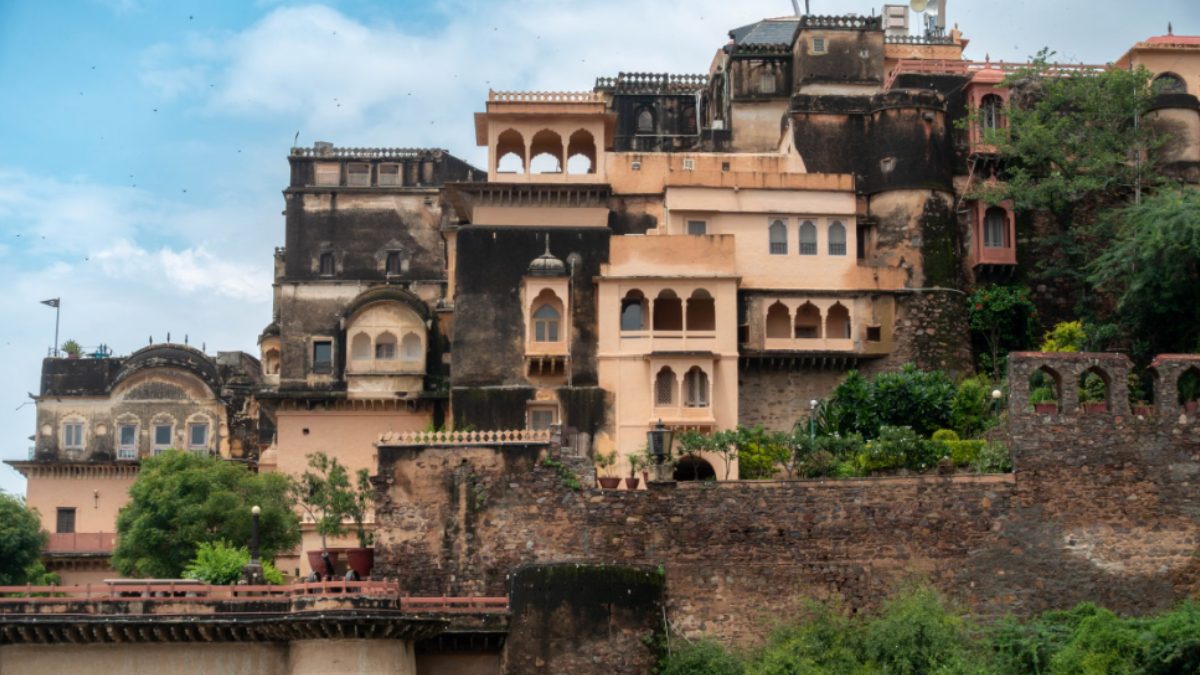
But Rajasthan’s fort heritage is far more than that of some of these popular locations. There are also a lot of historic strongholds scattered over the state’s hills, forests, desert landscapes and river valleys and they give a somewhat quieter experience of the royal past.
Winter is best for Rajasthan: colder temperatures allow for long walks through fort complexes and heritage towns. If you are planning a trip between October and February, seven forts are worth adding to your itinerary.
1. Gagron Fort, Jhalawar
Gagron Fort is one of Rajasthan’s most unique forts because of its unusual location. It is located in Jhalawar and the Ahu, Kali and Sindh rivers surround it on three sides.
The fort is also one of Rajasthan’s six hill forts recognised as a UNESCO World Heritage Site. Its natural surroundings and defensive structure make it different from the desert and hilltop forts that most travellers associate with Rajasthan.
It’s less event-like in nature and Gagron’s quieter setting is a good place for travellers to visit Rajasthan not only in the traditional tourist circuit.
2. Taragarh Fort, Bundi
Bundi is usually overlooked in favour of Jaipur and Udaipur, but its historic architecture makes it an excellent destination for heritage travellers.
Taragarh Fort is located on a steep hill above Bundi and is noted for the Rajput military architecture, huge walls, gateways, reservoirs and historic structures. The fort also offers panoramic views of the town and the surrounding Aravalli landscape.
The winter months are comfortable for exploring the fort and Bundi’s old streets, palaces and stepwells.
3. Kuchaman Fort, Nagaur.
Kuchaman Fort is one of the most striking but less well-known fort sites in Rajasthan and is around 300 metres above the ground on a cliff.
The fort is dated to the 9th century and is associated with the Rathore ruler Thakur Zalim Singh. There are 32 bastions and 10 large gates; the interior has wall paintings, decorative work and traditional architectural features.
Visitors also get a look at Kuchaman town and the surrounding area from the fort. Architecture and photography lovers might be attracted by the place.
4. Nagaur Fort, Nagaur.
Nagaur Fort, also known as Ahichhatragarh, is quite different from the huge hill forts in southern Rajasthan.
The fort’s history dates back centuries, and Rajasthan Tourism explains that it was initially associated with the Nag dynasty before it was rebuilt in the early 12th century. It later became an important Mughal bastion.
The fort is now fully restored with palaces, gardens, fountains, wall paintings, and historic places. It also hosts cultural events, including the World Sacred Spirit Festival.
For Rajasthan’s Rajput-Mughal architectural heritage, Nagaur is worth considering.
5. Lohagarh Fort, Bharatpur.
Lohagarh Fort in Bharatpur stands out from Rajasthan’s more imposing palaces and forts as it is a durable defensive fortress.
It survived several British attacks and was finally captured. The name, Iron Fort, stands for “strength.”
Lohagarh is a fort, but unlike forts where the main feature is the decoration, you are able to get a glimpse of the military side of Rajasthan’s history. For a Bharatpur trip, it can also serve as a great addition to a heritage tour and the nearby Keoladeo National Park. Rajasthan Tourism refers to Lohagarh as a fort which is rugged, not handsome.
6. Bhainsrorgarh Fort, Chittorgarh Region.
Hindu heritage and history are also very much of the point for the tourist, and Bhainsrorgarh Fort is a particularly good place to visit.
The fort lies on a steep ridge about 200 feet high and is surrounded by the Chambal and Brahmani rivers. Situated around 50 km from Kota, it is a very different place from the desert forts that are so popular in Rajasthan.
A heritage hotel has been built on the former royal property; visitors can travel through the historic setting as part of the stay.
Riverside and surrounding forests make it a nice place for a slower, more peaceful Rajasthan trip for travellers.
7. Bhangarh Fort, Alwar.
Bhangarh is probably one of the lesser-known fort locations in Rajasthan for most people because of the legends surrounding it.
The 17th-century fort was constructed by Raja Madho Singh between Jaipur and Alwar. The site has the remains of temples, havelis, marketplaces, and fortifications, so visitors can see the place that was here.
Bhangarh is often described as a haunted place. The supernatural stories around the place are legends rather than historical facts. The fort’s architecture, surrounding Aravalli landscape, and history are the more tangible reasons to visit.
Why Winter Is A Good Time To Explore Rajasthan Forts.
Rajasthan's winter season is generally more comfortable for outdoor sightseeing than the hotter months. Walking, climbing steps, and spending a few hours in a large fort complex is often enough to be outdoors, and at least for a few hours in the cooler weather is very convenient to visit.
In addition to the weather conditions, choosing to visit lesser-known forts can also make a Rajasthan trip seem less predictable. For example, instead of only Jaipur, Jodhpur, and Udaipur, travellers are able to visit Bundi, Jhalawar, Nagaur, Bharatpur, and the Chittorgarh region instead.
Whether you are interested in architecture, history, photography, or even a quieter heritage getaway, those forts are another aspect of Rajasthan’s fantastic royal landscape.