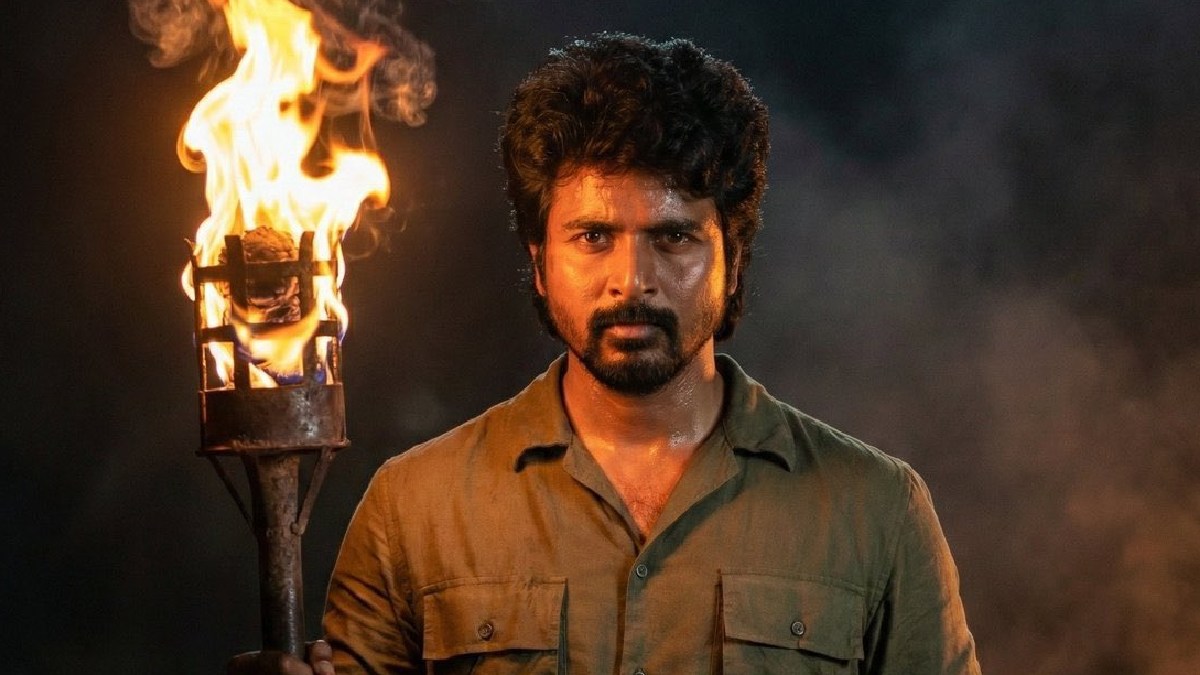
Lord Murugan, also known as Kartikeya, Skanda, Subramanya, is one of the most revered deities in Hinduism, especially in Tamil culture. He symbolizes wisdom, valor, discipline, and divine knowledge. Among the countless Murugan temples in India, six temples in Tamil Nadu hold exceptional spiritual significance. These are collectively known as the Arupadai Veedu—the Six Holy Abodes of Lord Murugan.
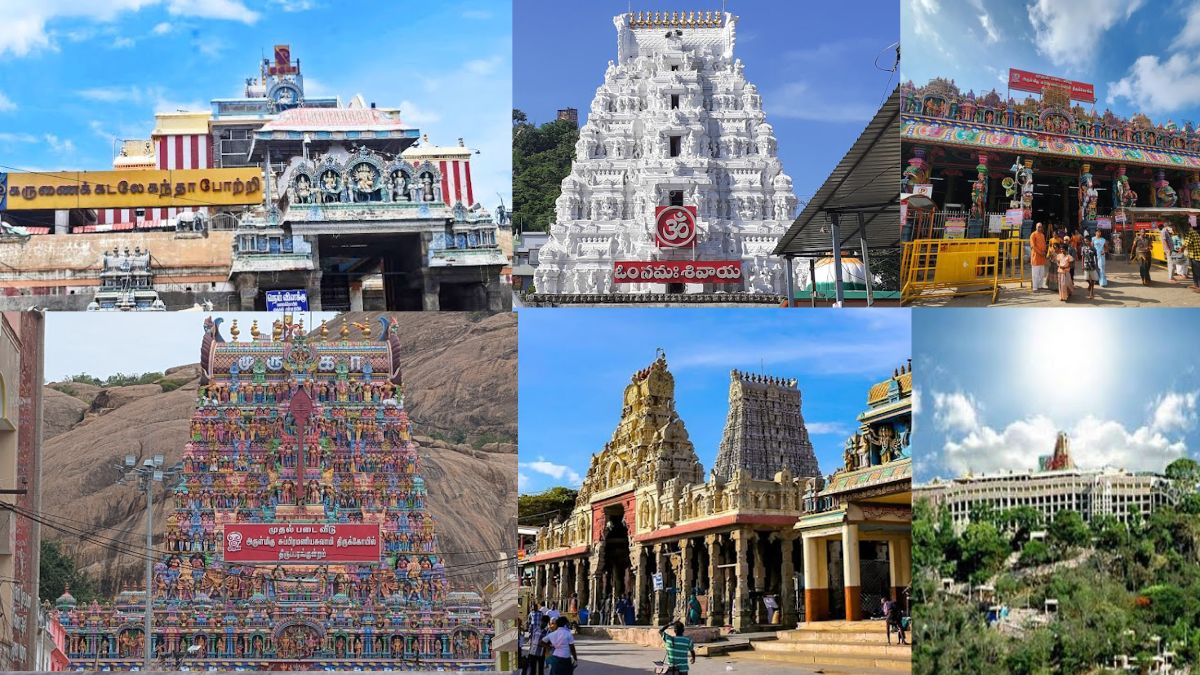
Each temple represents a distinct phase in Murugan’s divine life and spiritual journey.
Thirupparamkundram – The First Abode
📍 Near Madurai
Thirupparamkundram is believed to be the place where Lord Murugan married Deivanai, the daughter of Indra, after defeating the demon Surapadman. This temple is unique as it is carved inside a hill and worship is performed within a rock-cut cave. It represents divine victory and sacred union.
Tiruchendur – The Second Abode
📍 On the shores of the Bay of Bengal
Tiruchendur is the only seaside temple among the six abodes. It is here that Lord Murugan defeated the demon Surapadman, symbolizing the triumph of good over evil. Devotees believe that prayers offered here bring relief from sins, obstacles, and life struggles.
Palani – The Third Abode
📍 Dindigul District
Palani is where Lord Murugan appears as Dhandayuthapani, the ascetic form holding a staff. According to legend, Murugan renounced everything after a divine dispute over wisdom with Lord Ganesha. Palani teaches the deep truth that true wealth is knowledge and humility, not material possessions.

Swamimalai – The Fourth Abode
📍 Near Kumbakonam
Swamimalai holds a special place as the site where Lord Murugan taught the meaning of the sacred “Om” to Lord Shiva himself. This temple symbolizes supreme wisdom and guru-shishya tradition, reminding devotees that true knowledge transcends age and form.
Thiruthani – The Fifth Abode
📍 Near the Tamil Nadu–Andhra Pradesh border
After defeating Surapadman, Murugan came to Thiruthani to find inner peace and calm. Worship here is believed to remove anger, stress, and family conflicts. It is also associated with Murugan’s marriage to Valli, symbolizing love born from devotion.
Pazhamudircholai – The Sixth Abode
📍 Near Madurai
Set amidst lush forests, Pazhamudircholai represents Murugan as a gracious divine teacher and protector. This temple is closely linked with the Tamil saint Avvaiyar, highlighting Murugan’s role as the giver of wisdom to true devotees.
Spiritual Significance of Arupadai Veedu
The six abodes together represent the complete spiritual evolution of a human being:
- Courage and victory
- Discipline and renunciation
- Wisdom and divine knowledge
- Love, peace, and compassion
Pilgrimage to all six temples is believed to bring spiritual fulfillment, inner strength, and divine blessings.
Conclusion
The Arupadai Veedu are not just temples—they are milestones of spiritual growth. Lord Murugan, through these sacred abodes, guides devotees on the path of dharma, wisdom, and self-realization. Visiting or even remembering these temples with devotion is believed to remove negativity and lead one toward a righteous life.
“Vel Vel Muruga! Haro Hara!”