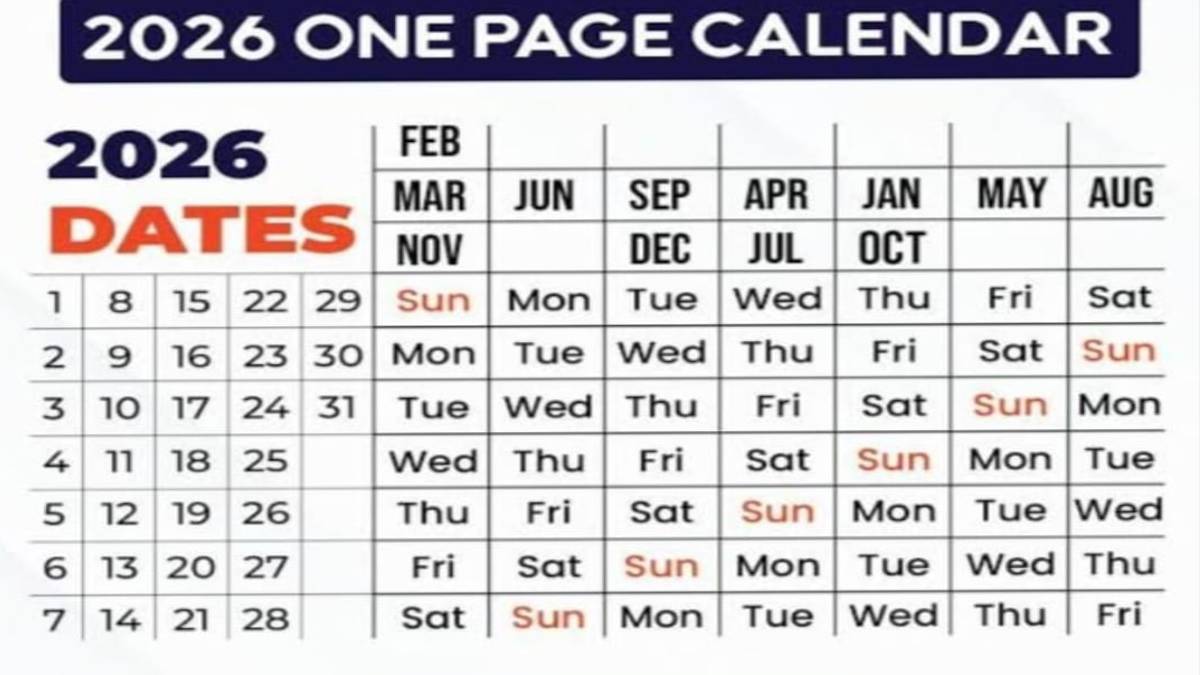
The calendar for 2026 has caught the eye of historians and observant observers, because it’s a verbatim reproduction of the 1914 calendar the year in which the world began World War I, so every date for 2026 takes place on the same day of the week as it did in 1914. So if January 1 happened to fall on a Thursday in 1914 it will also fall on a Thursday in 2026.
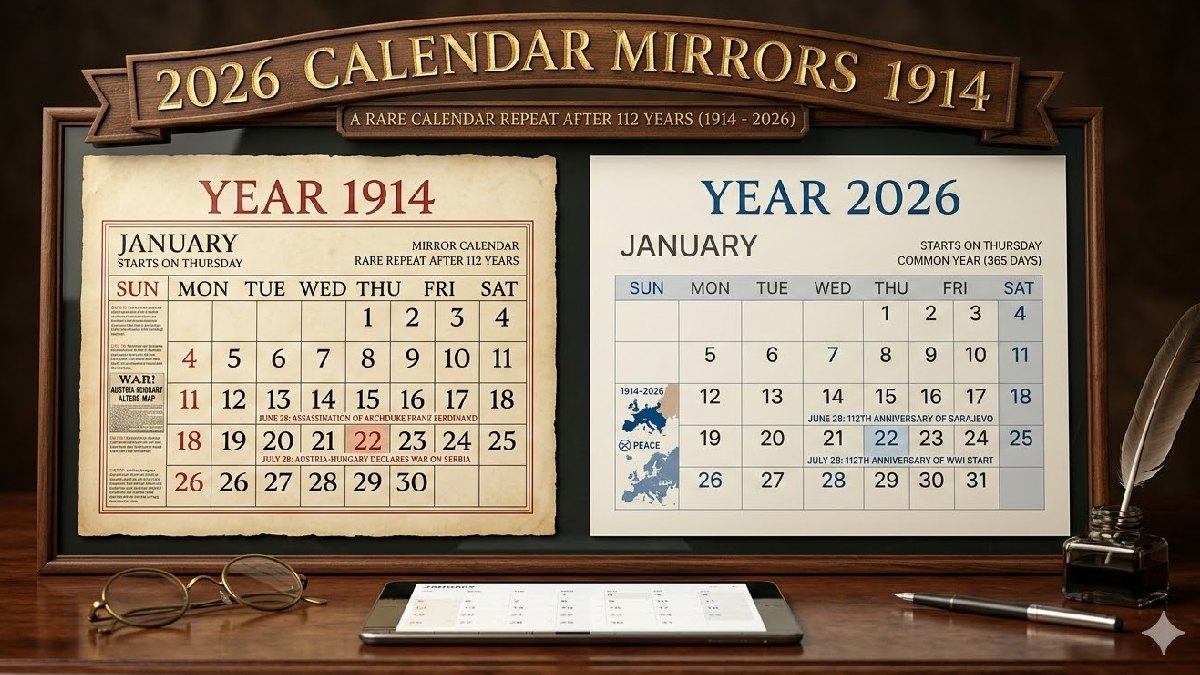
Why Do Calendars Repeat?
Gregorian calendar work makes it easy to replicate the calendar year-round. A calendar generally repeats every 28 years on average because that combination of 7 days in a week and leap-year cycles eventually recalibrates again. But there are exceptions. The years in the century that are not divisible by 400 consider 1700, 1800, 1900 are not governed by the usual leap-year rule. That inconsistency can change the calendar cycle, which, in fact, 2026 happens to coincide with 1914, as opposed to a mere 28-year roundwise repetition.
What Happened in 1914?
1914 is a significant year in all of history because it ushered in World War I, which is considered one of the deadliest conflicts of all time. Set off by June 1914's assassination of Archduke Franz Ferdinand, the war triggered waves of alliances and declarations of war across Europe. The calendar coincidence has appeared in online discussions, but historians say it’s a mathematical peculiarity of the calendar system, not a foregone conclusion about the future.
Interest in a Calendar in an Obsessive Fashion
Such calendar echoes are not uncommon but one finds them often when they are associated with historically significant years. This, for example, has led many to elevate the coincidence between 2026 and 1914 to that of social media buzzword-y discussions of history and coincidence that has led many around the world to consider them for comparison.
That's not to say, experts say, that there's hope of something resembling similar happening on a matching calendar it's just a fascinating reminder that time cycles can line up more than a century.

The Takeaway
Turns out that the 2026 calendar is a precise match to 1914, an amazing combination of history and mathematics. It connects the present to a moment in time, but is simply a summary of predictable Gregorian calendar tropes, and does not have a greater significance. For historians and calendar enthusiasts, it’s just another reminder of how time shapes repeat itself, even across 112 years.