
General Motors (GM) has secured a patent for an innovative camera-based system that could automatically control a car's launch at drag-racing tracks. The proposed technology is designed to read starting lights, calculate the right moment to launch and manage key vehicle functions, potentially reducing the need for drivers to manually coordinate accelerator and brake inputs.
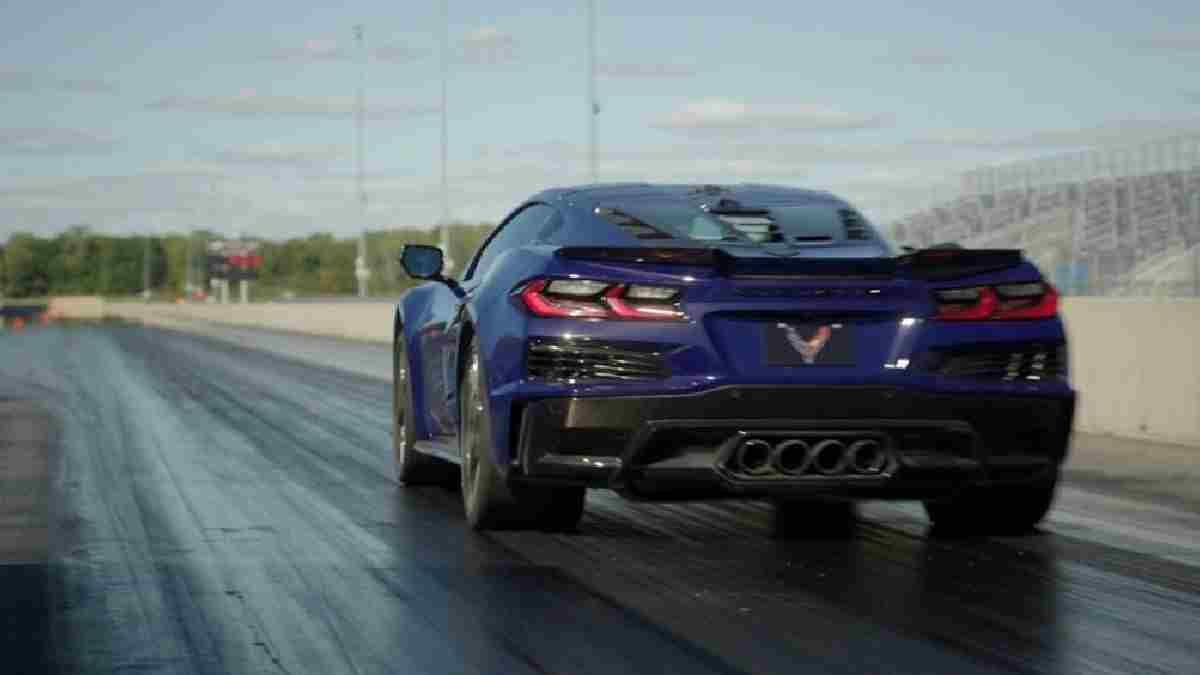
The patent describes a system that uses onboard cameras and software to monitor the starting lights, commonly known as the Christmas Tree, at drag strips. Once the system identifies the starting sequence, it prepares the vehicle and coordinates its controls to initiate a launch at the appropriate moment.
According to the patent details provided, the technology was granted on November 3, 2026, as US Patent No. 12,780,203. The application, titled Methods and Systems for Coordinating Launch Control for Vehicles for Racing, was originally filed in January 2025 and published in July 2026.
The development highlights GM's interest in exploring technologies that could make performance driving more automated and precise. However, the patent does not confirm that the system will be introduced in a production car.
How Does GM's Automatic Drag Racing Launch System Work?
The proposed system relies on cameras installed in the vehicle to observe the starting-light sequence at a drag strip. These cameras capture the illuminated signals and send visual information to onboard software for processing.
After the vehicle reaches the starting line, the system monitors the Christmas Tree lights and identifies the type of starting sequence being used. It can begin preparing the car even before the green light appears.
The technology is designed to coordinate several important vehicle functions, including brake pressure, engine torque and throttle input. These functions are crucial during a drag-racing launch, when even a small delay or incorrect input can affect the vehicle's performance.
Once the driver releases the pedals, the system can take control of the launch process. It manages the braking force while building engine torque and then coordinates the release of the brakes with throttle application.
The objective is to reduce the guesswork involved in achieving a consistent launch. Instead of manually balancing the accelerator and brake while watching the starting lights, the driver could rely on the automated system to manage the sequence.
GM System Can Recognise Pro Tree and Sportsman Tree Formats
One of the notable features described in the patent is the system's ability to recognise two common drag-racing starting formats: Pro Tree and Sportsman Tree.
Both formats use a series of coloured lights to signal the start of a race, but their sequences are different. Recognising the correct format is important because the system must calculate the appropriate launch timing.
In the Pro Tree format, all three amber lights illuminate simultaneously. The green light follows after a delay of 0.4 seconds. This format places considerable importance on a racer's reaction time.
The Sportsman Tree follows a different sequence. Its amber lights illuminate one after another, with intervals of approximately half a second before the green light appears.
GM's proposed system is designed to identify the sequence and adjust its launch calculations accordingly. Rather than relying on a single fixed timing pattern, the software would use the visual information captured by the cameras to determine the starting format.
This ability could help the system work across different drag-racing setups without requiring the driver to manually calculate the timing.
Could This Technology Make Drag Racing Easier?
Drag racing requires drivers to react quickly and coordinate multiple vehicle controls within a very short period. The launch is particularly important because a delayed start or poor traction management can affect the overall race.
For experienced racers, judging the starting lights and managing the vehicle's launch are essential skills. However, beginners may find it difficult to achieve consistent starts.
GM's proposed technology could potentially make this process more accessible to amateur racers by automating some of the complicated launch operations. It may also help reduce variations caused by differences in driver reaction and pedal control.
At the same time, automated launch control would not eliminate every challenge associated with drag racing. Factors such as tyre grip, track conditions, vehicle power and traction management would continue to influence performance.
Will GM Introduce the System in Production Cars?
Despite receiving a patent, GM has not announced plans to introduce the camera-based launch control system in a production vehicle. The patent establishes the company's proposed technical approach, but it does not guarantee that the technology will become commercially available.
Automakers regularly file patents to protect new ideas and explore possible engineering solutions. Some patented technologies eventually appear in vehicles, while others remain at the research and development stage.
For now, there is no confirmed information about which GM models could receive the system or when it might be tested on actual drag strips.
If developed further, the technology could represent an interesting step towards greater automation in performance driving. Its combination of camera-based light recognition and coordinated vehicle controls shows how software could increasingly influence specialised motorsport applications.
For drag-racing enthusiasts, the idea of a car that can read the starting lights and manage its own launch is certainly an intriguing development. Whether it eventually moves from patent documents to real-world vehicles remains to be seen.





Comments