
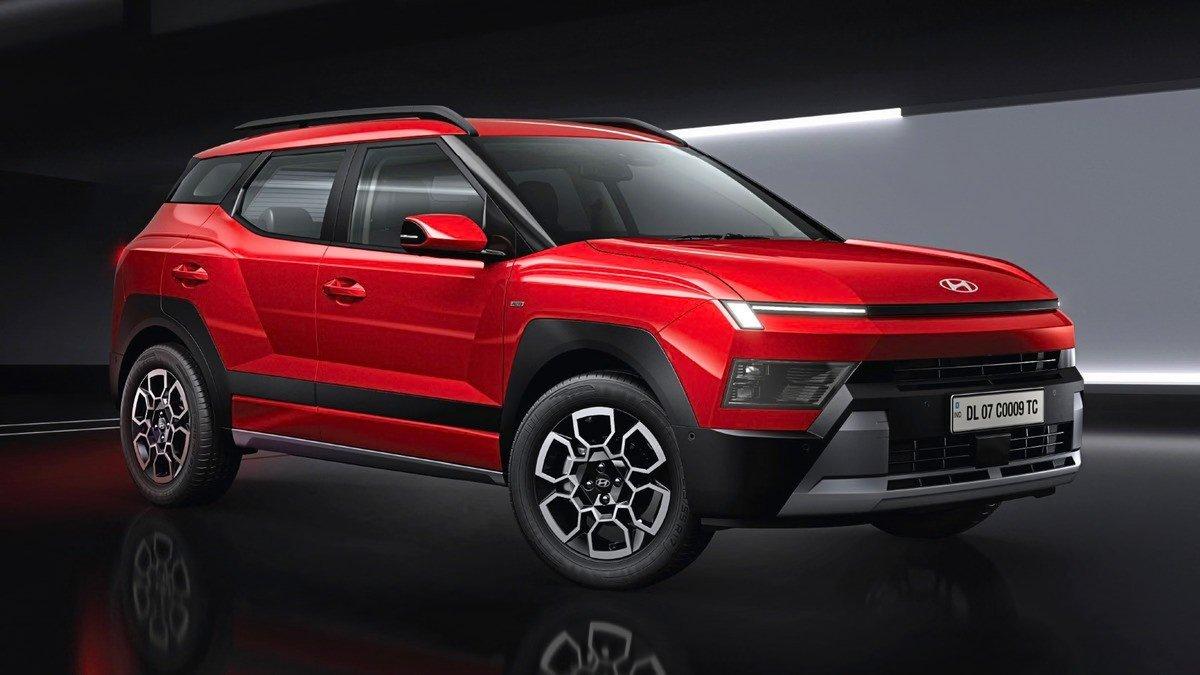
Hyundai’s new Bayon SUV has arrived at dealership stockyards prior to its launch date of October 26, 2026 in India. The introduction of a red India-spec model being unloaded from a transporter recently has also let us see on the vehicle’s exterior and interior layout and the interior design. It indicates the preparation is on track before the official launch when Hyundai will have to announce prices and also the list of variants.
The Hyundai Bayon will be positioned between the Venue and Creta in the Indian SUV portfolio. It is for those who want a compact SUV with contemporary styling, connected-car technology and a petrol powertrain with manual and automatic transmission options.
Hyundai has already opened bookings for the Bayon at an amount of Rs 11,000 through its website and authorised dealerships. But the company has not yet announced the final prices. Buyers will have to wait until October 26 for official pricing and complete variant-wise equipment details.
With stockyards now turning into land, customers’ interest in the new SUV will likely increase as they see the new design, features and the expected placement in Hyundai’s larger line-up.
Hyundai Bayon Exterior Design: LED Lighting, Dark Roof and SUV Styling
The India-spec Hyundai Bayon in stockyard footage is red on the exterior with a dark roof contrast. The looks of the SUV is modern with slim lighting elements, dark exterior details and protective cladding.
At the front, slim LED daytime-running lights are above the main headlamps which are lower in the bumper. The front bumper also has dark cladding and contrasting silver-coloured trim which adds visual difference to the lower section.
The side profile has blacked-out pillars, roof rails and wheel-arch cladding. These elements help the SUV-like look whereas the vehicle is a little more rugged. The contrasting roof further separates the upper part from the red bodywork.
At the rear of the Bayon are taillamps with vertical lighting elements, roof spoiler and a high-mounted stop lamp. The tailgate has prominent BAYON lettering, and a shark-fin antenna is visible on the exterior.
Although the stockyard images give a good look at the design, they do not confirm the full colour palette or specify which exterior features will be included across the different variants.
Hyundai Bayon Interior: Dual 12.3-Inch Screens and Connected Technology
One of the major features of the India-spec Hyundai Bayon is the dual-screen dashboard. The cabin has a 12.3-inch digital instrument cluster and a 12.3-inch touchscreen infotainment system that gives the dashboard a technology-oriented feel.
Images also show physical shortcut buttons below the central touchscreen, rotary controls and USB-C ports. The photographed automatic version features an IVT gear selector. Physical controls alongside the touchscreen might appeal to drivers who prefer direct access to frequently used functions.
Hyundai has also confirmed several connected and digital features for the Bayon, including a generative AI-based voice assistant and an NVIDIA-accelerated Connected Car Navigation Cockpit. The SUV is also going to have more than 70 Bluelink connected-car features.
Over-the-air updates will be available to up to 19 vehicle controllers and the systems can receive updates remotely. The voice command system supports English, Hindi, Tamil, Bengali, Telugu, Hinglish, which could mean that its features will be more readily available to a wider range of Indian customers.
However, the Bayon's final distribution of those technologies will not be available until the launch. The buyers should check the official variant-wise specifications at launch before choosing which version is the best.
Hyundai Bayon Engine and Transmission Options
The Hyundai Bayon will be powered by a 1.5-litre 4-cylinder, naturally aspirated MPi petrol engine. According to the specifications provided prior to launch it will have 113hp and 144Nm of torque.
Transmission choices will be a six-speed manual gearbox and Hyundai’s Intelligent Variable Transmission (IVT), which is a widely used transmission for cars. That’s the mix buyers prefer: a conventional manual transmission or automatic transmission for everyday driving.
The naturally aspirated petrol setup should appeal to customers who prefer a simple petrol powertrain rather than a turbocharged engine. Nevertheless, the real-world fuel efficiency, driving performance and ownership costs will come down to the driving conditions and usage habits. Hyundai says mileage figures and more technical details will be disclosed when Hyundai releases the complete specifications.
The Bayon’s ability to have manual and IVT options would also make it better at making it appeal to buyers with different driving preferences, and those who are used to driving in traffic in the city.
Hyundai Bayon Booking Amount, Launch Date and Deliveries
Hyundai has opened bookings for the Bayon at Rs 11,000. Prior to launch customers can reserve the SUV online or through authorised Hyundai dealerships.
The India launch is on October 26, 2026, when prices are expected to be announced. Delivery will be made during the festive season, of course the exact schedule will depend on the variant selected and dealership availability.
The arrival of vehicles at stockyards is important for customers awaiting the launch, but it does not confirm the final prices, the complete variant range or the availability of every feature in each version.
Pricing will be particularly important because the Bayon will sit between the Venue and Creta in Hyundai’s line-up. Its final positioning will depend on how the company balances equipment, powertrain options and variant-wise features.
Hyundai Bayon: What Buyers Should Watch Before Launch
The Bayon’s dual 12.3-inch displays, connected-car technology and 1.5-litre petrol engine form its core of the package. It’s also pretty modern in its lighting and its SUV-inspired details, and the manual and IVT gearbox options are also available for different buyers.
However, there are still essential details to be sorted out: prices and variants available, as well as the exact availability of features across trims. Fuel-efficiency stats and other ownership information will also be important when customers are comparing options in the segment.
The October 26 launch should give us a better sense of how Hyundai will position the Bayon in India. We can only hope for an early look at the upcoming SUV, but this is no way to conclude from the dealership sightings it is a possible, unannounced specification or pricing.







Comments
Leave a Comment