India to Require Vehicle-to-Vehicle (V2V) Communication in New Cars to Prevent Collisions with Dedicated 30 MHz Spectrum. The Government of India to Mandate Vehicle-to-Vehicle (V2V) in India to mitigate road traffic incidents, India has been recognized as the country with several key drivers to bring safety into public spaces in the country. This move puts India among the progressive countries utilizing advanced technology to avoid accidents and enhance traffic management.
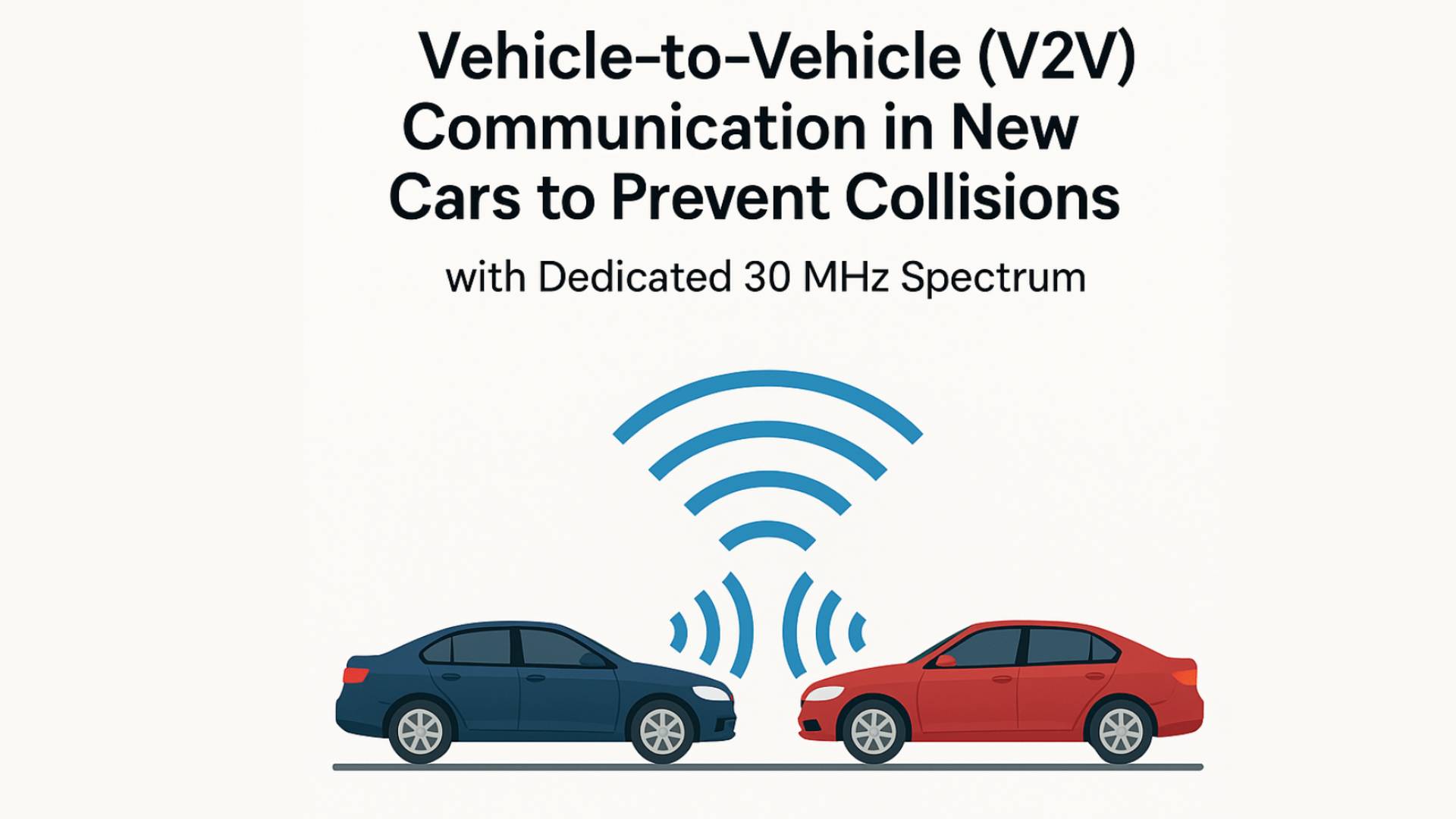
What is V2V Communication?
Technology to wirelessly communicate between vehicles on the road. With this system, vehicles can communicate their response to other cars on-the-move including speed, position, and heading. This real-time data synchronization helps to warn drivers of the threats, sudden braking or when vehicles in the vicinity will try to crash, thus significantly lowering potential accidents due to human error or blind spots. Dedicated Spectrum Allocation for V2V. To facilitate robust, non-interfering V2V transmission, the Indian government has allocated a dedicated 30 MHz range for V2V transmission. Such a dedicated frequency band will help low latency, high priority message delivery needed for safety-critical applications.
This allocation would follow global practices and it should standardize and facilitate sound infrastructure for connected vehicles throughout the country. Timeline and effects of implementation. From 2025 onwards, the Ministry of Road Transport and Highways will set a compliance deadline for the automobile manufacturers to begin implementing V2V communication modules in every new vehicle. Starting with passenger cars, the mandate will later stretch to commercial vehicles and two-wheelers.
It, experts expect, will drastically reduce rear-end collisions, intersection crashes and pile-ups that account for a significant proportion of road accidents in India. And finally, V2V technology is likely to serve as the next step in the evolution of safety systems in the vehicle, complementing and upgrading existing ones like ABS, airbags and assistive devices for drivers, and eventually be an aspect of smart and safer mobility. Challenges and Further Perspectives.
The mandate is a major step forward, yet challenges persist in terms of technology standardization, cost implications for OEMs, and infrastructure requirements. These issues are addressed and deployed as per the guidelines of industry and telecom industry stakeholders, and automotive professionals. In the future, V2V communications can act as the basis of more advanced Vehicle-to-Everything (V2X) tech that involves interactions with road infrastructure and pedestrian devices.
This integrated approach will drive the evolution of traffic ecosystems in India as a sustainable and accident-free transportation network for all people. In Conclusion. In this regard, India’s requirement for V2V communication in its new vehicles with a dedicated 30 MHz spectrum represents a leap forward in road safety and intelligent transportation. Leveraging live inter-vehicle connectivity, the nation seeks to majorly reduce road traffic accidents and countless casualties, strengthening its resolve to modernize freight lines into the 21st century.