A new technology feature is showing the car’s speed on its rear glass with the MG Comet EV. The speed is visible to the driver but also to other road users behind the car.
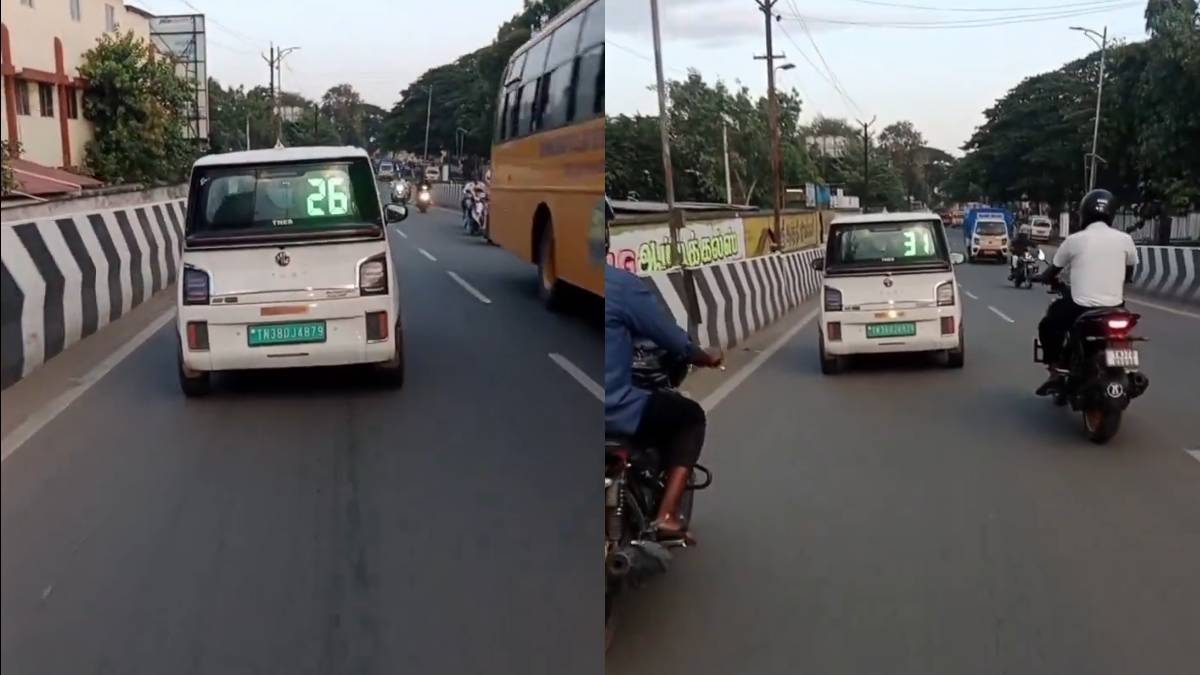
In a vehicle with a conventional speedometer, the speedometer is in the cab and is primarily visible to the driver. The other road users can’t see the speed of the car in front of them, but they can figure it out from the traffic flow and their own driving. The rear-facing display on MG Comet EV allows for that, but makes the current speed visible from outside.
The idea is simple: as the vehicle moves, the display can show its speed on the rear glass. A driver who is behind the Comet can look at the rear of the car and see the speed. In some traffic situations, the car’s movement might be more predictable.
The new feature is just one example of how vehicles are increasingly relying on digital technology to communicate information not just on their vehicle dashboard. Electric cars have been widely used to experiment with new digital features—connected applications and digital instrument clusters to advanced driver assistance technologies.
This car shows its speed to the vehicle behind you.
— Raja Gopal (@Raja936261) August 28, 2026
This MG Comet EV has a display on its rear glass that shows how fast it is going. So the person coming behind can easily see your speed.
It shows your live speed to everyone behind you. pic.twitter.com/YPb3p6zM9h
The MG Comet EV is already based on urban mobility. Its compact size makes it better suited to crowded city streets where manoeuvrability and parking are key. An external speed display has added one more unique technology feature to the small electric car.
Knowing the live speed of the vehicle ahead of you could be useful for a following driver. If the Comet is moving at a relatively slow speed, for example, the following driver is not going to know that the car is moving slowly, but that the car is driving slowly. The speed shown could also tell if the car is accelerating or moving slowly.
The idea also begs some interesting questions about the future of vehicle-to-road communication. Cars are increasingly connected with software, and communication with pedestrians, cyclists, and other drivers is now a matter of course. The external displays could be used for several purposes, for example, safety messages, warnings, charging information, or any other vehicle status indicators.
But a rear speed display should be used carefully. Information on the exterior of a moving vehicle should be clear and easy to understand without distracting other motorists. It should be useful information, not a visual distraction on already busy streets.
The live speed display also demonstrates how a fairly simple piece of information can be presented in a new way. Speed has traditionally been information meant for the person driving the vehicle. MG Comet EV puts it on the rear of the car, and that information is part of the road environment.
The feature has been eagerly awaited by automobile enthusiasts because it is so far out of the box that people typically associate with electric cars. EVs will be discussed in terms of battery capacities, driving range, charging speed, performance, and connected technology. An external speed display is a more unusual example of how manufacturers can re-examine how a car interacts with other road users.
The MG Comet EV’s compact design and technology-oriented cabin already distinguish it from most conventional city cars. As it’s focused on urban driving, external communication is particularly interesting because city traffic often involves close interaction between many vehicles, pedestrians, and two-wheelers.
When rear-facing speed displays will be common in the automobile industry remains uncertain. The concept could evolve as manufacturers work to develop more advanced external communication systems. Future cars could display braking, turning intentions, autonomous driving status, or warnings to nearby drivers.
At least the MG Comet EV’s ability to display its live speed on the rear glass is a great automotive feature. It gives the following driver a view of how fast the car is moving and shows how digital technology can be extended to the outside of the car.
As electric cars continue to evolve, features such as this could be part of a wider shift toward smarter and more communicative vehicles. MG Comet EV shows that even a simple function like displaying speed can be reimagined in a way that gets people talking about the future of automotive technology.