Tesla has never been shy about reinventing transportation, and the Cybercab is perhaps the company’s boldest vision to date. Sleek, minimalist and entirely electric, Tesla’s Cybercab is all about changing the way people move through cities by replacing traditional taxis with fully autonomous vehicles that need no human driver.
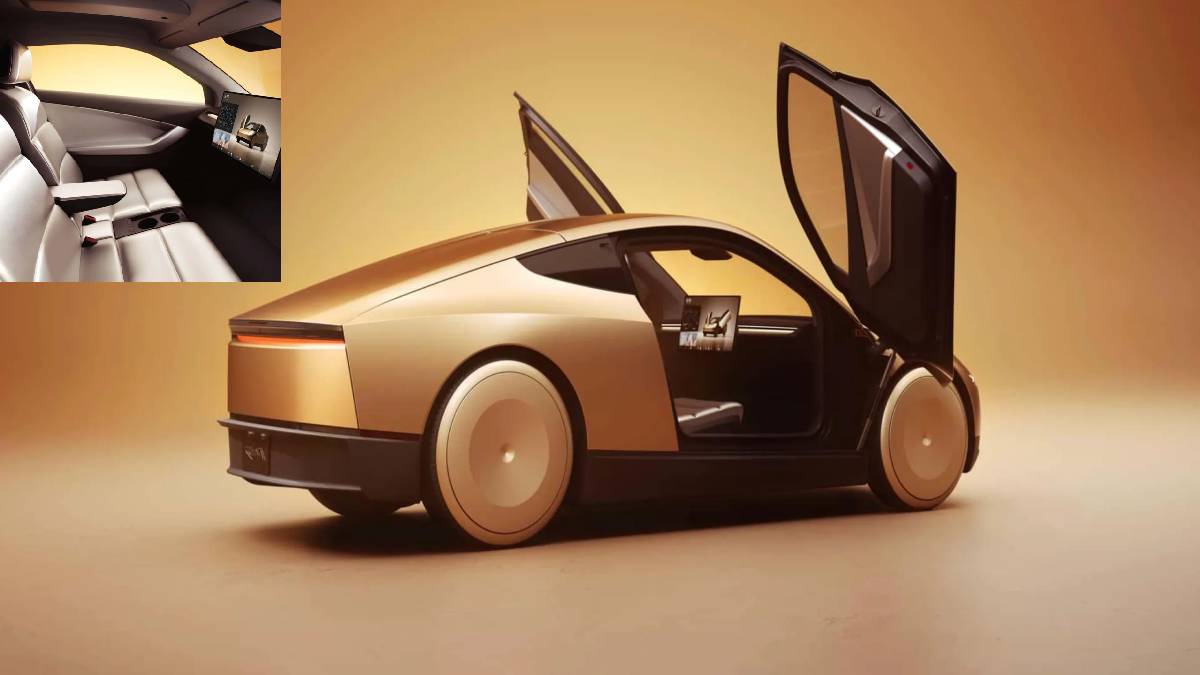
The Cybercab is not a car that we have ever seen, but it’s a glimpse of a very futuristic technology and electric operation that we can’t get any closer to today. It represents Tesla’s vision of intelligent transportation in the future: intelligent transportation is autonomous, clean, energy-efficient, and cheaper, and artificial intelligence, robotics, and automation come together to make it so.
Tesla Cybercab looks like the future arriving quietly at your doorstep
— X Freeze (@XFreeze) July 15, 2026
It is Tesla’s first purpose-built fully autonomous vehicle, designed to show up when you need it and take you where you want to go
Cybercab is built for a world where mobility becomes cheaper, safer, and… pic.twitter.com/v8RZfQoAC2
The Cybercab’s most striking feature is its compact two-passenger design. Unlike conventional taxis that are designed for manual driving, the Cybercab is designed from the ground up as an autonomous vehicle. It has no steering wheel and pedals, and Tesla expects it to be all autonomous in the next transport.
Clean exterior lines, aerodynamic profile and signature light bars make up the vehicle, in line with Tesla’s futuristic design principles. The gull-wing-style doors add an added flair to the interior and make entry and exit easier in tight urban parking spaces.
Deep inside the cabin, simplicity dominates the cabin. The big interior is all about passengers’ comfort, not driver control. Without a dashboard and steering column that has buttons on it and controls for the controls to open the car up like a luxury lounge, rather than just a regular car.
The Cybercab is Tesla’s electric drivetrain. Tesla has not disclosed every technical specification but claims that it’s designed for maximum efficiency and low operating costs. Not only does the absence of a gasoline engine reduce tailpipe emissions, but it’s also very quiet for passengers, so it’s enjoyable when traveling in cities, which makes urban transportation enjoyable and also reduces noise in cities.
Tesla will make charging easier with wireless induction technology. Instead of plugging cables, future Cybercabs could automatically recharge by parking over dedicated charging pads to allow robotaxi fleets to run with little human intervention.
The Cybercab is based on Tesla’s autonomous driving system. It is meant to work on camera-based systems, artificial intelligence, and neural network software to navigate traffic. Tesla believes its vision-based approach will lead to completely driverless transportation, and not only with expensive lidar sensors.
If successful, the Cybercab could dramatically reduce transportation costs. With no driver to pay, autonomous ride-hailing services could be much cheaper than taxi or rideshare solutions today. Lower operating costs could encourage wider adoption and personal transportation access for more people.
The Cybercab also fits Tesla’s broader vision of a global robotaxi network. Owners of compatible Tesla vehicles could run their cars autonomously when they don’t need to and make money by transporting passengers. Dedicated Cybercabs would expand this autonomous fleet, allowing access to on-demand mobility all day long.
Besides convenience, autonomous cars will help to make driving safer on the road. Human error remains the most common cause of traffic accidents around the world. Tesla argues that AI-driven vehicles, once they’re proven safe and reliable, will reduce accidents by reacting faster than human drivers and keeping track of their surroundings.
There are still many challenges before Cybercabs will be prevalent in the world. Regulatory approval, public trust, infrastructure readiness, and testing of fully autonomous driving technology will all be critical to getting to the point of a large-scale deployment. The regulators are still working to decide on safety standards and legal frameworks for autonomous driving and to protect people in many countries. Autonomous cars could even reduce road deaths and improve road safety beyond convenience. Automated vehicles aren’t just a convenience to us; they’re going to make us safer on the road. Human error is still one of the major causes of traffic accidents worldwide, and Tesla says AI-driven vehicles, once proven safe and reliable, could reduce collisions by reacting faster than a human driver can react and being more accurately and consistently aware of the road environment and keeping track of what is happening around them.
There are still many obstacles to overcome before Cybercabs will become a common sight. Regulatory approval, public trust, infrastructure readiness, and the legitimacy of fully autonomous driving technology will all be critical factors in determining when a large-scale deployment becomes feasible. Safety standards and legal systems for the use of driverless vehicles are being investigated in many countries.
There’s also increasing competition in the autonomous mobility space. Many global auto and technology companies are investing in self-driving systems, electric mobility, and AI-based transportation. Tesla’s Cybercab is in an increasingly competitive climate, and innovation and safety will define its future.
But even if the barriers aren’t so high, the Cybercab represents a much larger transformation in the automotive industry. Electric powertrains, artificial intelligence, connected vehicles, and autonomous navigation are revolutionizing mobility. The transformation is not just changing to gasoline engines but also transforming how urban transportation can be done.
If Tesla’s vision is realized, urban transportation in the future could be a driverless Cybercab with a smartphone, a quiet, emissions-free ride and an arrival at a destination without a steering wheel. A future like this would reduce traffic, reduce transportation costs, and help to improve environmental sustainability.
But the Tesla Cybercab is more than a concept vehicle; it’s a view of where automotive companies are going. When it gets to the city streets in the future or takes a little longer to be mainstream, it gives us a glimpse of a day when intelligent, autonomous, and electric transportation becomes a part of everyday life.