Bharatiya Janata Party (BJP) President Nitin Nabin has pulled up three Delhi MPs after they visited the family of former Congress leader Sajjan Kumar to console them with grief. The development has attracted BJP's attention as Kumar was convicted for the anti-Sikh riots in 1984 and has been the BJP's top priority in the past of justice for the victims and the responsibility of those responsible.
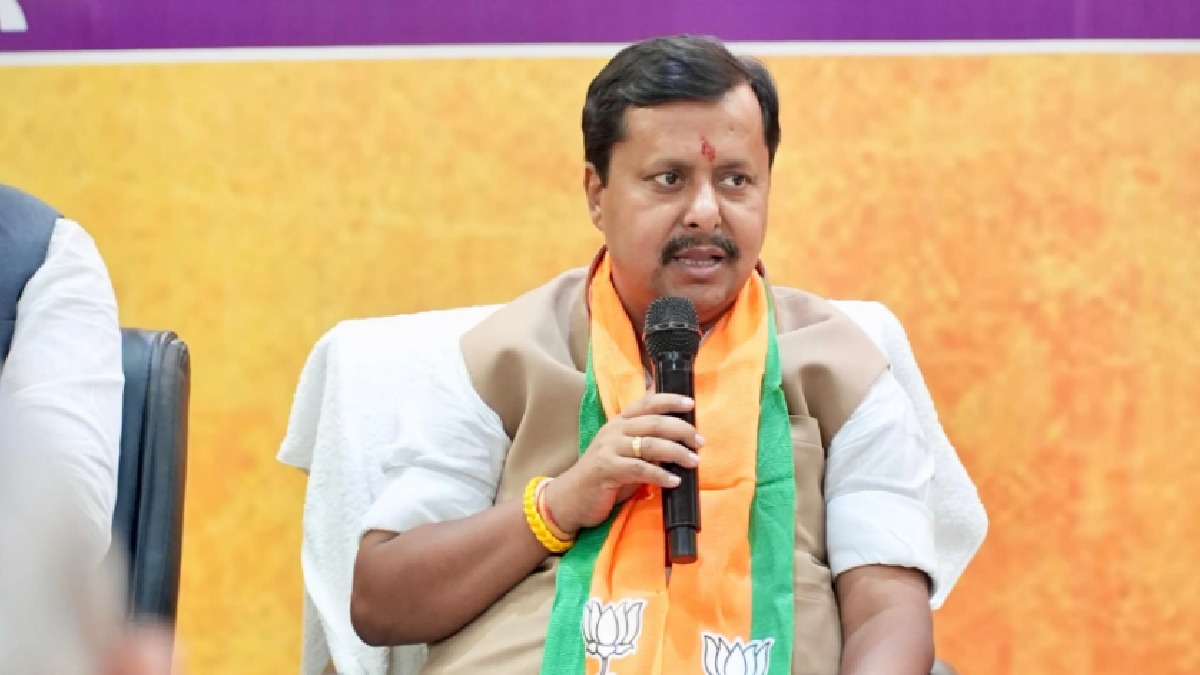
According to those involved in the matter, Nabin summoned Delhi Parliament Members Kamlajeet Sehrawat, Ramvir Singh Bidhuri and Yogender Chandolia to express his anger at their decision to condole Kumar's death. The BJP leadership is believed to have found this move inconsistent with the party's overall political stance on the 1984 anti-Sikh violence and its long-standing campaign for justice for victims.
Sajjan Kumar died in prison on August 20, after serving two concurrent life sentences for the murders of Sikhs in the 1984 violence. His death has once more centered the politically sensitive issue of the riots, because the BJP has frequently criticized the Congress for its handling of cases relating to the violence.
The 1984 anti-Sikh riots began after the assassination of then Prime Minister Indira Gandhi by her Sikh bodyguards. Thousands of Sikhs were killed in violence in many parts of India, with Delhi being among the worst affected regions. Many investigations and legal proceedings have been conducted over the years investigating political leaders and others indicted for their role in the violence.
The BJP has made justice for the victims central to its political messaging. After taking power in 2014, the BJP-led Union government formed a Special Investigation Team (SIT) in 2015 to reinvestigate the 1984 riots. It was a bid by the party to bring back the cases which it said had not been looked at in recent governments.
The reported action against the three Delhi MPs has thus created a peculiar situation for the party. Political parties often express condolences after political figures’ death, even if they are against each other. But BJP leaders felt that Kumar’s conviction in a major case related to the 1984 violence made the matter different from a simple gesture of political courtesy.
A BJP leader, quoted in interviews, said while political propriety is the rule between rivals, Kumar’s conviction and the BJP’s long campaign for justice to be delivered to the victims made the condolence gesture particularly sensitive. The situation could also have a wider political impact in Punjab where the BJP is planning to contest the upcoming Assembly elections independently.
This is happening at a time when the BJP is also taking disciplinary action against some in Punjab. Last Sunday, the party issued notices to three leaders—Randeep Singh Deol, Maninder Singh Kapial and Jatinder Kalra—for comments they allegedly made at a press conference in Sangrur.
According to the notices, the three leaders made statements about the party’s internal affairs and organisational matters that were not in agreement with the party’s official line of thought. Those words could damage the party's reputation, credibility and organisational image, according to BJP.
The leaders have been asked to write detailed explanations within seven days of receiving the notices and to explain why disciplinary actions should not be initiated against them. The party leadership is putting the focus on organisational discipline and adherence to its official positions.
The Delhi MPs row also shows how politically sensitive the legacy of the anti-Sikh riots of 1984 is. For the BJP, it is an issue which remains inextricably linked to criticism of Congress and the promise of justice for victims. Any action or statement by BJP leaders that is not in line with this position has to be viewed by party leadership as inconsistent.
Now, with Punjab Assembly elections on the way, the BJP will likely be particularly cautious on the issue of the Sikh community and the legacy of the 1984 violence. The party leadership's summons to the three Delhi MPs is an indication of the party’s determination to maintain its political messaging consistency and organisational discipline among its elected representatives.