
Karnataka is likely to have an unusually warm winter this year as temperatures are expected to be 2–3 degrees Celsius higher than normal, weather experts said. Winter has not arrived on time; wind patterns have changed and strong El Niño effect too has affected the state.
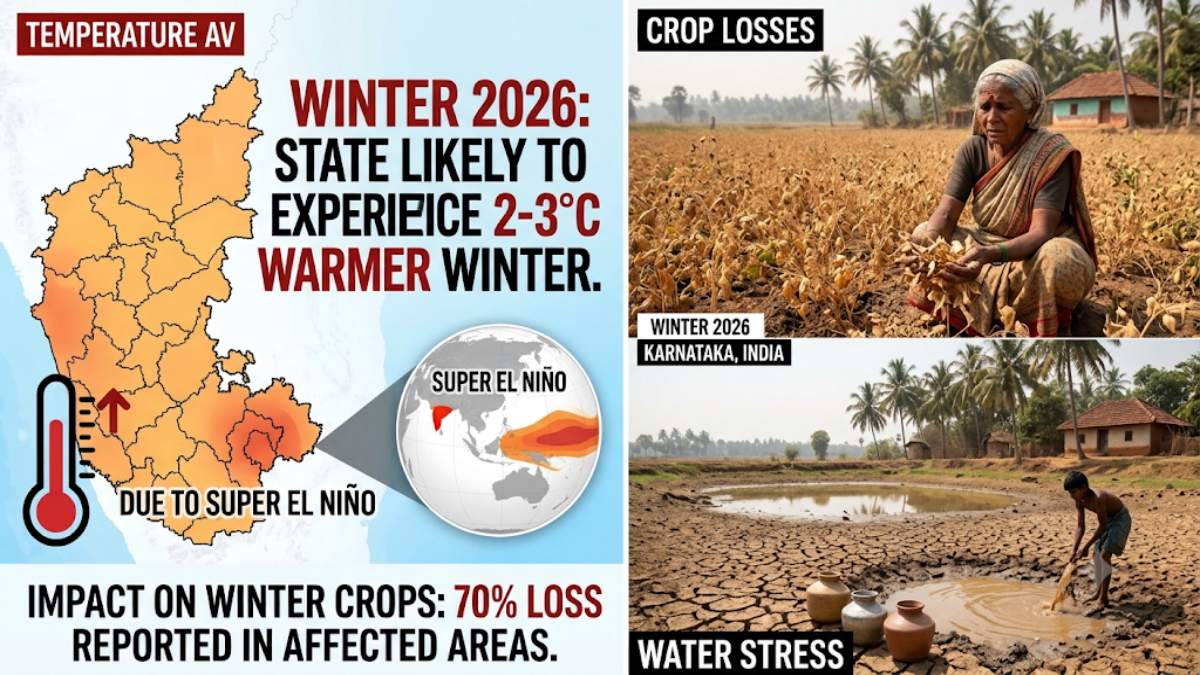
Normally, winter starts in mid-October with the onset of the northeast monsoon and the arrival of northerly and northeasterly winds, but this year it has been so far away from the usual pattern that temperatures have remained high, and the transition into colder weather has been delayed.
Experts say intense El Niño effect, extended summer season and deficient rainfall during southwest and northeast monsoons have all played a role in making weather unusual this year. This change in climate pattern is not only affecting daily temperatures but also creating serious problems for agriculture across Karnataka.
A senior official of the India Meteorological Department (IMD) said normally temperatures start dipping from October onwards as the state enters slowly into winter but this year it has been delayed and seasonal changes are so drastic that scientists need to study what will happen in the long run.
Bengaluru IMD Director N Puviarasan said rainfall over many parts of Karnataka in the past two days was due to upper-air circulation over the Kanyakumari region; there is no forecast for heavy rain in the state and dry weather is expected to continue.
Maximum daytime temperatures are likely to hover around 2 degrees Celsius above normal (27 degrees Celsius); night minimum temperatures are likely to be close to normal (around 18 degrees Celsius). Temperatures would come down once northeasterly winds blow across the region, but “there is no such wind pattern indicating in the immediate future”, Puviarasan added.
KSNDMC Director M.S. Divakar said the delay in winter was due to El Niño conditions being strong. “Super El Niño will continue till March 2027, and that will affect the state’s agricultural cycle and crop production,” he said, adding that crops cultivated during rabi season (dry season) depend heavily on moisture retained in soil and rainfall deficit, and climatic changes have affected them already.
Agricultural experts are also worried about a rise in temperature affecting winter crops too. Professor M.B. Rajegowda, an agricultural meteorology expert, said Karnataka normally has winter from mid-October to February, but this year it is expected to begin only around the third week of November and even after that, the cold intensity will not be much. He added all seasons are linked with monsoon rainfall patterns, and this year's irregular monsoon has affected the entire seasonal cycle.
The rainfall deficit in both monsoons has further worsened concerns about Karnataka’s agricultural prospects. IMD data showed the southwest monsoon had a 32% rainfall deficit so far, the highest shortfall ever recorded. Northeast monsoon too has been bad (49%).
Rainfall shortages have affected soil moisture levels, availability of groundwater and the overall agricultural environment. “Influence of Super El Niño is likely to make this winter warmer than normal. Heatwave conditions could develop during March-April as well, which will put farmers under additional stress,” said J Srinivasan, Distinguished Scientist at Divecha Centre for Climate Change at IISc.
Temperatures during the coming months would affect wheat production, especially since the crop needs relatively cooler conditions during important growth stages. Average maximum temperature in October was 32.43 degrees Celsius, the highest ever recorded for the month, while average minimum temperature was also unusually high at 20.83 degrees Celsius, the fifth-highest October minimum temperature since records began in 1901.
The impact of rising temperatures and deficient rainfall in Karnataka’s agricultural sector is already there. Professor M.N. Thimmegowda, professor and head at the University of Agricultural Sciences (UAS), Bengaluru, said a cooler winter is necessary for good yields from chickpeas, safflower, mustard and sunflower, as well as lower temperatures generally promote healthy crop development and better productivity; a warmer-than-normal winter forecast means crop growth will be affected and output will go down.
He said initially the state had targeted cultivation of crops on 24.5 lakh hectares this year but sowing has been completed only on 11.10 lakh hectares so far, which is about 45% short. “This combination of high temperatures and low rainfall has caused an estimated 70% crop loss across the state this year.”
The unusual weather has therefore become a major issue for Karnataka farmers who depend on seasonal rainfall and winter temperatures conducive to agricultural production. Winter is coming late this year, and temperatures are likely to remain above normal, so crops that require cooler conditions will be under more stress; heatwaves in March and April could add to the problem if soil moisture remains low.
“The changing season pattern shows how agriculture is getting more vulnerable to extreme weather events and rainfall irregularities,” say experts. The next few months will be crucial for Karnataka as farmers, agricultural authorities and weather monitoring agencies track temperature trends, rainfall patterns and El Niño development. Though it’s too early to know what impact it will have long term, at present Karnataka could face one of its warmer winters, with ramifications on agriculture, water availability and overall climate conditions in the state.





Comments