
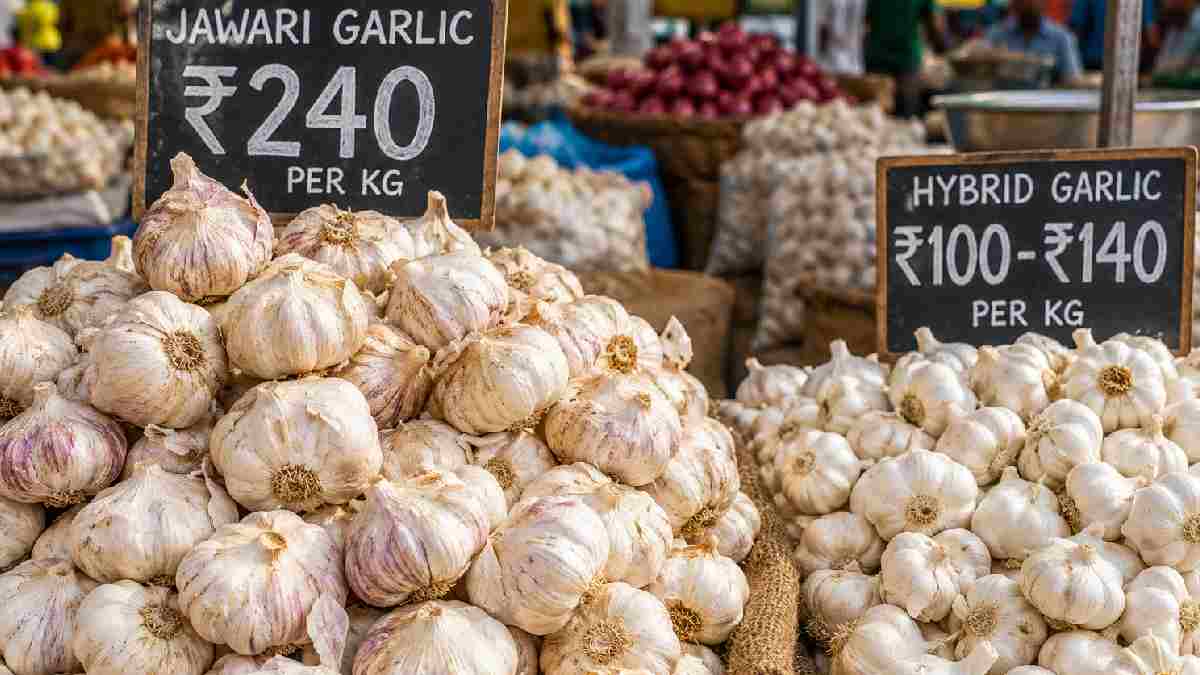
Garlic prices have risen across parts of Karnataka, putting more pressure on household budgets as the cost of basic cooking ingredients increases. In Hubballi and Dharwad markets, the retail price of local, or jawari, garlic has crossed ₹240 per kilogram, while hybrid garlic is available at comparatively lower prices ranging from ₹100 to ₹140 per kg.
Consumers are switching to cheaper products because of the sharp difference in prices. Traders say fewer arrivals, reduced supplies, and increasing wholesale prices are the reasons. With garlic being such a staple in Indian cooking, the price rise is not only affecting the home but also hotels, restaurants, dhabas and street-food vendors.
Garlic Price in Hubballi and Dharwad: Local Variety Crosses ₹240
Consumers in Dharwad district are facing higher expenses as the retail price of local garlic has climbed above ₹240 per kg, according to the supplied market report.
Local garlic, which is preferred by buyers for its characteristics and cooking ability, is now much more expensive. By contrast, hybrid garlic is selling at ₹100-₹140 per kg and is more affordable for low-budget families.
The price gap has transformed buying patterns in local markets. Garlic is not completely off consumers’ list, but many are buying hybrid varieties to save on their monthly grocery costs.
The increase is particularly challenging for middle- and lower-income families, for whom even small increases in the prices of everyday food ingredients can affect the household budget.
Wholesale garlic price reaches ₹18,000 per quintal
Rising wholesale prices are another major factor contributing to the increase in retail rates. Garlic prices in the Hubballi and Dharwad wholesale markets have reached around ₹18,000 per quintal, according to local traders in the report.
This comes to around ₹180 per kg before adding transportation, handling, sorting, storage and other retail expenses. These additional costs can push the final selling price beyond ₹240 per kg, particularly for local varieties.
However, wholesale prices vary according to quality, variety, market arrivals and date of trading. So, the retail price consumers pay may differ between markets and individual vendors.
Garlic prices in Karnataka markets
The wholesale market data cited in the report dated October 16, 2026, showed differences in garlic prices in some Karnataka markets.
| Market | Reported Wholesale Modal Price per Quintal | Approx. Price per Kg |
|---|---|---|
| Shivamogga APMC | ₹17,000 | ₹170 |
| Davanagere Market | ₹15,500 | ₹155 |
| Bengaluru APMC | ₹12,000 | ₹120 |
Note that these are modal wholesale prices for October 16, 2026, not current retail prices. Actual rates can vary depending on quality, variety and market conditions.
The figures illustrate how garlic prices can vary significantly between trading centres. They also illustrate why the retail prices paid by consumers may not match the wholesale rates reported by agricultural markets.
Lower supply and reduced arrivals put pressure on prices
Traders have attributed the price increase to tight supply and fewer market arrivals. Poor rainfall in some parts of North Karnataka has led to decreased agricultural production in the area, and lower garlic yields are expected to be the cause of this.
Ranebennur in Haveri district has been identified by local traders as one of the areas that supply local garlic to regional markets. According to the supplied report, lower yields have affected the quantity reaching traders.
Supply from other garlic-producing states such as Madhya Pradesh, Gujarat and Rajasthan can also affect the Karnataka market. Arrivals from these states could also affect the availability and wholesale cost of garlic.
A separate report dated October 24, reported in the supplied material, said garlic arrivals in Yeshwanthpur APMC in Bengaluru had fallen by approximately 50%, with retail prices at ₹250-₹280 per kg. These figures reflect that situation and should not be considered verified current prices in Bengaluru.
Hotels and street-food businesses also face higher costs
Garlic is a necessary ingredient in restaurants, hotels, dhabas and street food stalls. It is found in curries, chutneys, gravies, marinades, spice mixes and many popular snacks.
When garlic prices rise sharply, food firms need to decide whether to absorb the extra cost, cut back on their use or reduce menu prices. Smaller establishments with limited operating margins may find it particularly difficult to manage higher ingredient costs.
If prices remain high, some companies could pass some of the additional cost on to customers. That means that if the price of a single kitchen ingredient increases, so do household grocery bills and food-service expenses.
Will prices of garlic fall in the coming weeks?
The future direction of garlic prices will mostly depend on production, fresh arrivals, demand, and supplies from the major producing states.
Traders expect supplies from Gujarat and Rajasthan to potentially improve between December 2026 and January 2027. If supply from these states increases sufficiently during that period, the additional availability could ease wholesale prices and eventually provide some relief to consumers.
But it is not clear when and how the price will actually decrease. Weather conditions, crop yields, transportation costs, and demand will be the key to market rates.
For now, consumers in Hubballi and Dharwad are comparing prices and increasingly choosing hybrid garlic as cheaper alternatives to local varieties. Garlic is likely to remain a major expense for households and food businesses in the affected markets until supplies improve and wholesale prices moderate.






Comments