
Stress can fall on anyone. Because of job loss in a business, downturn at work, unexpected costs, lack of time or plan, no matter the difficulty or challenge. And it’s a tough place to be broke when you’re broke, financial problems. But it might not be all right—if you do just the right things, if you’re disciplined about it with precision and crystal clarity.
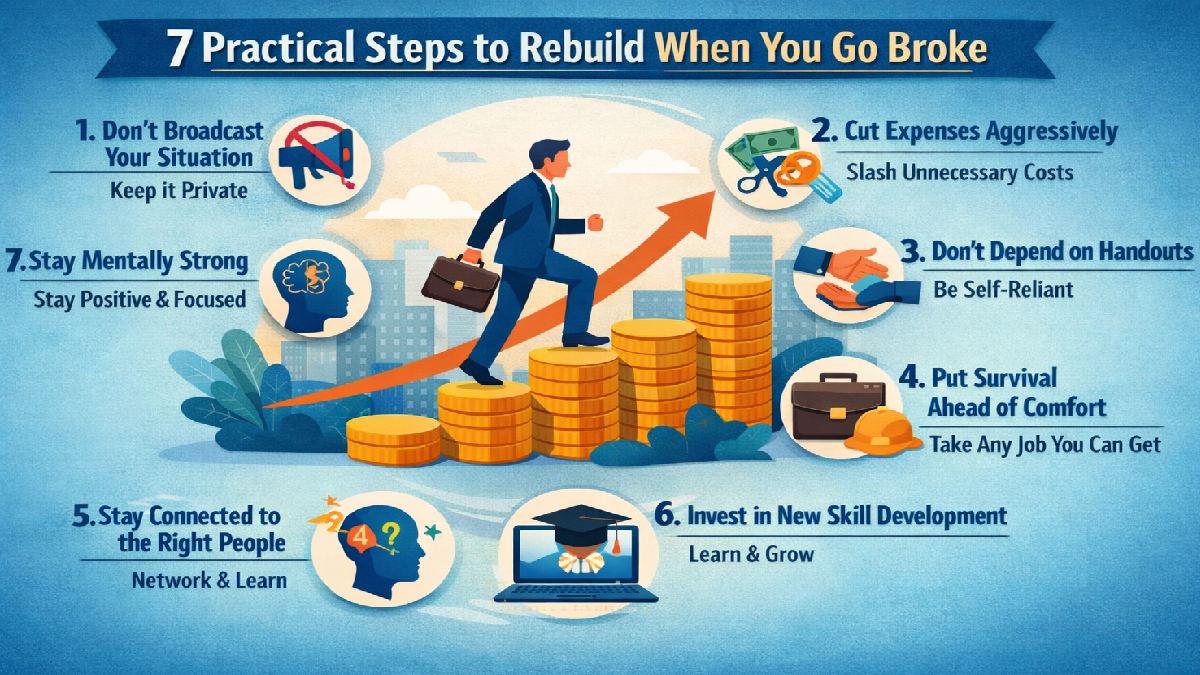
7 practical plans for rebuilding your financial life; how you get back in control and that’s where you have done well.
1. Don’t Broadcast Your Situation
You are going to need to be firm when you’re broke too. You don’t have to have it all be like all perfect, but being able to share your financial hardships always gives others a different picture of you. In many cases, it lowers trust in you and limits you from opportunities.


Instead, focus on solutions and not worry about the world as an intrusion. Look out your way to a solution quietly and rather work on improvements you are needing where you stand—and not bother you about this.
2. Cut Expenses Aggressively
The first and most critical step. So take a quick look at your spending pattern and figure out where your money ends up going from now on. Don’t take away from anything anymore except what is mandatory for the business and nothing important.
All meals, money, rent, utilities, and transportation are to be taken care of by this policy. Every rupee saved is a step toward stability.

3. Don’t Depend on Handouts
It is so easy to feel able to depend upon friends and family for financial advice, but if the habit is allowed to go on, relationships will get destroyed and your confidence will be low.
Instead, look for ways to offer value. Provide assistance with errands, run something like a small business for someone else. With easy assistance, there are a few things to have that will make you some money and help you realize how you want to be independent.
4. Put Survival Ahead of Comfort
This is not a time to put on your best look, wait for the “perfect” job opportunity. Take small jobs, temporary jobs, or anything that brings money.
It’s survival and momentum. But once your stability is here, you’ll look for better ones.
5. Stay Connected to the Right People
Get an up-and-coming, fast-paced environment with people who want to get better working or growing and have money together. Not to find somebody with better money. But not to compare what you have to gain—but to continue to be exposed to things and thoughts which will make some way forward and create value.
Be respectful of their time and useful whenever possible. Sometimes opportunities come from the place you’re in.
6. Invest in New Skill Development
During this phase, improve yourself. There are tons of online courses (in terms of digital marketing, sales, communication, technical skills) available that could help to improve oneself in those short, low-cost courses and how we can all work on new skills we can learn for free.
Skills improve market value and provide better income options.
7. Stay Mentally Strong
And the anxiety of going broke is overwhelming, and it wears on your confidence. Just remember: All that is going to happen for a while will be in the past, this whole experience.
Let go of defeat, be optimistic… and keep getting better. There is going to be a point where progress may take time to take place, but the principle of consistency pays off.
Final Thoughts
To be broke isn’t life in itself—and neither in the most positive sense. What matters most is how you are going to deal with it. Discipline, humility, and persistence are the formula for getting back together financially.
Starting small, do your best and we can keep working on the way to progress. A small step will change—step by step.











Comments