There is a financial phenomenon in India’s economy. Despite a decade of aggressive digital push and the worldwide crowning of the Unified Payments Interface (UPI) as a fintech marvel, the demand for physical paper money has surged to unprecedented levels. In India as of 24 February 2026, the Currency in Circulation (CiC) reached an eye-watering ₹40 lakh crore.
This is a huge increase from ₹24.2 lakh crore (in February 2020) and around 2.5 times the ₹16.42 lakh crore (in February 2016). When it comes to “Scan and Pay,” the humble banknote is the unquestioned king of the Indian wallet. The Numbers Tell the Story The growth of cash has outstripped numerous predictions.
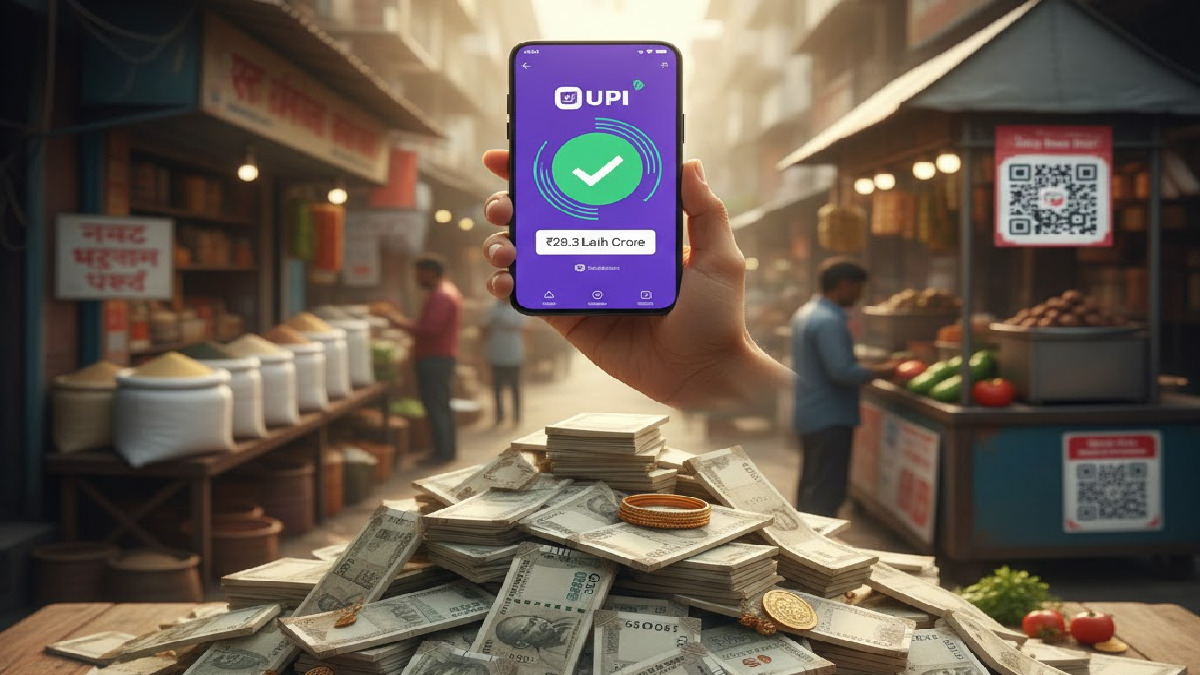
The data released by the Reserve Bank of India (RBI) and SBI Research indicate that CiC grew by 11.1% year-on-year in early 2026—almost double the growth rate of the previous year. That’s happening even when UPI transaction values have peaked monthly at roughly ₹28.3 lakh crore. The rate at which transactions move in the economy is changing, and digital rails are supporting and processing such a vast amount of micro-transactions, all the while keeping value, particularly that of the ₹500 denomination of notes, in the economy.
And why Cash Addiction Persists?
There are a number of structural and psychological factors underpinning this "dash for cash": Trust and Store of Value Factor: For a number of Indian households, physical cash is still the "comfort food" of a safe financial life. In such global geopolitical uncertainty and/or local inflation, the tactile sensation of “Rupee in hand” offers a reality that digital balances can’t match.
- The GST Signaling Effect: Strikingly, an increase in cash usage has been correlated with better tax enforcement. For example, after thousands of GST notices were dispatched to small-scale vendors in India, according to their UPI transaction volume in 2025, many of them in states such as Karnataka or West Bengal turned back to cash for compliance purposes to stay under the official watchful eye.
- Rural Consumption and Interest Rates: In the rural and semi-urban parts of India, where the digital infrastructure is patchy, cash remains the primary medium for high-value agricultural trade while daily consumption stays constant. And low deposit interest rates for months have encouraged many to keep cash at home.
- The Gold Recycling Boom: At record prices, the price of gold reached historic highs in 2026, so many households have been "cashing out" their bullion hoards. This liquidity injection of gold into financial accounts has replenished the system of household savings money and money from the economy.
A Hybrid Future
The world of 2026 could not be defined as a "Cash vs. Digital" war. And although the cash-to-GDP ratio has actually moderated to about 11.2 percent (from a pandemic high of 14.4 percent), the absolute amount of cash keeps rising as the 'economic pie' of India, that is, the total income pool, continues to grow so quickly.
But it has cemented more firmly the role of cash as the primary device for both securing and insulating wealth as UPI has become the dominant currency of trade. As the Indian economy continues to march toward multi-trillion dollar targets, it appears the QR code and the Gandhi-series banknote will remain on hand behind each other as they stride hand in hand.