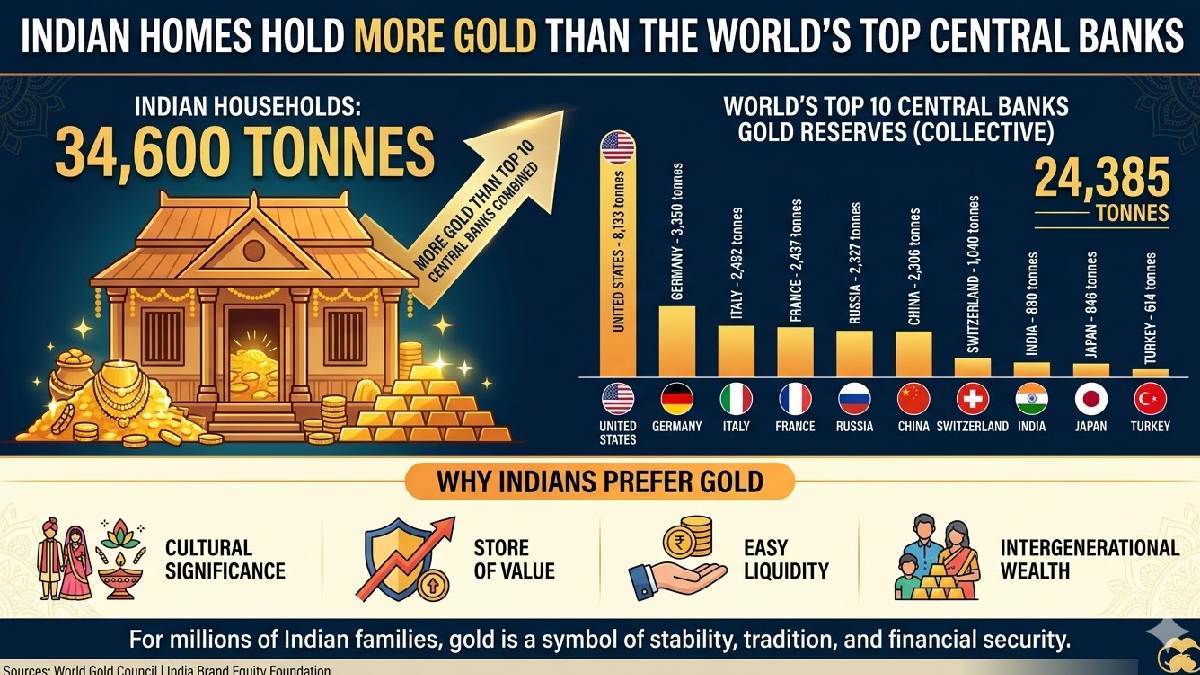
Gold has always had a special place in Indian culture, be it weddings and festivals or long‑term savings. Indian households own about 34,600 tonnes of gold, based on estimates provided by the World Gold Council and the India Brand Equity Foundation, which is far more than the world’s largest central banks own.
Gold Reserves of Key Nations
Gold is stored in general foreign exchange reserves of central banks. Some of the largest economies have reserves of:
- United States — 8,133 tonnes
- Germany — 3,350 tonnes
- Italy — 2,452 tonnes
- France — 2,437 tonnes
- Russia — 2,327 tonnes
- China — 2,306 tonnes
- Switzerland — 1,040 tonnes
- India — 880 tonnes
- Japan — 846 tonnes
- Turkey — 614 tonnes
These top 10 central banks collectively hold an estimated 24,385 tonnes of gold.
Indian Households: The World’s Largest Private Gold Owners
Private households in India, by contrast, are reported to possess 34,600 tonnes of gold, more than the overall gold inventory of these major central banks. This vast hoarding mirrors an unusual relationship between India and gold. In many places, where gold acts as a wealth management asset, India also holds:
- A symbol of wealth and prosperity
- Central part of cultural and religious traditions
- Another common type of long‑term saving
- A financial buffer for the family
Why Indians Prefer Gold
Gold is still preferred asset among Indian households for quite a number of reasons:

- Cultural Significance: Gold is a special aspect of weddings, festivals such as Diwali and for numerous celebrations and special events.
- Store of Value: Gold is seen by many families as a hedge against inflation and currency fluctuations.
- Easy Liquidity: Gold can readily be pledged or sold in financial emergencies.
- Intergenerational Wealth: Gold jewellery and coins are often handed down through generations.
The Economic Impact
India’s wealth of private holdings of gold is good for the economy but is also problematic for the economy. Whereas gold confers financial security on households, large imports of gold can increase the country’s trade deficit. So, it, therefore, encourages alternative investments like gold bonds and digital gold investments.
That Indian households are holding more gold than the world’s biggest central banks showcases the metal’s profound cultural and economic significance in the nation. Gold is more than a precious metal to millions of families; it’s a symbol of stability, tradition and financial security.