
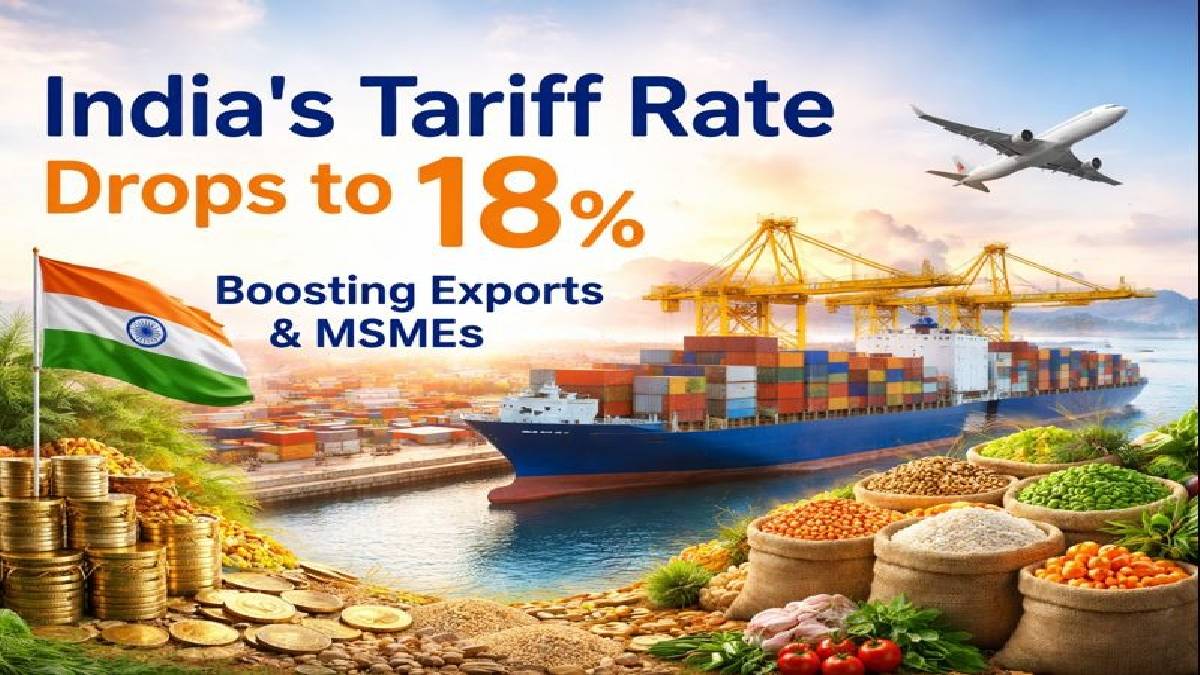
With an effective tariff rate of 18%, India is one of the lowest-tariff economies in Asia and has improved its global trade positioning. Thus, this move is expected to improve India’s export competitiveness and create massive benefits for exporters as well as micro, small and medium enterprises (MSMEs) and agri-based businesses, particularly in major international markets including the United States.
Asia Comparative Tariff Position (Tariff Position in Asia)
India’s revised tariff rate is in good comparison with the regional peers:
At its latest, India: 18%. Pakistan: 19%. Indonesia: 19%. Thailand: 19%. Bangladesh: 20%. Vietnam: 20%. China: 34%. A lower tariff rate provides a competitive edge to Indian exports and enhances market access with more exports coming in.

Trade Agreement between India and US
Tariff reduction is part of a bilateral trade agreement that India has made with the United States:
The United States lowered tariffs on Indian goods from 25% to 18%. India agreed to lower tariffs and rationalise non-tariff barriers on certain US products. This reciprocal relationship is a sign of strengthening trade relations between the two, facilitating greater economic engagement.
Consequences for Indian Exporters
The new tariff structure would contribute to the worldwide competitiveness of Indian exports as well, primarily through:
Improving price competitiveness on foreign markets. Improving export margins. Encouraging higher export volumes. To further develop long-term trade relations. Key sectors for benefit would be textiles and apparel, engineering goods, electronics, auto components and processed food products.
Impact on MSMEs
Thanks to the enhanced access to overseas markets and low cost disadvantages against regional competitors, MSMEs and their services, which are crucial in India’s export trade, could potentially make up for lost access opportunities. The tariff reduction will enhance MSME integration into the international value chains and foster value addition and scale up.
Agri and Food Exports Opportunities
This could mean greater access to and demand from markets of higher value for agri-based exporters dealing in millets, pulses, spices, organic foods and processed products. This move reflects the nation’s goals of advancing value-added agri exports and sustainable agricultural practices.
India’s Global Tariff Position
India’s tariff rate does also compares favourably with a select few key economies:
European Union: 15%. Japan: 15%. South Korea: 15%. United Kingdom: 10%. Brazil: 50%. South Africa: 30%. In the context of the emerging economies, India is now amongst the more competitive trading countries.
The 18% reduction in India’s tariff rate constitutes a big leap forward in improving the competitiveness of exports and enhancing India’s integration in global trade. The measure aims to help the economy grow more quickly on export earnings, better market access for firms from Indian regions and consolidate Indian standing within global value chains.









Comments