The Indian stock market has been rocked by a large-scale share sell-off with Reliance Industries Limited (RIL), the country’s largest company, falling by about 6% in the past two days. Such a sharp drop saw a loss of the company’s market capitalization of over ₹1 lakh crore and the total value of the company’s stock was at close to ₹18 trillion.
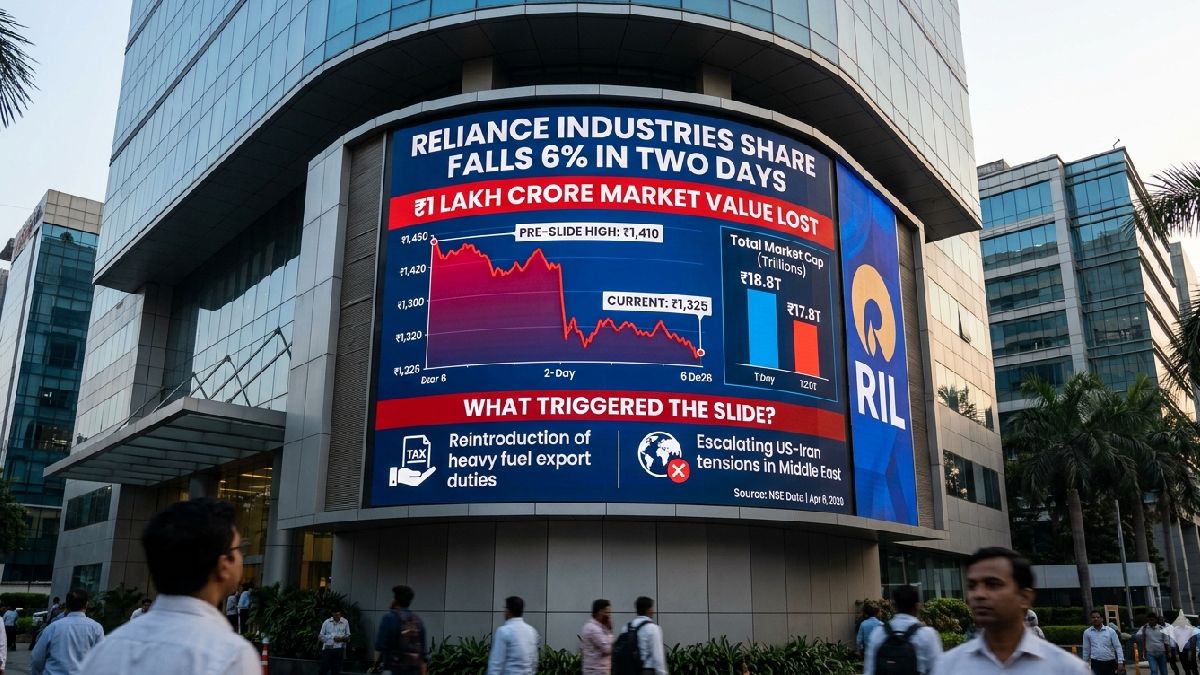
On April 6, 2026, the stock dropped to a low of ₹1,291 in early morning trading and investors are wondering why RIL was sold off and how that happened. The first cause of this downward spiral is the "double whammy of domestic policy changes and global uncertainty."
Investor sentiment was also negatively affected when the Indian government imposed heavy export duties on refined fuels. For a global refining giant like Reliance, the windfall taxes will put a strain on the high profit margins that come with international fuel exports.
In the same way, the U.S. and Iran are in conflict and the consequences of it are already resonating in the energy markets. Although oil prices increase (approaching $110/barrel) mainly for upstream companies, they are also worried about supply chain disruption in the Middle East and shipping costs.
Investors are worried about the impact of higher input costs on Reliance’s O2C earnings in the next few quarters and limited export profitability. A technical crisis is also prevalent because the stock has fallen below key support levels, and the stock is now below the 50-day and 200-day moving averages, a common bearish signal.

A few years ago, it was at a record high and RIL was aggressively booking profit. The lack of technical support has led institutional investors to reduce exposure, which is known as a snowball effect or selling leads to selling. However, for all this gloom, there is at least one silver lining.
The huge SEZ (Special Economic Zone) refinery of Reliance may be exempt from the new export duties, the company’s court verdict indicates. If it is true, then that would be a huge help to the company. But until the global energy reality is resolved and for how long these domestic taxes may be in place, the stock will remain under pressure and the ₹1,280-₹1,300 range is the next key battleground for bulls and bears.