Top 10 High-Tax Countries in 2026: An Analysis of Personal and Corporate Taxes Compared. At the end of the day, ‘taxation is the greatest driver of where people are living and where business is conducted’. Internationally in 2026 tax frameworks show that a compromise between high public spending and the preservation of private wealth and resources remains in place where best. Those countries with large welfare-sharing economies, full universal healthcare and strong social security institutions often tend to tax relatively high, although more so on rich people.
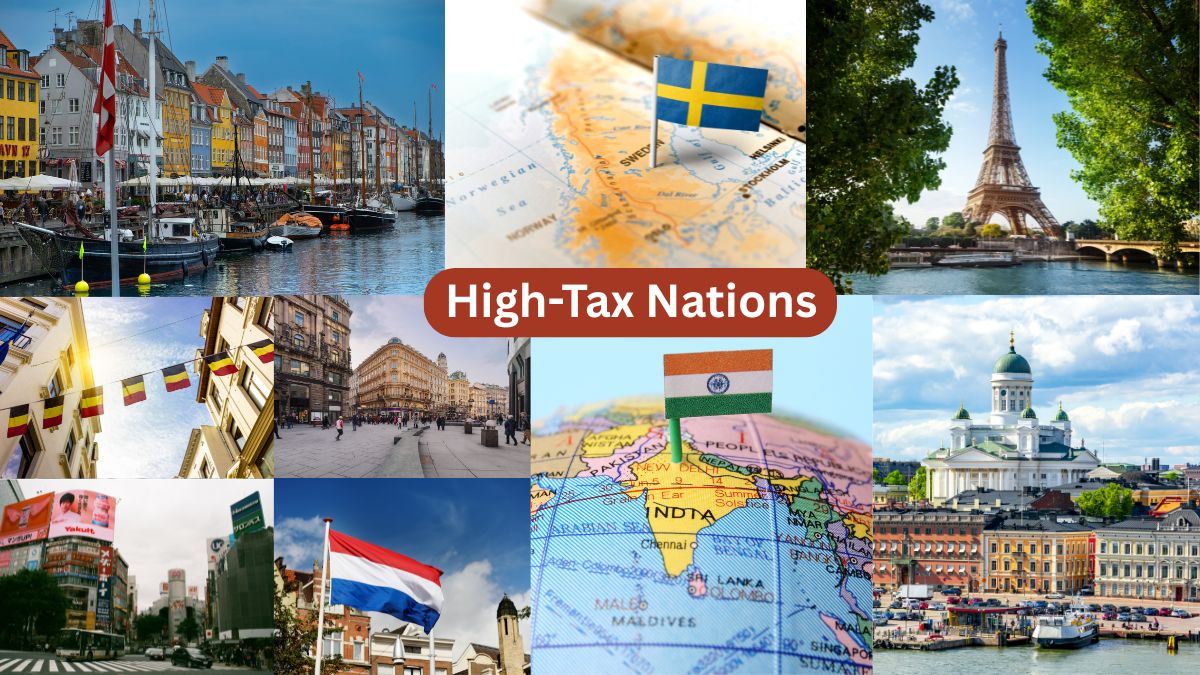
This article examines the Top 10 High-Tax Countries for 2026, assessing their taxes on personal income tax and corporate tax and puts India vis-a-vis the world. What Are High-Tax Countries? A country is considered “high-tax” not only on headline income tax rates, but also on the aggregate burden of:
The highest personal income tax marginal. Corporate income tax. Social security contributions. Local or state taxes. Indirect taxes like VAT or GST. One story may be told by statutory rates, and quite another by the effective tax burden. Countries of the Top 10 High-Tax Countries (Individuals & Corporates – 2026).
1. Sweden
Sweden ranks as one of the world’s highest-taxed countries, with its highest personal income tax rate at around 57%. Corporate tax, on the other hand, is relatively low: 20.6 percent, intended to make Sweden a welcoming place for companies to do business. In return, citizens receive generous health care, education, child-care and pension benefits.
2. Denmark
Denmark very much follows in this regard: its personal income taxes stand at approximately 55.9%. A 25% flat VAT leads to a significant increase in general tax load. Corporate taxes hover at about 22%, with the goal of funding social welfare and being able to compete as a business.

3. France
After paying social contributions, France’s top income tax rate is roughly 55 percent. Corporate tax equates to nearly 26.5 percent. France also taxes capital gains and, in some contexts, wealth, making it one of Europe’s most comprehensive high-tax systems.
4. Belgium
The Belgian 50% top personal income tax rate in personal incomes and contributions to social security result in effective taxation that is very high. Corporate tax is around 25 percent, and labor costs are some of the most expensive in Europe.
5. Japan
Japan’s combined national and local income taxes drive top marginal rates up to almost 55%. Corporate taxes are also pretty high, around 30 percent, so Japan ranks among the more expensive countries in Asia for people and companies both.
6. Austria
Austria has a personal income tax rate at 55% as its top tax rate, while it is in line with high contributions to social security. Corporate tax is 25% or so, placing Austria very much so in line with Western European economies.
7. Netherlands
The Netherlands has a top personal income tax rate of around 49.5%, along with taxes on dividends and capital gains. Corporate taxes are around 25.8%, so the tax is high on households, and moderate-high if they are businesses.
8. Finland
The country’s top income tax rate is around 51.25 percent, which includes local taxes. Company taxes are low at 20% anyway, so in the case of Finland, this is a good thing though, due to high levels of personal taxation.
9. India
The top personal income tax rate is as high as 30% (in India) but surcharges and cess raise the effective rate for high earners. Corporate tax is approximately 25-30% based on company structure. India’s direct taxes are lower than in Europe but GST and compliance fees add a major weight to the real tax bill there.
10. United States
The US federal income tax is at its height at 37%, but in combination with state taxes, can top out at almost 50 percent (California, New York, for instance). At the federal corporate tax level it is 21 percent, with state taxes raising it to 25–30 percent.
Report Insights
Global Trends. Europe leads the world in high-tax rankings with its huge welfare and social security systems. High-tax countries often have higher personal tax rates; corporate tax rates are relatively low compared to personal income tax rates, allowing firms to invest more efficiently in the market, which also reflects the attractive environment for foreign investments to thrive. Japan and the U.S., both high-tax nations, are primarily taxed when national and local taxes are pooled.
On the global platform India is classified as a high tax in the sense of a country being taxed directly globally, but with moderate approach. India in Global Perspective. The tax burden of India is markedly higher than that of tax-friendly countries like UAE, Singapore, or Hong Kong. Yet, relative to Nordic and Western European countries, India is still a mid-tax country, at least in terms of personal income tax.
The issue in India isn’t so much the headline rate but rather the indirect tax, the compliance headache, and the ripple-effect of cost. Conclusion. High-tax countries aren’t inherently undesirable — in most situations, they offer better public service, social stability and quality of life. But individuals and corporate wealth must comprehend the larger tax ecology. Because of increased global mobility, countries must continuously achieve a balance between revenue needs and competitiveness.
Disclaimer: This is general information. Tax rates are an indication and could change. Individual or business circumstances will cause that tax liability to vary widely. This is not tax advice, or law advice — so don’t make such decisions without consulting a qualified professional.