
Taxpayers earning short-term capital gains (STCG) under Section 111A in FY 2025–26 must closely monitor the tax on these gains: the Section 87A rebate will no longer be available to reduce tax.
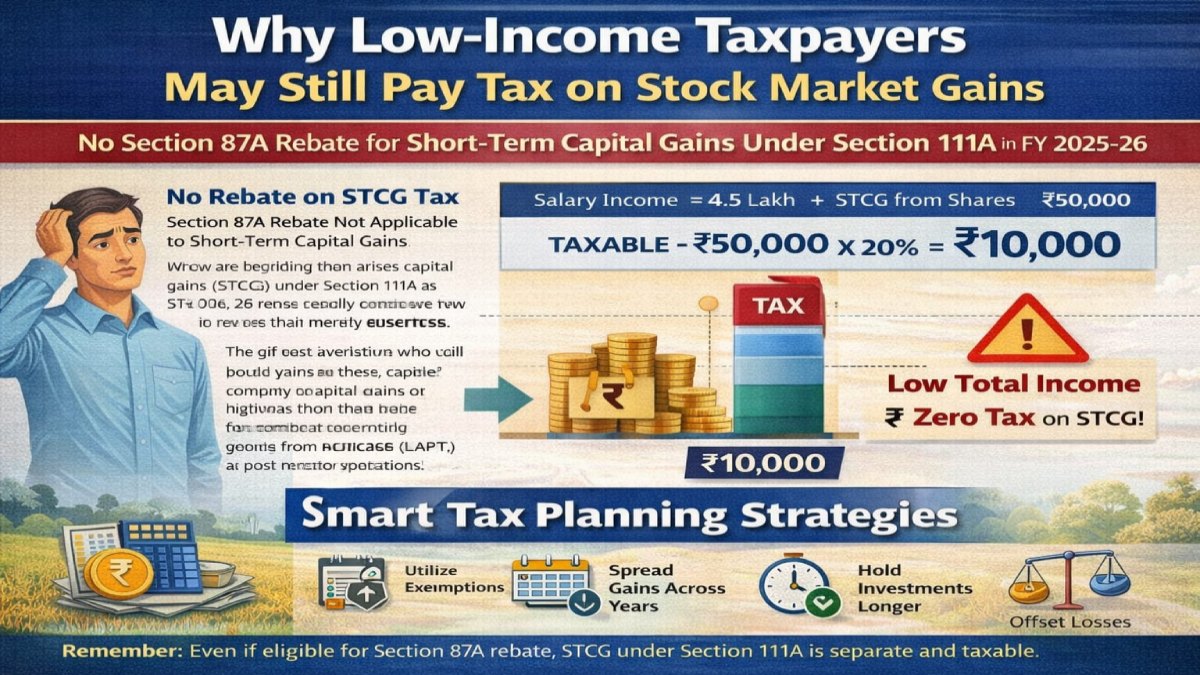
This affects investors who sell listed equity shares, equity-oriented mutual funds, or business trust units within 12 months where Securities Transaction Tax (STT) is paid. STCG arising under Section 111A is subject to tax at 20%, plus applicable cess and surcharge. While Section 87A continues to offer rebate benefits for eligible resident individuals under both old and new tax regimes, it applies only to normal taxable income and not to income taxed at special rates such as STCG under Section 111A.
For instance, if a taxpayer earns ₹4.5 lakh as salary income and ₹50,000 as STCG from equity shares, salary tax may become nil due to rebate eligibility, but tax on STCG ₹10,000 must still be paid. The result is a tax burden many small investors don’t anticipate because they think low total income automatically means zero tax. To minimize the tax burden, investors can adopt smart planning strategies such as using unused basic exemption limits, spreading gains across financial years, holding investments longer to qualify for long-term capital gains treatment, and offsetting gains with short-term capital losses.
The crucial lesson is that even if your income qualifies for Section 87A rebate, STCG under Section 111A remains taxable separately. Proper investment timing and tax planning are necessary to avoid surprises when filing returns.







Comments
Leave a Comment