
File Form 121 to Avoid TDS Deduction.
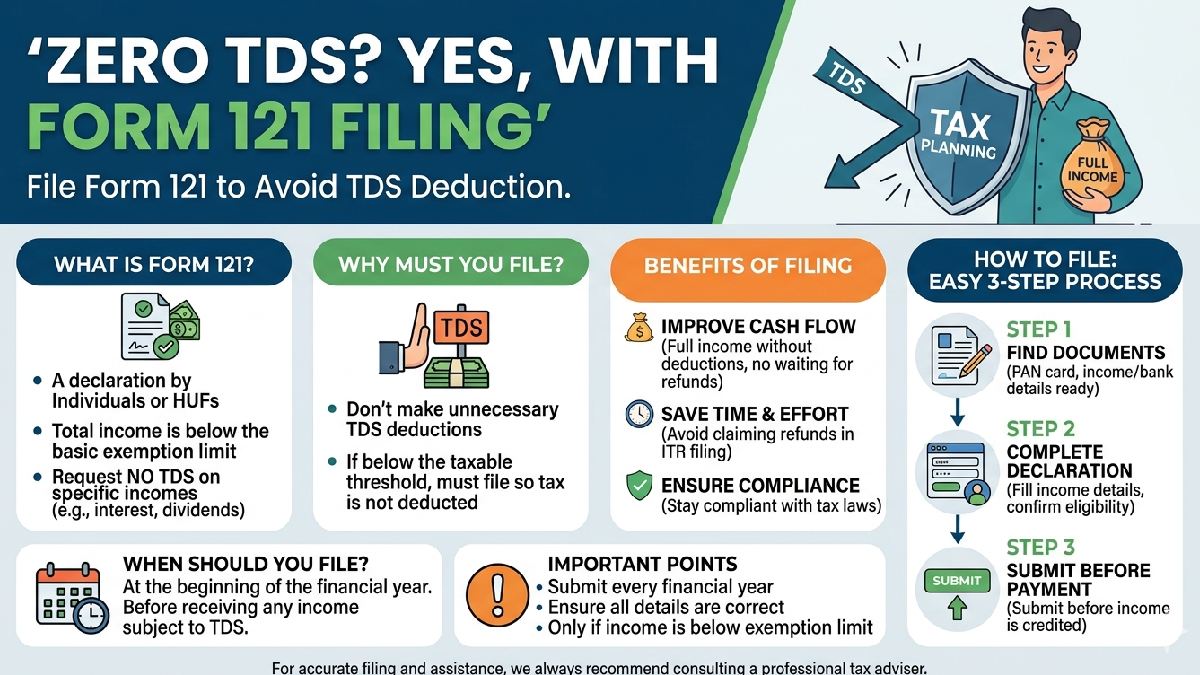
Tax planning is very important for your income to not be adversely affected by TDS. If your total income is just under the taxable limit, you will avoid any unnecessary deductions and better the financial management of your family with Form 121.
What is Form 121?
Form 121 is a declaration by individuals or Hindu Undivided Families (HUFs) that their total income is below the basic exemption limit. This form allows you to request that no TDS on certain incomes (interest, dividends, rent) be deducted.
Why Must You File Form 121?
Don’t make unnecessary TDS deductions.
If you are below the taxable threshold, you will have to file this form so tax is not deducted at source.
Benefits of Filing Form 121
- Improve Cash Flow – You will get your full income without deductions and don’t have to wait for refunds.
- Save Time and Effort – You can avoid the process of claiming refunds in the income tax return filing.
- Ensure Tax Compliance – Filing the right declaration keeps you in compliance with tax laws and avoids future mishaps.
- Suitable for Eligible Individuals – This form is suitable for residents and HUFs whose total income is below the exemption limit.
How to File Form 121: Easy 3-Step Process
Step 1: Find the documents required to file.


PAN card, income and bank information should be ready.
Step 2: Complete Declaration.
Income, eligibility, etc. are important.
Step 3: Submit Before Payment.
Submit the form before the income is credited to ensure no TDS is deducted.
When Should You File?
- At the beginning of the financial year.
- Before receiving any income subject to TDS.
Important Points to Remember
- The form must be submitted every financial year.
- All the details provided are correct.
- Only if your total income is below the exemption limit.
Form 121 is a simple and effective way to avoid taking unnecessary TDS deductions and have better control over your money. If it is submitted on time, you will have more cash flow and comply with tax requirements.
For accurate filing and assistance, we always recommend consulting a professional tax adviser.










Comments