For years the dominant corporate narrative has been clear: Artificial intelligence is cheaper, faster, and more efficient than human workers. But a quiet counter-revolution is taking root. More and more companies are now openly questioning whether the cost savings of AI are actually materialising—or if the technology’s hidden costs keep human workers on the cheaper side in the long run.
Hidden Costs of Automation
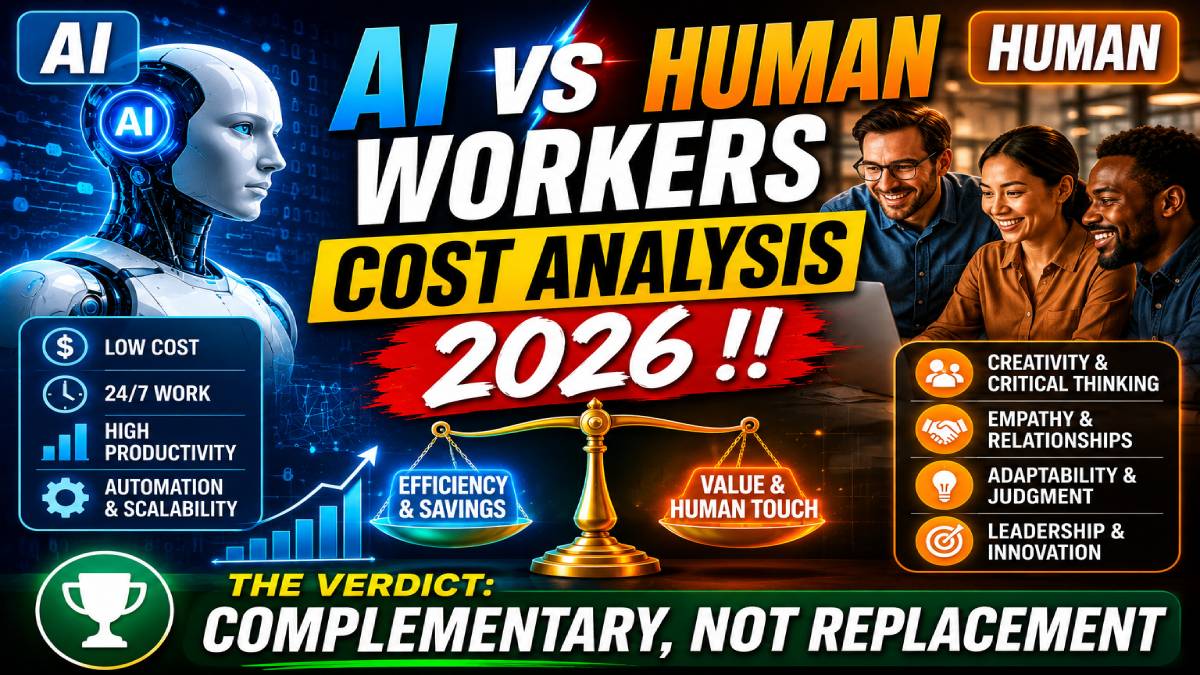
On paper AI eliminates salaries, benefits and paid leave. But the reality is much more complicated. According to a recent study, 77% of companies now say that AI has actually increased their operational costs, with some seeing cost hikes as high as 30%. Why? The upfront investment for enterprise-grade AI systems is staggering. Licensing fees for advanced models, cloud computing infrastructure, data storage and ongoing model training run into millions of dollars annually. And there is the need for AI engineers, data scientists, and compliance officers—all of whom will be paid a lot of money.
The Quality vs. Speed trade-off
The quality gap is perhaps more concerning. While AI performs work faster, a separate analysis found that it generates incorrect or fabricated data (3% to 35% of the time), depending on the complexity of the task. In fields such as legal document review, medical coding or financial reconciliation, these errors require human oversight, auditing and correction—an investment of time and money that takes a big bite out of the anticipated savings.
"People think AI replaces salaries," said one mid-sized manufacturing CFO who spoke to industry researchers. "But we now spend more on AI licenses, error correction and prompt engineering training than we ever spent on the junior analysts we replaced. It was a false economy."
In the Human Advantage: Adaptability Without Retraining
One other factor companies are rediscovering is human adaptability. A trained AI model for customer service for one product line has weeks of training and thousands of labeled examples to adapt to a new product. A human worker, in contrast, is able to absorb new information in a single morning meeting on the job and learn new information quickly.
For small and medium businesses dealing with unpredictable workflows, the rigidity of AI systems has been a liability. “We can’t afford to freeze our operations every time we need to retrain a model,” a retail operations manager said.
The Verdict: complementary, not replacement
Experts say that the pendulum is moving towards a more nuanced understanding. AI excels at narrow, repetitive, high-volume tasks. Humans excel at ambiguity, judgment and adaptation. The most cost-effective approach appears to be hybrid—not replacement. "The companies questioning AI costs aren’t Luddites," one analyst said. "They’re the ones doing the math that the AI evangelists didn’t. And increasingly, that math suggests keeping the human in the loop isn’t just a moral decision—it’s an economic one."