Bharat Sanchar Nigam Limited (BSNL) announced a satellite phone priced at ₹1,34,166 in a bid to reach the people suffering from communications in remote areas where conventional mobile networks are not available.
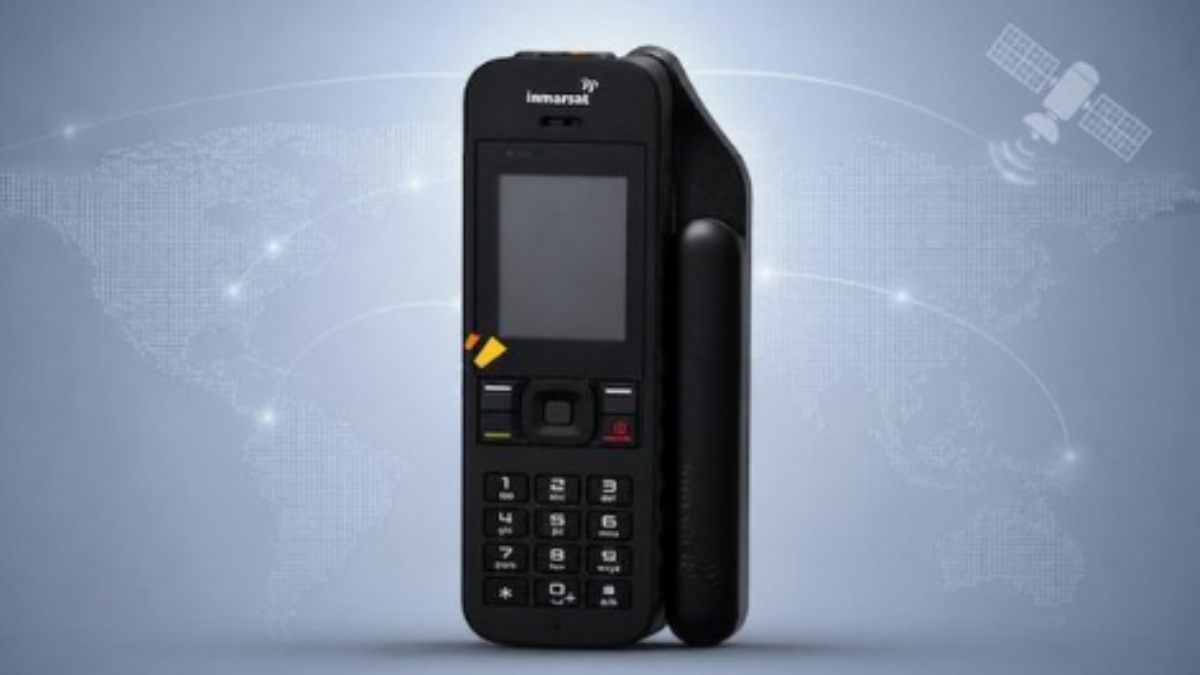
The satellite phone is mainly for defence personnel, disaster response agencies, emergency services, maritime operations, and adventure travellers.
Unlike conventional smartphones which are based on terrestrial cellular towers, satellite phones communicate directly with satellites orbiting the Earth.
This gives users the ability to make voice calls and, depending on the service, send text messages from areas with weak or even no mobile coverage, such as mountainous areas, dense forests, deserts, offshore waters, and disaster-hit areas.
A Communication Lifeline in Remote Areas.
Satellite phones have long been used by defence forces, emergency responders, scientific expeditions, shipping companies, and rescue teams because they can function independently of conventional telecom infrastructure.
BSNL’s latest offering is aimed at fulfilling the growing need for reliable communication during emergencies. In natural disasters like earthquakes, floods, cyclones, landslides, etc., terrestrial mobile networks may be damaged or overloaded. Satellite communication is another way that rescue and government personnel can communicate and coordinate.
The device is also expected to benefit trekkers, mountaineers, researchers, and explorers traveling to remote Himalayan areas or other isolated locations where standard mobile connectivity is unavailable.
Designed for Mission-Critical Communication
The satellite phone has been positioned as a rugged communication device that can function in tough environments. It won’t have the multimedia features we have now in the smartphone world, but it will deliver reliable voice communication in the most challenging circumstances.
Its intended users include:
Defence and paramilitary personnel deployed in border regions. Disaster management agencies responding to emergencies. National and state disaster response teams. Forest officials and wildlife researchers. Maritime operators and fishermen in deep sea. Adventure tourists, trekkers, and expedition teams. Infrastructure companies in remote project sites.
For those users, uninterrupted communication will be of great value to their operation and their personal safety.
Why Satellite Phones Matter
India’s wide geography includes mountains and forests, deserts, islands, and coastal areas where conventional cellular infrastructure is not easy to build and maintain. Even highly connected urban areas can experience communication disruption in the event of natural disasters.
Satellite phones bridge this gap by connecting directly to satellites instead of depending on nearby cell towers. As long as the user has a relatively clear view of the sky, communication is generally possible even in isolated areas.
The technology has become increasingly important for disaster preparedness as climate-related extreme weather events continue to increase in frequency and intensity.
Regulatory Considerations
Satellite phones are regulated in India due to national security concerns. The purchase, possession, and use of satellite phones are subject to government regulations and licensing requirements. In case of such devices, prospective users will have to satisfy all relevant regulations before purchasing or using them.
BSNL's offering is anticipated to be part of India's approved satellite communication system and be available to authorized users who require reliable long-distance communication.
Strengthening Emergency Preparedness
In the future, experts believe that satellite communication will play a bigger role in India’s disaster management ecosystem. In rescue operations, reliable communication will be one of the first elements needed in order to coordinate evacuation efforts, medical assistance, logistics, and distribution of relief.
Satellite phones provided by a public sector telecom provider could also improve access for government departments, emergency agencies, and organizations in remote locations.
Growing Demand for Specialized Communication.
As adventure tourism becomes popular in India, the demand for specialized communication devices is also increasing. Trekking tours in the Himalayas, wildlife surveys, geological exploration, and offshore work often take place in areas beyond the reach of conventional mobile networks.
Satellite phones are an additional layer of security in these environments for professionals and travellers who are working in these environments; they provide emergency contact when other communications systems fail.
🛰️ BSNL has launched its Satellite Phone Service in India.
— Ved Singh (@tech_feed2023) July 9, 2026
- The Price: The specialized handset costs ₹1.34 lakh (including taxes).
- The Tech: Uses Inmarsat satellites to provide voice calling and emergency SOS features anywhere without cell towers.
- The Access: Strictly… pic.twitter.com/VHpBKriCw8
The launch of BSNL's ₹1,34,166 satellite phone indicates the rising importance of resilient communication technologies in a climate-affected region with huge infrastructure investments and increased operations in the remote. And although it’s a high-end product rather than a consumer device, its price points to connectivity that ordinary mobile phones lack and therefore makes it a vital tool for mission-critical operations.
With India investing in disaster resilience, border infrastructure, and remote-area connectivity, satellite communication will eventually be a key component to public safety, national security, and emergency response.