And while the United States is still struggling to find solutions for many of the social and infrastructure problems, China is fast-approaching innovation in classrooms.
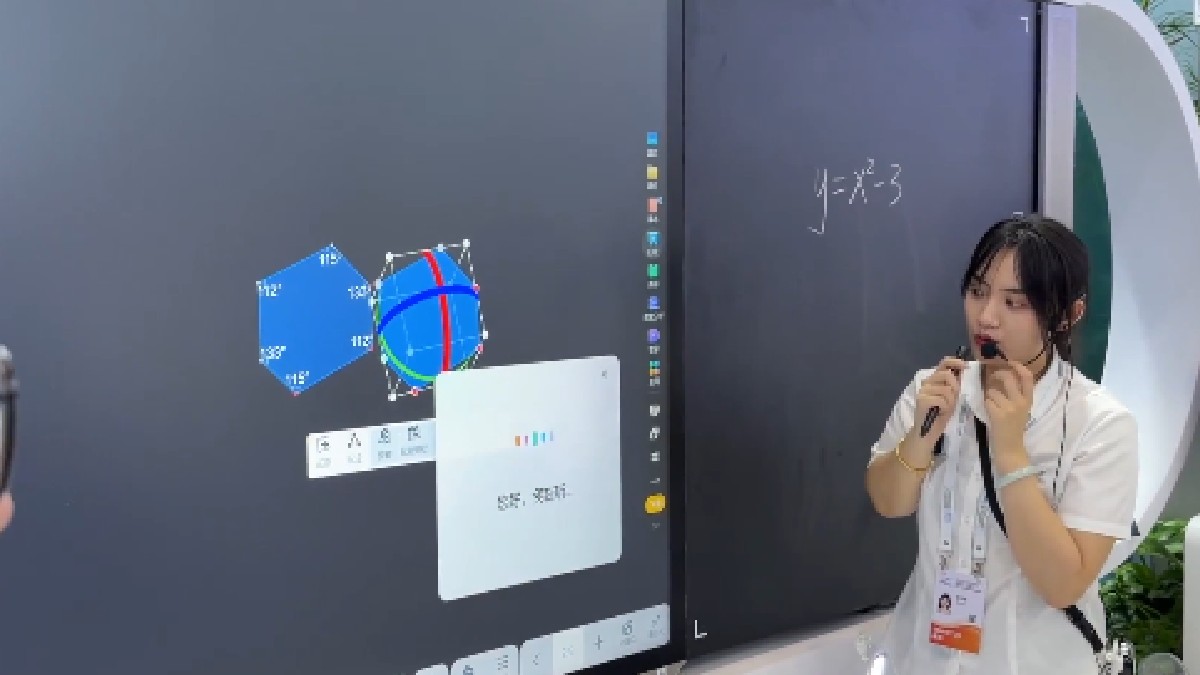
Some of the most striking examples is the replacement of chalkboards with large interactive touchscreen displays that look like oversized smartphones or tablets.
In many schools today in China, the traditional blackboard is being replaced with smart digital boards. The high-quality touchscreen panels allow teachers to write, draw, present presentations, play educational videos, surf the internet, and interact with learning apps all from a single screen.
Students also can have a hand in this by solving the problems directly on the screen using a touch or a digital stylus.
A smart display, unlike blackboards, can be easily used by teachers and students. Teachers can zoom into diagrams with their fingers, swipe through lessons, annotate documents in real time, and make notes and share them with students instantly and easily. The interface reminds students of a smartphone and is easy to understand.
The technology supports multimedia learning, which allows teachers to incorporate text, animations, images, videos, and quizzes in one lesson. Maths, science, geography, and language learning are more interesting when students can visualize things rather than just look at textbooks or chalk drawings.
Many of these digital classroom boards also support cloud connectivity that enables teachers to access online educational resources, upload assignments, and synchronize lesson plans across devices. Some schools have integrated artificial intelligence-based educational software that measures student participation and learning progress.
Another benefit is that chalk dust is removed from the floor, and so the classroom becomes cleaner and more open without the need to use chalk and erasers. Students can erase the content immediately, switch between pages, and go back and re-read previous lessons all the time, without having to rework it from scratch.
The change is part of China's larger investment in smart education and digital infrastructure. AI-assisted learning, online classrooms, facial recognition attendance systems in some institutions, and intelligent teaching systems are all part of the country’s push to modernize education.
These interactive displays support student engagement, encourage collaboration, and allow teachers to provide more dynamic lessons. And students who are already used to smartphones and tablets are apt to adapt very quickly to new classroom technology.
While the US debates whether to solve homelessness or not, these are the next generation of school blackboards in China🇨🇳.
— Jason Smith - 上官杰文 (@ShangguanJiewen) July 23, 2026
👇 pic.twitter.com/dFNf23Z767
But technology cannot produce better educational outcomes. Successful implementation depends on teacher training, curriculum development, screen time at all levels of education, and equal access in urban and rural schools.
And although many well-funded schools have started incorporating digital classrooms, the use of digital classrooms varies with local resources.
As education systems around the world continue evolving, China’s interactive touchscreen blackboards illustrate how digital technology is changing the learning process.
Instead of chalk and dust, classrooms are now connected and interactive places where learning is visual, collaborative, and technology-driven.
Whether other countries follow a similar path remains to be seen, but China’s investment in smart classroom technology shows how education is becoming one of the most important areas in digital transformation in education in terms of investing in technology as it could be a major point of focus for digital transformation.