Artificial intelligence is transforming industries throughout the world but one of the technology's early pioneers is warning that its economic effects could be crippling. Geoffrey Hinton, known as the “Godfather of AI” for his seminal work in machine learning and neural networks, says there are high opportunities for unemployment as AI is developed so rapidly and so far.
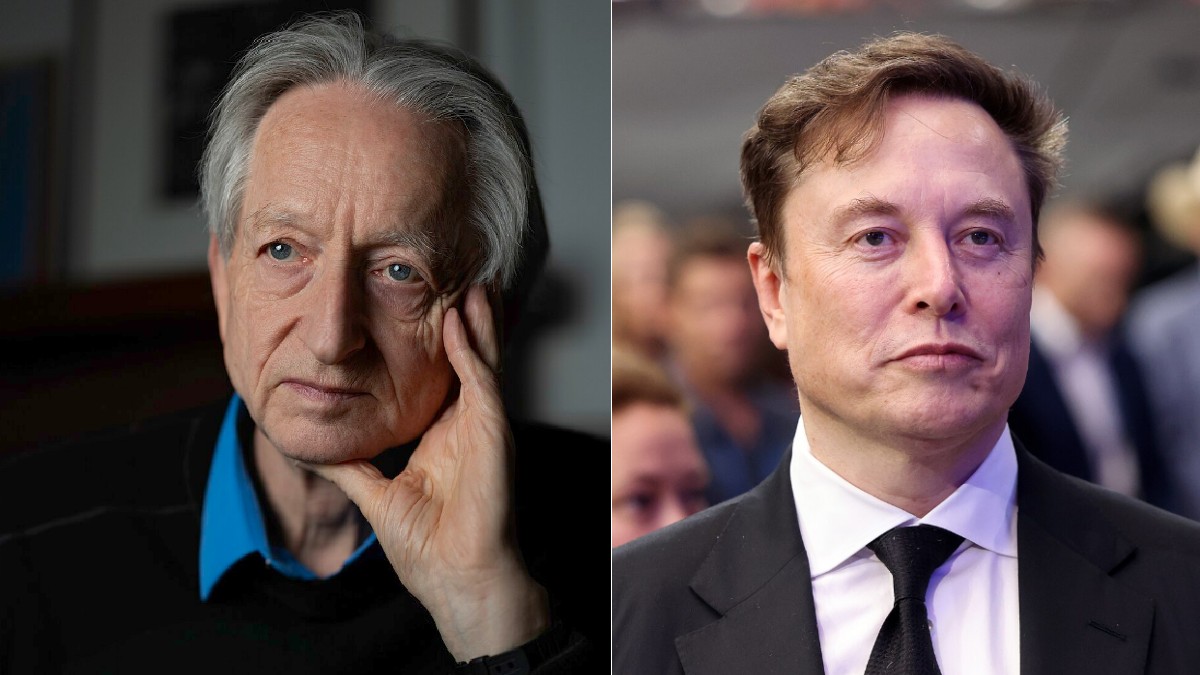
Hinton’s concerns echo warnings already made by Tesla and SpaceX CEO Elon Musk, who has repeatedly indicated that AI systems and robots will eventually take over a large portion of the work that humans do now. Musk even said that a future could exist in which having a traditional job might be optional rather than essential for many people.
Hinton raised his concerns in a November 2025 speech to US Senator Bernie Sanders at Georgetown University. He said that many people are convinced that AI could cause “massive unemployment,” reflective of increasing fears of automation’s effect on workers in different sectors.
AI Could Replace More Jobs Than It Creates
It is true that technological advances have eliminated some jobs and created others in some cases but Hinton thinks the scale and speed of AI development will make the present transition different. Artificial intelligence will create new jobs and opportunities, but would that be enough to fill the positions that can disappear?
The concern is particularly salient for jobs with repetitive, predictable or computer-based tasks. AI systems are gaining capability to generate content, analyse information, produce software, handle customer interaction and perform a variety of administrative functions. As these systems become more powerful and less expensive from the business sense, companies could be more financially motivated to replace human labour with AI-powered tools.
According to Hinton's argument, the huge investments in AI development could eventually be justified by companies using AI systems that perform tasks at a much lower cost than human employees. That economic incentive could accelerate automation in many industries.
Elon Musk, Jensen Huang And Bill Gates Have Raised Similar Concerns
Hinton is not alone in warning about the potential disruption caused by artificial intelligence. Elon Musk has frequently talked about a future in which AI and robotics could take over most forms of work, and perhaps change the role of employment in people’s lives.
Nvidia CEO Jensen Huang has also suggested that AI will transform almost all jobs, highlighting the magnitude of technological change businesses and employees are going to see in the near future. Microsoft co-founder Bill Gates has also spoken of a future in which AI could take over work where humans are currently doing it.
Although the predictions are detailed in their details, they do have a common theme: AI is likely to fundamentally reshape the labour market rather than simply add another productivity tool.
Transition Could Be Difficult For Millions Of Workers
The biggest challenge may not necessarily be the future of highly automated workplaces, but the transition period between today's economy and that future.
Workers who become automated may not have the skills to deal with AI jobs. Retraining millions of people could also be challenging, if technological advances are faster than the education system and labour market can adapt.
There are other questions that have to do with income inequality, social security and distribution of wealth generated by AI. If businesses become significantly more productive while requiring fewer employees, governments and policymakers may be under pressure to develop new approaches to employment, taxation, education and income support.
At the same time, AI could create new industries and professions. AI researchers, engineers, data experts, cybersecurity professionals and other technology-related workers are already in demand. But Hinton’s concern is that these opportunities will not be found in sufficient numbers and not accessible to everyone who is left behind by automation.
Hinton Says The Future Is Difficult To Predict
Hinton himself has admitted that nobody can precisely predict how AI is going to reshape employment. The technology is evolving so rapidly that long-term predictions are very uncertain.
He compared the situation to driving through fog, saying people can see what is ahead but have limited visibility further down the road. “All AI is not fully developed,” he says.
So Hinton’s warnings are a risk assessment instead of a definitive prediction that mass unemployment is inevitable. The future of employment will depend on how fast AI develops, how businesses use it, how governments respond and whether new kinds of work emerge alongside automation.
When AI systems are able to be more powerful the debate over their economic impact is likely to be exacerbated. Policymakers, the business world and the workers will have to figure out ways to make use of AI’s enormous productivity potential and make sure that the technology does not leave millions behind.