A video posted on the web by a hacker is making waves as it appears to show 20 SIM cards connected to a single phone at the same time, with WhatsApp being opened with the connected numbers. It has triggered an online debate over mobile connectivity, multi-account messaging and the limits of smartphones.
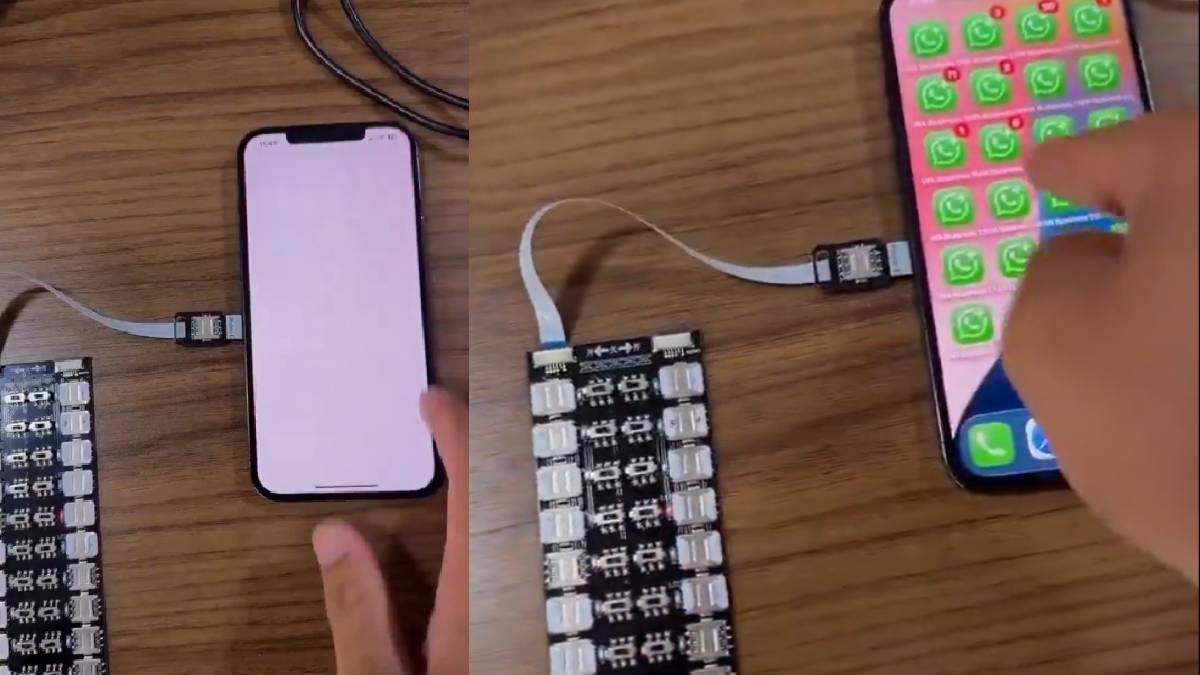
The video appears to show a setup in which many SIM cards are connected to a single device or external system, so multiple mobile numbers can be accessed at a time. The claim accompanying the video makes it look like WhatsApp was opened using the different numbers, making it seem like multiple WhatsApp accounts could be operated from the same physical setup.
The demonstration has raised questions because traditional smartphones only support a few physical SIM cards. Many modern devices support dual-SIM functionality, and some even support an eSIM alongside a physical SIM. A setup involving 20 SIM cards is therefore a very different configuration from an ordinary consumer smartphone.
It is important to differentiate between connecting multiple SIMs to a device or system and simultaneously running multiple fully independent WhatsApp accounts. The video alone does not tell us exactly how the hardware was set up, how the SIM cards were managed, or whether all the accounts were running independently at the same time. Details of the demonstration would need to be independently verified.
A hacker shared footage of connecting 20 SIM cards to a single phone at the same time and opening WhatsApp with all of them. pic.twitter.com/afvgUs4dkJ
— Massimo (@Rainmaker1973) August 27, 2026
WhatsApp has expanded its support for multiple accounts on a single phone in recent years, providing the ability for users to make separate accounts on compatible devices. But that does not mean a smartphone can natively support 20 physical SIM cards at once.
The footage is interesting from a technology point of view because it shows how mobile identities could be managed through more specific hardware. SIM cards have subscriber information that can allow a device to authenticate with the mobile network. Managing many SIMs at a time requires hardware and software that can handle multiple cellular connections or switching between them.
Such systems can have legitimate applications. Businesses, telecommunications companies and testing laboratories may work with multiple SIM cards when testing mobile networks, applications, messaging systems or connectivity services. Developers must also have multiple numbers for controlled testing environments.
At the same time, large-scale SIM management can create security and regulatory problems. Mobile numbers are increasingly used for account registration, two-factor authentication and identity verification. If many numbers can be controlled through a single setup, security researchers and regulators might be interested in understanding how such systems could affect digital-account security.
WhatsApp is the most interesting part of the video. Messaging platforms rely on phone number verification to create accounts, so if multiple accounts exist, then access to multiple active numbers can potentially give you access to many accounts. But account creation and access to those accounts are regulated by platform policies and verification processes.
For this reason, the demonstration should not be taken as proof that WhatsApp’s security has been bypassed. A person with multiple SIM cards does not indicate a weakness in WhatsApp. Each account is still verified by the platform, and further checks can be carried out to find suspicious activity.
But cybersecurity experts would often warn that demonstrations involving strange hardware configurations can be misleading if technical details are not presented. A short video may depict the outcome without showing what hardware, software, network infrastructure, or account management process was used.
The other big question is whether the 20 SIM cards were actually working simultaneously or the setup was rapidly switching between them. Multi-SIM hardware can provide centralized management without all connections having to work in the exact same way as the SIM slots of a typical smartphone.
The viral nature of such demonstrations also points to the increased complexity of mobile technology. Smartphones have evolved from simple communication devices to complex systems that manage multiple identities and applications and networks. Special hardware can extend those capabilities far beyond what is available to the average user.
It’s a reminder to protect your accounts for WhatsApp users. Users should use all the security features they have, such as 2-step verification, do not share verification codes, and be wary of sudden requests to access your accounts.
The video is certainly unusual, but its technical capabilities are not so clear without independent verification. The video does seem to show a multi-SIM setup, but claims about running 20 WhatsApp accounts simultaneously should be considered cautiously until we get a full picture of the hardware in question and the software.
What the footage does show is how multiple mobile identities can be managed by specialized technology. As digital services increasingly depend on phone numbers for authentication, such demonstrations are likely to continue generating interest among cybersecurity researchers, technology enthusiasts and regulators.
For now, the 20-SIM single-phone WhatsApp demonstration is a remarkable technical claim, not actual evidence of a WhatsApp security breach. Further technical analysis would be needed to determine how the setup works and whether every SIM and account shown in the footage was genuinely active at the same time.