India has achieved a major milestone in its defence and aerospace capabilities with the successful development of its first indigenous expendable turbojet engine in the 350 kg thrust class.
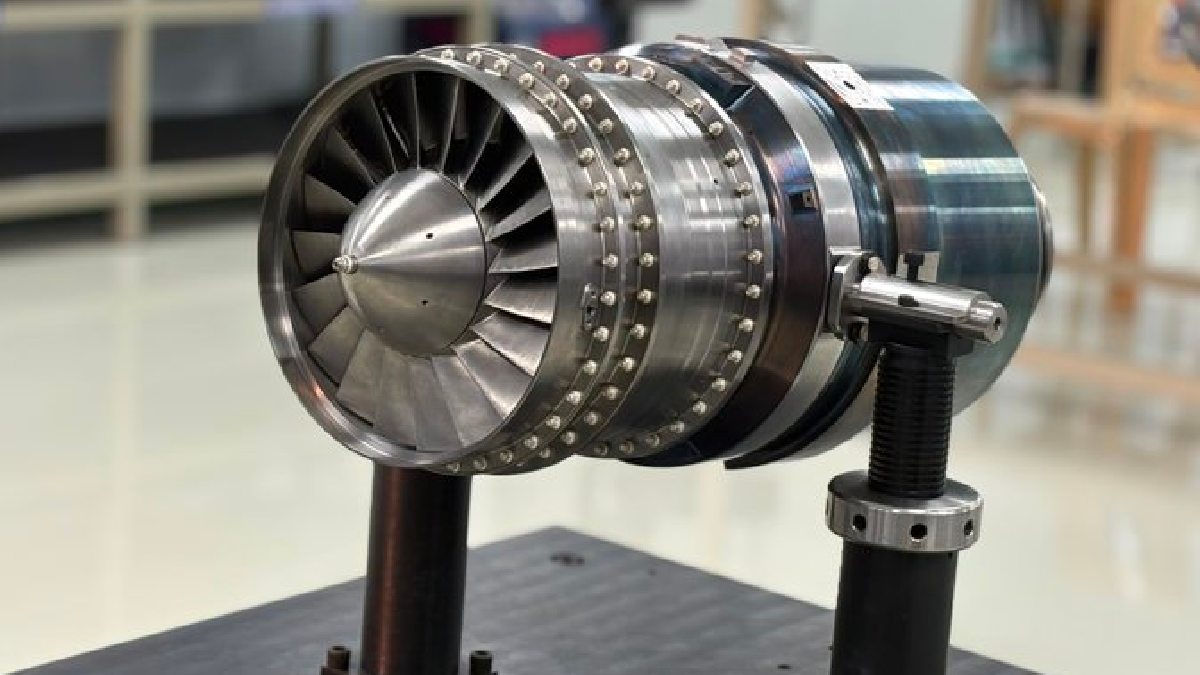
This is another step towards self-reliance in critical defence technologies under the Aatmanirbhar Bharat initiative.
The new turbojet engine has been developed for expendable aerial platforms to include long-range unmanned systems, loitering munitions, target drones, and cruise missile applications. Up to now India has been dependent on imported propulsion engines for such platforms.
The indigenous engine will reduce reliance on foreign suppliers while also enabling strategic autonomy.
The engine was designed and developed by Indian defence scientists and engineers and achieved many key developmental milestones like design validation, manufacturing and testing. The propulsion system provides about 350 kg of thrust which is good for powering a lot of UAVs and next-generation precision strike systems.

The successful development indicates India's increasing technical competence in gas turbine engine development, one of the most challenging areas in aerospace engineering. Turbojet engines require precision manufacturing, advanced materials, high-temperature components and aerodynamic design. To accomplish the capabilities locally shows the country's expanding technological base.
Defence experts say the indigenous engine will play a significant role in future military modernization projects. It could also be used to create indigenous defence projects for the indigenous defence and is flexible enough to be incorporated into many indigenous defence projects for quick production cycles, lower procurement costs and operational readiness.
The presence of a homegrown propulsion system also reduces supply chain risk in a situation of geopolitical uncertainty.
The achievement is in line with India’s long-term goal to develop indigenous defence platforms on land, sea, air and space. In the past few years, the country has intensified efforts to design and manufacture advanced missiles, drones, combat aircraft components and propulsion technologies in India.
Apart from defence applications, the project aims to strengthen India’s aerospace manufacturing sector.
DRDO’s GTRE has successfully developed India’s first indigenous Expendable Turbo Jet Engine in the 350 kg thrust class. Manufactured and assembled by industry partner Azad Engineering, the engine marks a historic milestone in indigenous jet engine technology and reflects the… pic.twitter.com/osIVeLdA2W
— Ministry of Defence, Government of India (@SpokespersonMoD) July 23, 2026
Indigenous engine development in India is aimed at promoting the collaboration of research organizations, public sector enterprises, private businesses, and universities. For India to become a world-class aerospace industry, such partnerships are needed.
The successful development also opens up future advances in engine technology to be made as engineers can improve fuel efficiency, thrust output, reliability and endurance to make it easier for unmanned combat systems and aerospace platforms.
Industry experts viewed the achievement as a strategic capability and not just as a technological accomplishment. Indigenous propulsion systems offer more freedom in defence exports since export restrictions of foreign engines can often hurt international sales.
A domestically developed engine could therefore boost India's defence export capacity in the future.
As global demand for unmanned systems continues to grow, indigenous propulsion technology will be increasingly important. India’s new breakthrough further strengthens its vision of technological innovation, defence preparedness, and self-reliance and puts it among a small group of countries capable of manufacturing advanced turbojet engines in the country.
The indigenous 350 kg thrust-class expendable turbojet engine is another significant milestone in India's journey toward becoming a global aerospace and defence manufacturing hub.