In southern India, thousands of workers are engaged in a unique project that combines human labor with artificial intelligence. With head-mounted cameras, the workers work on everyday tasks like cutting mangoes, folding towels and ironing bags and other daily activities, all done with robots using a human-like level of precision. The footage is then used for training AI-powered robots in human dexterity and the robots can then mimic routine tasks as well.
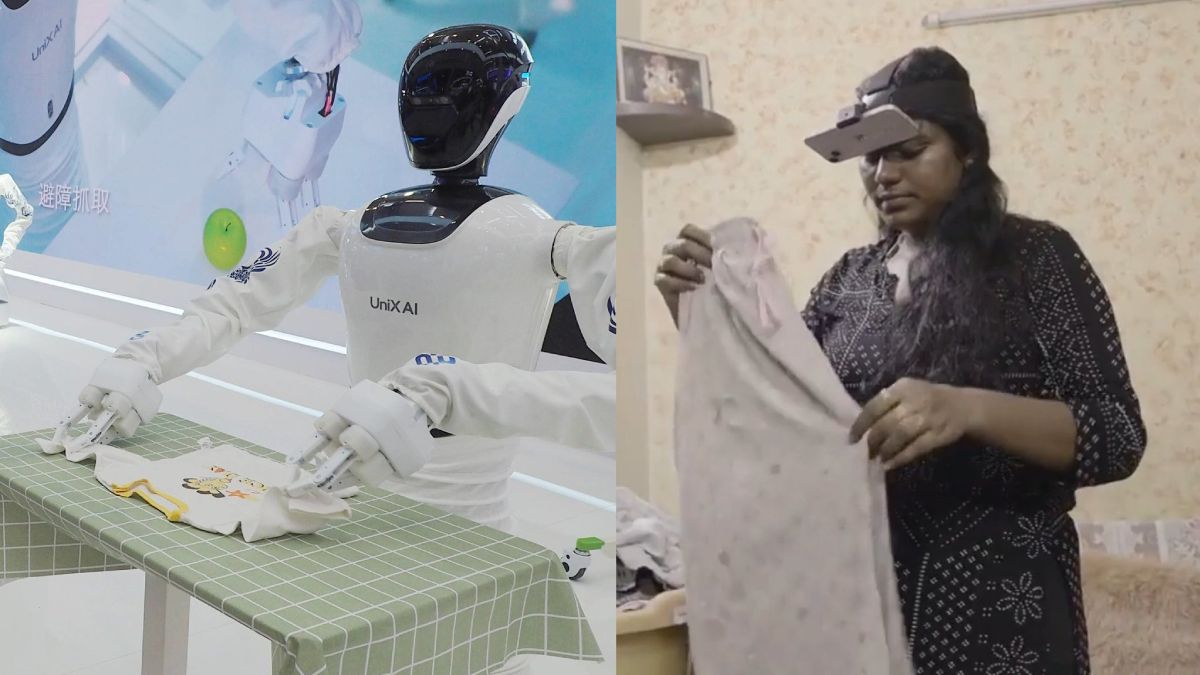
These are led by companies like Objectways, which employs more than 2,200 people to provide data to Fortune 500 clients. Founder Ravi Shankar sees this as a first step to creating better human jobs in the future, because training robots today could lead to more skilled jobs tomorrow.
For many workers, the project provides modest, but steady wages. Nagireddy, a housewife, said she enjoys the income she gets from doing the tasks on camera, and that she can make money without leaving home. But others are worried about the long-term impact. Ponni, a flower seller, is worried that the current generation is earning from the current job work but, as robots get better at replacing human workers, the future generation will lose work.
The debate underlines a much bigger problem in India’s sprawling informal workforce. AI training projects offer short-term jobs, but they also raise questions about the future of low-skilled jobs. Experts stress upskilling and reskilling, to ensure that workers can move into jobs that are more automated rather than competing with automation.
India’s engagement in such projects underlines the way it is growing into the global AI ecosystem. And with the data that robots have learned to do human things, Indian workers are shaping the future of automation worldwide. But at the same time the balance between opportunity and risk is delicate and policymakers and industry leaders should keep the livelihoods safe while making sure technology is not put at risk.
At the same time, the sight of workers carrying out routine tasks with head-mounted cameras is a good reminder of the promise and its peril of AI integration. Even if the companies like Objectways see it as a route to better jobs, there are concerns of workers such as Ponni to tell us that the future of work in India will depend on how well the country invests in skills and adapts to automation.