NVIDIA is once more pushing the boundaries of graphics technology, but its latest attempt to make video games look more photorealistic has already divided gamers. The company's DLSS 5 (3D-Guided Neural Rendering) will be released on RTX 50-series graphics cards and GeForce NOW on September 3 and NBA 2K27 will be the first of them to reveal it.
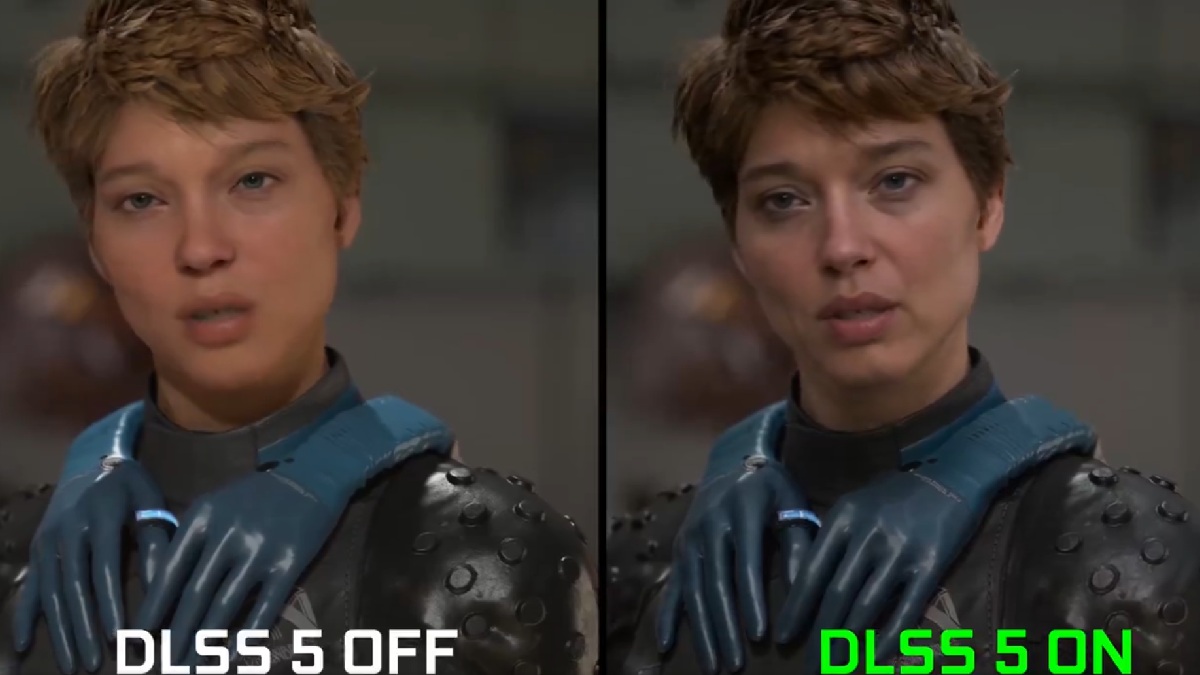
Whereas earlier versions of DLSS were focused on performance improvements and image reconstruction, DLSS 5 focuses more on how the game looks. NVIDIA is using artificial intelligence to add lighting, skin scattering, and material appearance to the game's lighting. The aim is to provide visuals that can be more realistic than real-world photography for the game's rendering system to reproduce and retain the information from.
The technology is just one step in NVIDIA's larger strategy to combine graphics rendering with neural networks. If every visual detail is not to be determined completely by rendering techniques, neural rendering can use AI models to create or improve certain aspects of a scene. This approach could mean developers will be able to create visual effects that would take substantially more compute power to do in the past.
One of the most interesting aspects of DLSS 5 is the level of control that game developers have been given. Developers can control the intensity of the effects, color of the effects, and masking to determine where the technology should be applied instead of a single visual filter over a whole game. This means studios can theoretically take advantage of neural rendering selectively and still keep the artistic direction they set up for their games.
That flexibility is crucial because photorealism is not the goal of every video game. Games often need character models, lighting systems, textures and color palettes to create a specific atmosphere. Making everything look more realistic does not necessarily mean making it look better.
Some gamers have liked the demonstrations of games such as Death Stranding 2. The game’s cinematic presentation and detailed environment already align with NVIDIA’s visual realism goal. DLSS 5 could add more subtle details and make characters, surfaces and lighting appear more convincing without developers having to redesign their entire graphics pipelines.
So for fans of Hideo Kojima’s visual storytelling, the technology might be a good fit. Realistic skin, better material response and more sophisticated lighting can potentially enhance the cinematic quality that is one of the pillars of the Death Stranding experience.
But not everyone thinks that more realism produces a better image. Some have criticized AI-enhanced facial designs for appearing too artificial. Wrinkles and skin details on younger characters, for instance, have been observed to be particularly pronounced. What is designed to be realistic can end up making the character older and less natural than the original artistic design.
The concern becomes more important when the technology is applied to games with very distinctive visual identities. Cyberpunk 2077 is, for instance, a game that has an elevated aesthetic built on neon lighting, stylized environments and a one-of-a-kind interpretation of a futuristic world. If neural rendering changes lighting, textures or character features too aggressively, some people are worried that the resulting image will drift away from the game’s intended look.
This has set the stage for a larger conversation on the role of AI in game graphics. For years, the industry has pursued better visuals through the development of better rendering capability, better ray tracing and lighting and material systems. Neural rendering opens up another possibility: AI may have a greater input into the final image.
The problem will be finding the right balance. Developers need to make games look technically impressive without allowing AI processing to override artistic decisions. While a photorealistic face may have more technically detailed skin, if that skin doesn’t reflect the age of the character and personality or the intended design they were trying to convey, the result might feel less convincing.
Hardware limitations are another big factor in the discussion. Games are getting so demanding that developers are looking to create games that aren’t requiring high-end hardware in order to achieve high-end visuals without requiring players to own an engine. NVIDIA’s RTX 50-series GPUs are in line with the company’s AI and rendering technology and GeForce NOW could make some of these capabilities available in the cloud.
DLSS 5 applied to Death Stranding 2.
— AMIT ROY (@GamerInVoid) September 2, 2026
Hideo Kojima wanted DS2 to look photo-realistic. THAT was his artistic intent. You cant tell me DLSS 5 doesn't help that. It simply pushes past the hardware limitation and then some
Watch the full 4K comparison here -https://t.co/YJ07b1tacD pic.twitter.com/v8gKmA7GzH
The introduction of DLSS 5 will therefore provide a practical test of whether neural rendering can make any meaningful improvements that do not compromise the artistic intent. Early demonstrations can generate excitement, but how useful the technology is in real-world games will ultimately be.
When official tests and broader implementations become available, players will probably continue to compare DLSS 5-enhanced scenes with their original versions. The most interesting question may not be whether NVIDIA can make games look better, but if it can make them look better while still allowing developers to remain in control.
If NVIDIA gets it right, DLSS 5 will be a major part of the next generation of game graphics: traditional rendering combined with AI-driven visuals. But if it gets too far, then the technology will show that technical perfection and artistic quality are not always the same thing. Currently, the discussion around DLSS 5 reflects a much larger question facing the gaming industry: how much should artificial intelligence influence the way virtual worlds are designed and seen?