Artificial intelligence is transforming technology at an exponential pace, but Zoho founder Sridhar Vembu says it could be more important for employment than many realize.
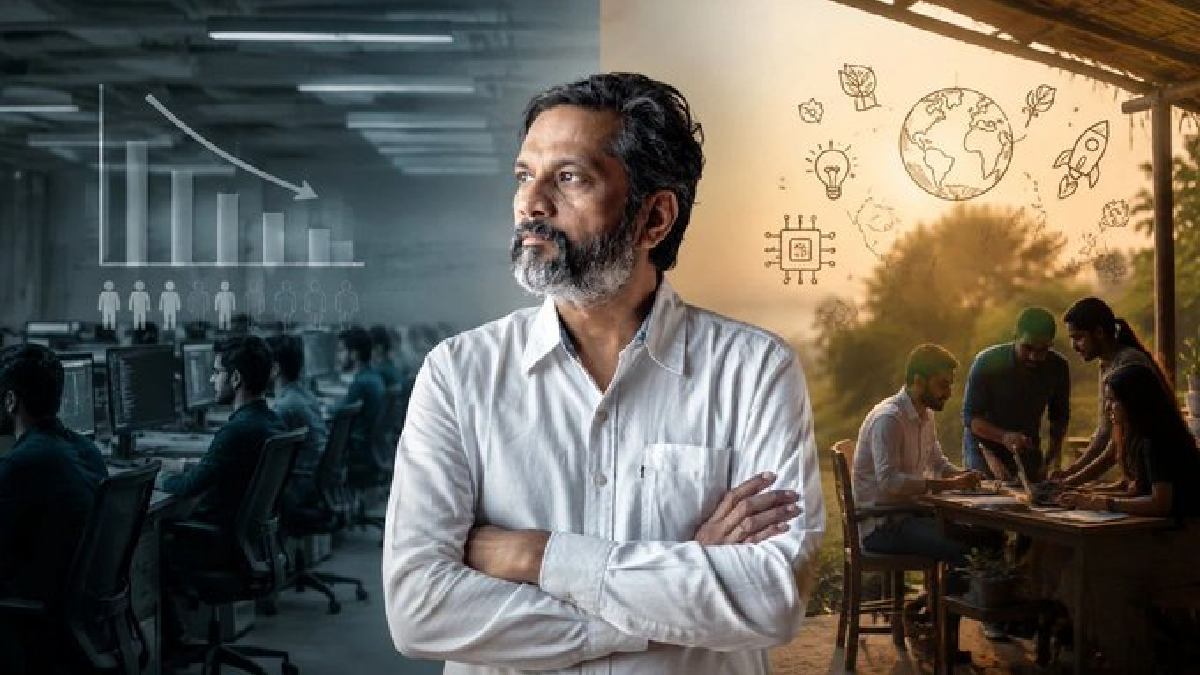
And Vembu said on social media: AI is already killing hiring in tech and could make it harder for young professionals to secure entry-level jobs.
These days, it’s happening at a time when companies are turning to AI tools to boost productivity and automate repetitive work to bring down operational costs. AI-based technologies are revolutionizing the way they recruit and develop a workforce for companies, not only that’s good but also how organizations recruit and create a workforce.
Vembu added that many software development tasks that were formerly done by junior engineers can now be done with AI programming tools. As a result, companies may need fewer entry-level employees, resulting in slower hiring despite the high demand for experienced professionals.
In Vembu’s view, this change is a big problem for young graduates who will have to work in junior positions in order to gain industry experience.

If companies are not hiring as many new software engineers, the career path for software engineers could well be less than ideal.
This concern goes beyond software development. AI is being incorporated into customer support, quality assurance, content creation, data analysis, cybersecurity, and a lot of other technology functions. Businesses are looking for people who will work with AI systems, not just perform the laborious manual job.
But Vembu did not suggest that AI will eliminate all technology jobs. He said that the field is changing fast. And people who keep working and learning to use AI skillfully are likely to be useful in the job market.
Industry experts have been sharing similar views in recent months. Many tech companies are paying so much for generative AI platforms while simultaneously slowing down recruitment for some entry-level positions.
And there is a growing appetite for candidates with experience with AI tools, machine learning, cloud computing, cybersecurity, and software engineering.
The change in the world for students and recent graduates underscores the importance of continuous learning. Internships, open-source projects, certifications, and AI-assisted development can really help students in getting work experience for the short term.
Educational institutions are also under pressure to modify their curricula. More and more universities and training organizations are introducing AI-oriented courses to prepare students for an industry in which automation will play a key role.
AI is still creating exciting new areas of opportunities in healthcare, finance, manufacturing, education, and software development, but it is also changing the skills that employers want to train their employees for the future.
Vembu’s warning indicates that technological advances do bring both opportunities and obstacles for people to contend with. The next generation of professionals in the future, and indeed all those in the future who will be able to enter the AI-driven workforce will need to evolve to be part of an increasingly sophisticated workforce and work harder to adapt to a world of AI as the adoption of the technology is accelerating.
The future of technology jobs might not have fewer jobs overall but will almost certainly require different skills, more adaptability, and lifelong learning from aspiring professionals.