Smartphone performance is no longer just about the processor, RAM or the refresh rate of the screen. The storage technology is also becoming an increasingly important part of the user experience. This is where Universal Flash Storage (UFS) comes into the picture. UFS 3.1 has been widely used in smartphones for several years, but UFS 4.0 is a much faster storage standard for newer premium and high-performance devices.
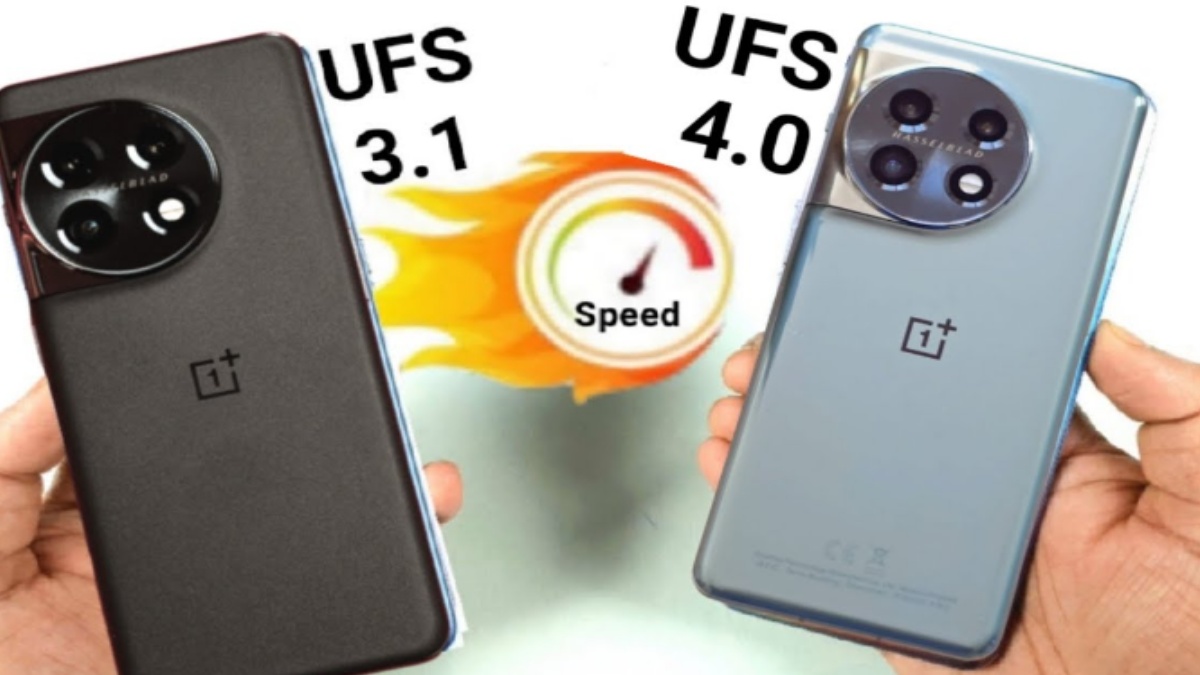
On paper, UFS 4.0 has nearly double the interface bandwidth of UFS 3.1. On a basic level, the question many smartphone buyers would like to know is: How fast will they feel a phone will go faster?
The answer depends drastically on how you use your phone. This is mainly in what you do with your phone and how much of your phone. UFS 4.0 can have significant performance benefits during storage-intensive activities (e.g., transferring large files, installing apps, downloading games, loading demanding games, and handling large amounts of data). But if you spend most of your phone’s time in messaging apps like text messages, social media, watching videos, and streaming music, the difference between UFS 4.0 and UFS 3.1 may not always be as simple as you think.
UFS stands for Universal Flash Storage and is essentially the high-speed storage technology in many modern smartphones. It stores the operating system, applications, photographs, videos and other files. Unlike older storage standards, UFS is designed to support faster data transfers and more efficient communication between storage and the smartphone's processor.
UFS 3.1 is already a big leap forward over the older storage technology. It does enough to be used in everyday smartphone use and is up to demanding apps and games. One still has a highly responsive phone with UFS 3.1.
UFS 4.0 takes storage performance considerably further. Its interface bandwidth is effectively twice that of UFS 3.1, which means the storage subsystem can move data much more quickly. This higher bandwidth is particularly helpful when a smartphone needs to read or write large amounts of information in a short period of time.
One of the most obvious examples where UFS 4.0 can be used is in the context of large file transfers. Moving a high-quality video, large collection of photographs or other large files can be moved faster in a UFS 4.0 device. The speed of such transfers can be achieved with UFS 4.0, but it can be constrained by other components as well (e.g., the source device, cable, WiFi connection or file transfer protocol).
App installation is one example where faster storage is needed. App installation takes time to download data, write data to storage and perform processing tasks. Large games can contain several gigabytes of data; faster storage will save time writing and accessing the data. This speed improvement will not necessarily match the theoretical bandwidth difference. The installation speed will depend on the internet connection, processor performance, and how the application is packaged.
Gaming is a workload that UFS 4.0 can potentially have advantages. Mobile games now have more advanced graphics, large environments and lots of game data. Better storage can speed up loading times if large data has to be retrieved. It can make data-intensive operations feel more responsive, especially for high-end smartphones which are designed for game-intensive operations.
But UFS 4.0 does not automatically make every aspect of a smartphone twice as fast. This is one of the most important things to consider when comparing the two standards. Storage bandwidth is only one part of overall smartphone performance. The processor, RAM, software optimisation, thermal management and application design all have a major effect on how quickly a phone responds.
For most everyday tasks such as sending messages, checking emails, browsing websites or scrolling through social media, the difference can be much smaller. Most of these tasks do not require continuous transfer of massive amounts of information between storage and processor. When an application is loaded into memory, many of the simple tasks depend more on the processor, RAM and software than on maximum storage capacity.
Video streaming is another example. Whether you are watching a video on a streaming service, the experience is largely determined by your internet connection, display and decoding capabilities. UFS 4.0 doesn’t make an online video stream play at twice the speed simply because the phone has faster internal storage.
The same goes for basic messaging applications. Opening a chat, reading a message or typing a response is unlikely to showcase the full capabilities of UFS 4.0. For these activities, UFS 3.1 and UFS 4.0 can provide a smooth experience on a modern smartphone.
There are also efficiency benefits from the new storage technology. UFS 4.0 was developed to improve performance and energy efficiency compared to previous generations. Better efficiency is also helpful in high-end smartphones that are trying to balance performance and battery life.
Another important aspect is how the storage itself works. Two phones may both advertise UFS 4.0 but deliver different results in practice depending on the quality of their storage chips, controller, firmware and overall system architecture. Likewise, a UFS 3.1 smartphone can sometimes feel faster in everyday life than a poorly optimized UFS 4.0 smartphone.
For consumers, this means UFS needs to be considered alongside other specifications and not as the only parameter to monitor phone speed. A smartphone with UFS 4.0 is generally better suited for heavy workloads and future applications, but the value may not be enough to choose a specific device solely based on the storage technology.
The difference is especially apparent for users who often install large applications, transfer large files, shoot high-resolution video, play demanding games or use their smartphones for intensive productivity tasks. These users will encounter situations where faster storage can save time.
For casual users, UFS 3.1 can still deliver a fast smartphone experience. Messaging, social media, streaming, web browsing and everyday photography don't require the maximum storage bandwidth of UFS 4.0.
Finally, while UFS 4.0 is a significant technological upgrade, it is the practical benefits that need to be considered, and not only theoretical. The near doubling of interface bandwidth is impressive, but phones don’t automatically improve instantly when they are used in real time. Most of the improvements come when performing storage-intensive tasks, while everyday tasks can feel very similar between UFS 3.1 and UFS 4.0 devices.
Therefore, for smartphone users, we should consider the entire hardware package. Processor performance, RAM, software optimisation, battery capacity, cooling and storage technology all work in concert to make a phone feel responsive. UFS 4.0 is an advantage for demanding users, but UFS 3.1 can still offer an excellent experience for everyday phone use.