
The Central government is considering a major change in the identification process for welfare benefits union Minister Rajiv Ranjan Singh has said Aadhaar cards will not be used as primary basis for payment of beneficiary. Voter ID numbers and biometric authentication are expected to be used to identify eligible beneficiaries and make payments.
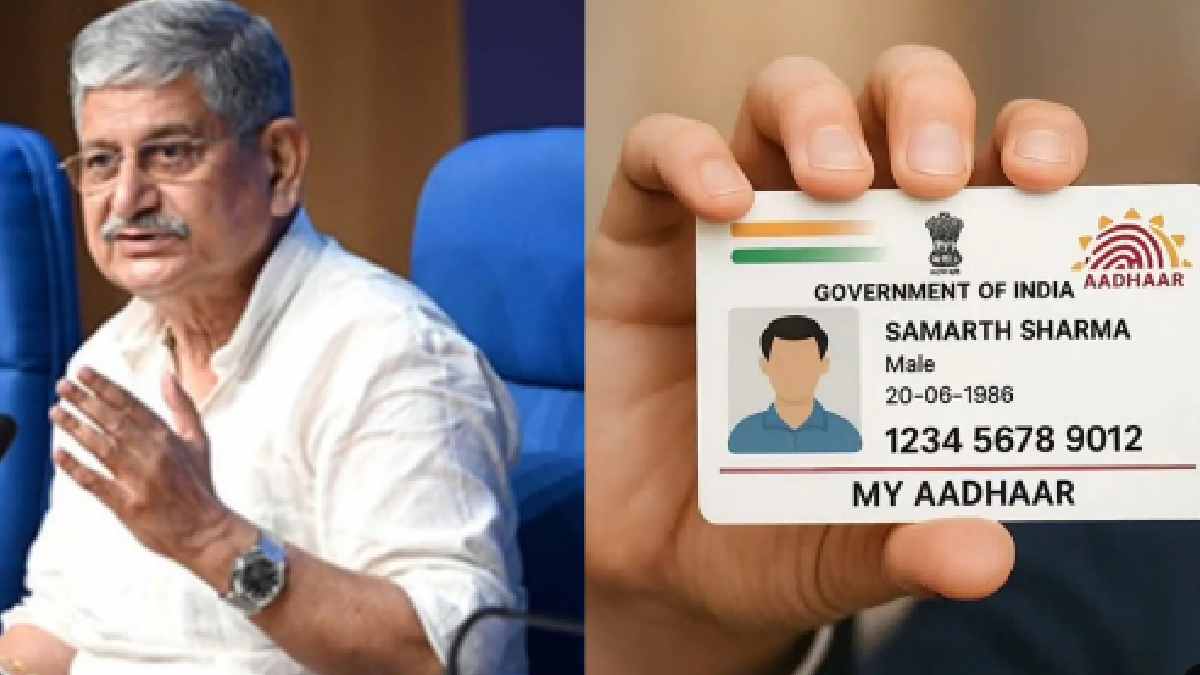
Singh (who heads the Ministry of Panchayati Raj, Fisheries, Animal Husbandry and Dairying) announced this while addressing the National Workshop on People’s Plan Campaign 2026-27 in New Delhi on October 30.
The minister said Aadhaar was not reliable as a means of identifying genuine beneficiaries. “Aadhaar enrolment facilities have become so widespread that people can get the document quickly,” he said.
Instead, Singh said beneficiaries would be asked to provide their EPIC numbers along with biometric details for identification and payment. The system is expected to strengthen beneficiary verification and prevent ineligible people from getting government assistance.
However, the minister has not said which welfare schemes will adopt this new identification arrangement. It is also not clear whether the proposal will apply only to schemes linked with his ministries or if it will cover other central government welfare programmes as well.
Questions Over Implementation
The announcement has been news because Aadhaar-based identification is used across several major government welfare programmes PM-KISAN, Pradhan Mantri Awaas Yojana-Gramin and social security pension schemes.
Aadhaar seeded bank accounts and authentication systems have been used to identify beneficiaries and make direct benefit transfers. Any change in this arrangement could therefore be very complex administratively and technologically.
There has also been criticism from the Communist Party of India (Marxist) which said making voter ID and biometric authentication mandatory would add to difficulties for economically weaker sections.
The party said elderly people, agricultural workers and manual labourers already have problems with biometric authentication (worn out fingerprints; difficulties capturing iris scans etc.) so genuine beneficiaries can’t complete verification.
The CPI(M) also raised concerns about rural households which do not have smartphones (especially when it comes to electronic KYC procedures).
SIR Exercise Adds to Concerns
The proposal has also become politically sensitive because it comes at a time when SIR (Special Intensive Revision) of electoral rolls is going on. Opposition parties have said voter deletions during the exercise may affect eligible citizens.
Critics say linking welfare payments to voter ID would make life more difficult for people whose names are missing from electoral rolls (even if they remain eligible for government assistance).
The CPI(M) has demanded that the proposal be withdrawn and said access to welfare benefits should not depend on documentation or technology which vulnerable households may find difficult to access.
As of November 5 no government order had been issued regarding the change or how it would be implemented.
The move has therefore raised important questions about Aadhaar-based welfare payments, beneficiary verification and access to government assistance in future. The Centre will need to clarify how the proposed system will work and which beneficiaries will be affected by it.



Comments