
Apple Pay launched in India, bringing Apple’s contactless payment service to iPhone, iPad and Apple Watch users in India.
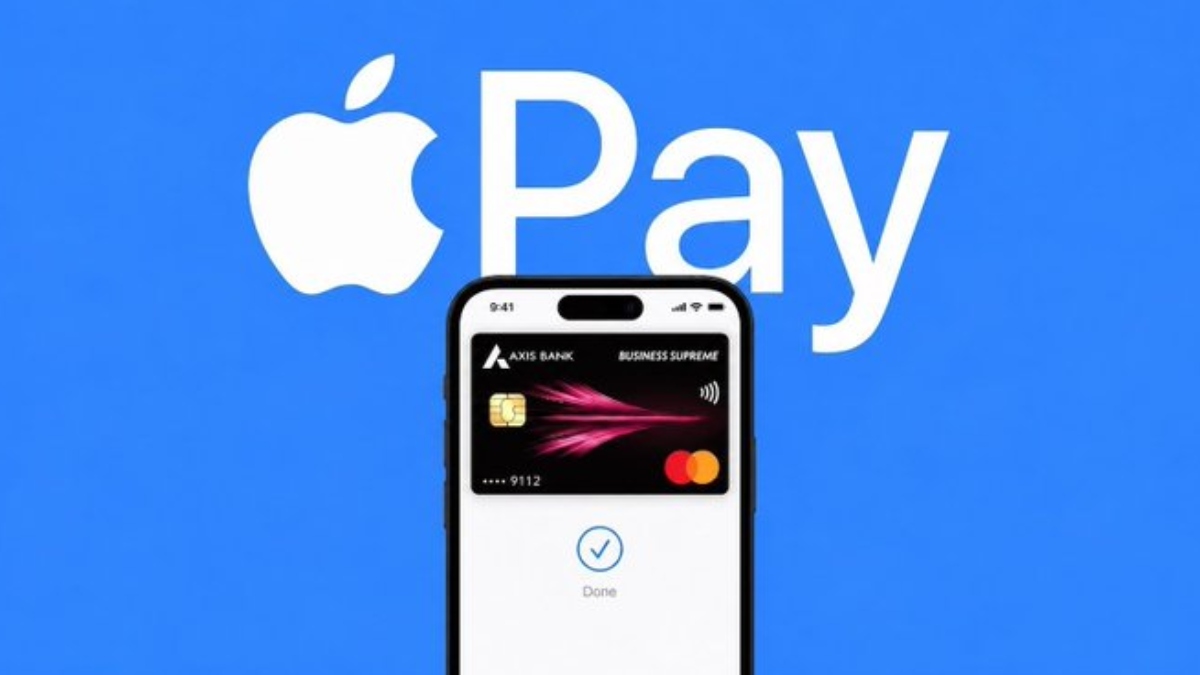
The launch of Apple Pay is of course in the middle of an intensely competitive digital payments market in India, and consumers already depend on UPI, cards and mobile payment apps. When it comes to contactless payments, it’s available to apply for Axis Bank and Visa and Mastercard credit cards for contactless payment at supported retailers.
When Apple Pay arrives in India, it will be an important step as the service has been available in a number of international markets for years but not locally. Apple has now brought its own payment system to one of the world’s largest smartphone and digital payment markets. The company has said Apple Pay is designed to provide consumers with a safe and convenient way to make payments on Apple devices.
With Apple Pay, users can add payment cards to Apple Wallet and use them for contactless payment at compatible payment terminals. On iPhones and Apple Watches, customers can check if the payment card is authentic with the device security features before holding it at contactless payment reader. This means payment won’t require them to physically take the card and is not just a replacement of regular card payments.
The first Indian roll-out is with Axis Bank. Reports confirm support for eligible Axis Bank Visa and Mastercard credit cards, and the availability of other banks and card networks will depend on future partnerships and Apple's rollout plans. Not every Indian credit or debit card can be added into Apple Pay from day one. Users will need to check if their particular card is eligible through the Wallet setup process.
Apple Pay can be used in participating physical stores and on apps and websites. In stores, the service relies on contactless payment technology. For that reason, compatible NFC-enabled payment terminals are key for the in-store experience. It will be particularly important in India given that the payment system in India is based on UPI and NFC card payments are another more established solution.
Security is a core feature of Apple Pay. Instead of requiring users to show their physical card information during a transaction, Apple Pay employs device-based security and tokenisation features. Transactions can also be authenticated through biometric security (e.g. Face ID or Touch ID) based on the Apple device. Apple has already emphasized privacy and security as a key aspect of Apple Pay's global payment architecture.
The service will be available on iPhone, iPad and Apple Watch devices at launch. Apple reports that iPhone XR and the newer ones are compatible with the Indian rollout. Users will need compatible hardware and software, an eligible payment card and access to a merchant payment terminal or online checkout.
Apple Pay’s entry into India does not mean that UPI payments are being replaced. What it offers is another pay-in-the-hand solution for Apple users, especially those who prefer card-based payment options and contactless payments. India’s UPI ecosystem still plays an important role in daily digital payments, while Apple Pay’s hardware and Wallet and card-payment ecosystem is based on Apple Pay.
Apple has also been expanding Apple Pay globally. Apple announced in January 2026 that Apple Pay was available in 89 markets worldwide and had more than 11,000 bank and network partners. Apple also reported that Apple Pay had generated more than $100 billion in incremental merchant sales globally and, based on Apple and industry data cited by the company, helped eliminate well over $1 billion in fraud in the previous year.
The launch could make Apple devices more useful for everyday card payments while giving banks another digital channel for their customers. The initial Axis Bank partnership could also be the starting point for Apple's expansion to other Indian banks and payment networks.
The launch comes at a time when Apple is strengthening its presence in India in hardware, retail and services. Apple has several brick-and-mortar stores in the country and has been expanding its Indian operations. And its latest software platforms (i.e., iOS 27) are rolling out to compatible devices.
🚨 Apple Pay is officially launching in India today. pic.twitter.com/66CJrv0fVO
— Indian Tech & Infra (@IndianTechGuide) September 30, 2026
For users who want to use Apple Pay, one should open the Wallet app on a compatible device and try to add an Axis Bank card to it. The payment might not be available with the specific card and Apple’s banking partner relationship. As more banks and networks might branch into the service, Apple Pay will be available to more people in India.
So the launch in India is a major step in the direction for Apple Pay, although a relatively small number of users in comparison with the much larger UPI ecosystem in India. For now, the service offers a way for Apple users to pay, combining contactless payments, Apple Wallet integration and device-based authentication for a single payment experience.







Comments