
At the UN Office of Counter-Terrorism, an Indian parliamentary delegation, led by Rajya Sabha MP Sikander Kumar, discussed strengthening counter-terrorism cooperation with the UN Office of Counter-Terrorism - as well as intelligence cooperation and terrorist financing and cyber threats.
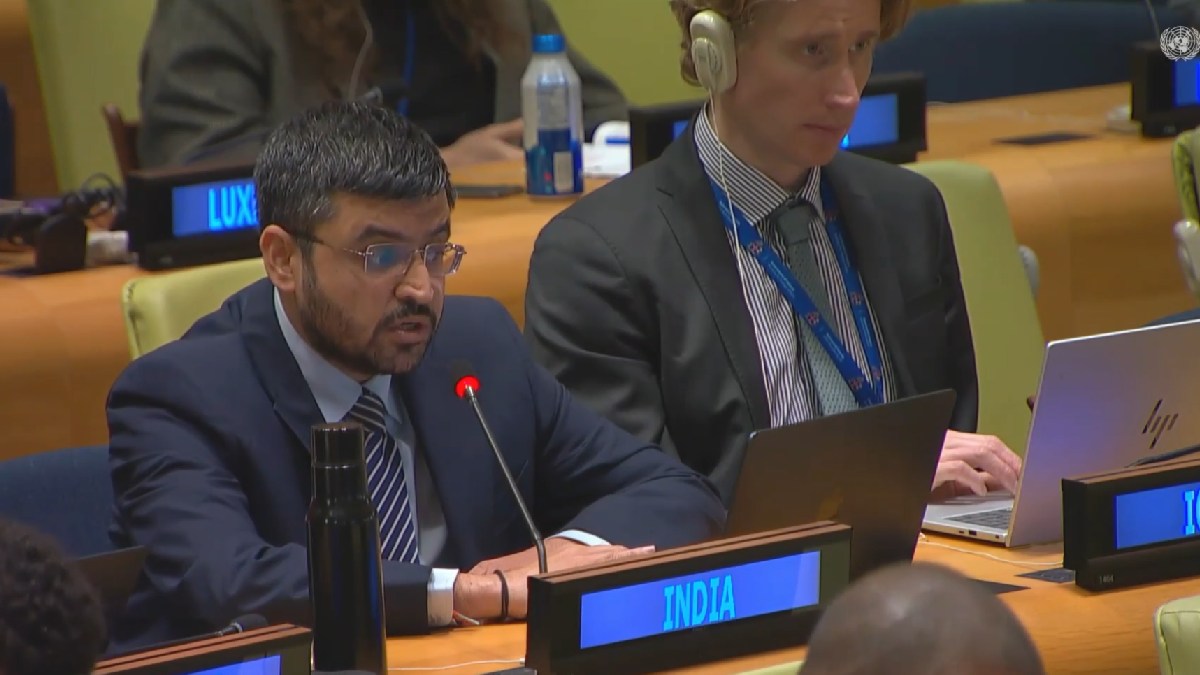
India’s parliamentary delegation attending the UNGA session has reaffirmed India’s commitment to fighting terrorism and the need for international cooperation to deal with cross-border dangers and prevent terrorist networks from capitalizing on modern technology and financial systems.
According to an official release, the delegation was led by Rajya Sabha MP Sikander Kumar who reiterated India's zero tolerance policy against terrorism. At the United Nations, the delegation stressed the need for a global response of coordination in tackling terrorist activities such as cross-border networks and allegations of state-sponsored terrorism.
The delegation traveled to New York and had a bilateral meeting with Alexander Zouev, Acting Under-Secretary-General of the United Nations Office of Counter-Terrorism (UNOCT). The discussions were on the strengthening of cooperation between India and the UN body and making joint counter-terrorism efforts more effective.
India Calls For Greater Global Counter-Terrorism Cooperation.
Kumar said terrorism cannot be justified in any form or manifestation in the meeting and related discussions. He said countries should work together to fight terrorist networks and respond decisively to threats that cross borders.
The delegation also highlighted the importance of international coordination in preventing terrorist organisations from accessing financial resources, accessing technology or operating across jurisdictions.
The problem of terrorists and officials from different countries is growing more complex as terrorist networks evolve and use digital platforms to communicate, spread propaganda and coordinate the activities of their members in the world.
India's position, as detailed in the release, was that effective counter-terrorism measures require sustained cooperation between governments and international institutions. Sharing of intelligence, technical assistance and stronger legal frameworks were identified as key areas in which countries could work together.
The delegation also spoke of India’s commitment to global capacity-building efforts. These efforts could help countries improve their capacity to investigate terrorist activities, identify threats and strengthen the institutions that oversee counter-terrorism laws.
Focus on Intelligence Sharing And Cyber Threats
Intelligence sharing was one of the key topics highlighted by the delegation to UNOCT. When relevant information is exchanged between countries timely, it can help to find suspected terrorist organisations, investigate cross-border activities and coordinate responses to emerging threats.
The delegation also mentioned the misuse of cyberspace by terrorist organizations. Digital platforms can be used to distribute extremist propaganda, send messages across borders, and recruit or commit other illegal activity. It is therefore important that international cooperation has been established to respond to these threats and to meet the legal requirements.
Money laundering was another area of concern. Terrorist organisations need money to carry on their business and so terror financing is at the core of global security efforts. The delegation stressed that in order to identify suspicious financial flows and to prevent terrorist groups from getting money, cooperation from forming would be crucial in order to help.
India also highlighted its cooperation with UNOCT, including cooperation on intelligence exchange, countering terrorism in cyberspace and promoting international legal mechanisms.
India Emphasises a Rules-Based International Order
Kumar emphasized that India has long been affected by terrorism and that a rules-based international order is necessary to tackle it effectively. The delegation's message was clear: counter-terrorism should be on the basis of global norms and collective action not at all in a fragmented manner.
The talks also reaffirmed India’s call for a common approach to tackling terrorist networks, irrespective of where they operate or how they get support. International coordination can reduce gaps between national systems and make it harder for such networks to take advantage of differences in laws, enforcement capabilities and information-sharing arrangements.
The delegation also emphasized that lasting peace would not be achieved unless terrorist safe havens in the middle of borders were dismantled. In the end it stressed that global engagement, as well as a strong inter-governmental initiative to enhance counter-terrorism cooperation and help countries cope with new security threats, is needed.
The engagement with UNOCT was part of India’s wider participation in international discussions on the day of the UN General Assembly session in the presence of international leaders.
By raising issues such as sharing intelligence with each other, terror financing, cyber threats and legal cooperation, the delegation underlined India’s position that terrorism requires a unified international response.






Comments