
Larsen & Toubro (L&T) and BAE Systems have started production of the BvS10 Sindhu articulated all-terrain vehicle for the Indian Army at Hazira in Surat, Gujarat. The development marks a new step in India’s efforts to manufacture specialised military mobility platforms locally for operations in some of the country’s most challenging geographical and climatic conditions.
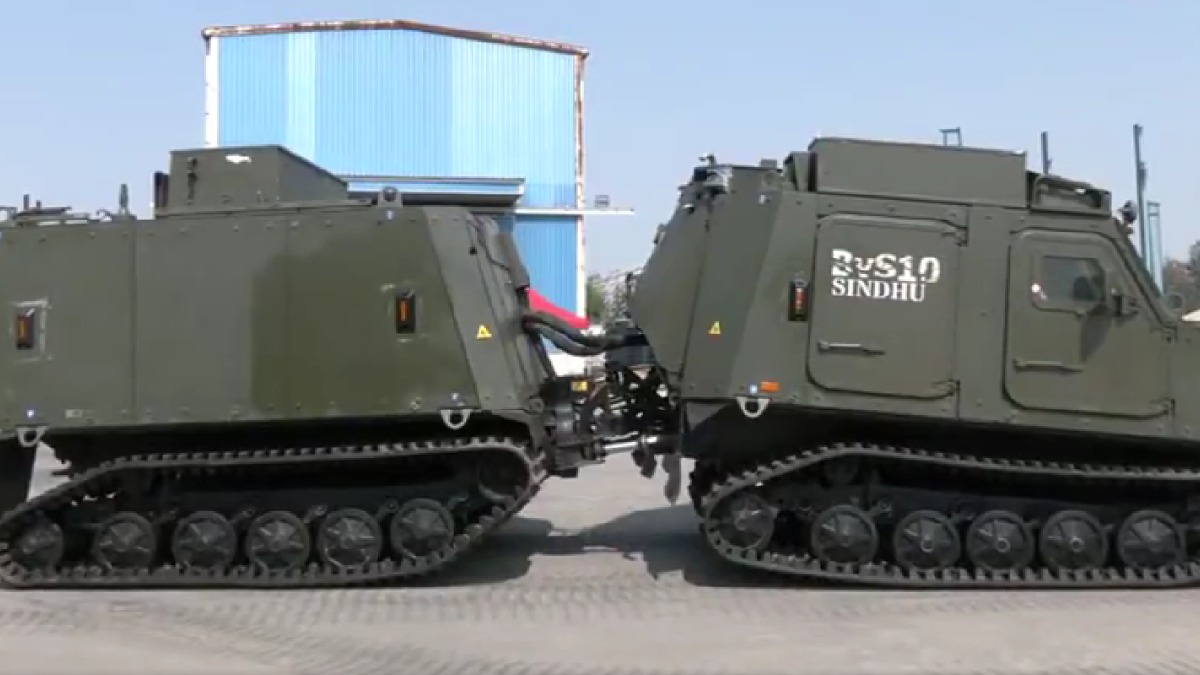
The Indian Army has placed an initial order for 18 vehicles. These are intended for deployment in Ladakh and the Kutch region, where troops may face dramatically different operational challenges, from extreme cold and snow-covered mountains to desert landscapes and marshlands.
BvS10 Sindhu to support operations in Ladakh
The BvS10 Sindhu is designed to support military operations at altitudes up to 18,000 feet. In Ladakh, where winter temperatures can fall to minus 55 degrees Celsius, the vehicle is meant to help troops navigate snow-covered and difficult high-altitude terrain.
#WATCH | Hazira, Surat (Gujarat) | Larsen and Toubro and BAE Systems today started the production of their articulated all-terrain vehicle (ATV) BVS 10 Sindhu for the Indian Army. The Indian Army has placed orders for 18 of these ATVs which are globally proven in conflicts and are scheduled to be deployed in Ladakh for high altitude operations at 18,000 feet in extreme winters and snow conditions at up to -55 degree celsius. On the Pakistan front, the ATVs are being deployed in the Kutch region where they can operate in temperatures up to 55 degree celsius and can be used troops for patrolling marshy lands, desert areas and the great Rann.
— ANI (@ANI) October 28, 2026
Conventional vehicles can struggle to cross snow, uneven ground and sparse road connectivity. The BvS10’s articulated, tracked design is intended to improve movement over these surfaces for personnel and equipment on terrain that can be hard to navigate.
The vehicle has been adapted to the Indian Army’s operational requirements. Based on the BvS10 platform developed by BAE Systems Hägglunds, the design is based on the BvS10 platform with the modifications to suit India’s various terrain and climate.
Deployment planned for Kutch’s Desert and Marshland Terrain
The vehicles are also intended for operation in the Kutch region of Gujarat, near the India-Pakistan border. The area includes desert stretches, marshlands and the Great Rann of Kutch, where environmental conditions can be very harsh.
Temperatures in the region can reach 55 degrees Celsius. The vehicles will help with troop movement and patrolling in difficult terrain where conventional transport may be limited.
From sand, mud and snow to uneven ground the BvS10 platform is designed to handle a wide variety of surfaces. The articulated design allows the two connected segments to move in parallel to each other for manoeuvrability in difficult landscapes. It can also be amphibious and move over waterlogged areas and waterways.
These features make the vehicle applicable to the Indian Army’s needs in both high-altitude northern areas and the difficult terrain of western India.
L&T to manufacture vehicles in Gujarat
Production is carried out at L&T’s Armoured Systems Complex in Hazira, Surat. L&T is responsible for manufacturing the Indian version, while BAE Systems Hägglunds provides technical and design assistance.
The partnership between L&T and BAE Systems was announced in September 2023 as part of an effort to bring the BvS10 platform to the Indian market under the Make in India initiative. The Indian Army's procurement contract was later announced in November 2025.
The programme also includes integrated logistics support for initial application, maintenance and long-term vehicle sustainment. The domestic manufacturing will also boost India’s defense production capabilities while also providing access to specialised engineering expertise required for the platform.
The financial value of the procurement contract has not been disclosed in the disclosed announcements.
What the BvS10 Sindhu means for the Indian Army
The BvS10 Sindhu programme addresses a practical need for military mobility in areas where geography and weather can restrict the movement of troops and supplies. Its planned use in Ladakh and Kutch reflects the need for vehicles that can operate across snow, rocky ground, sand and marshland.
The production launch is an important manufacturing milestone, but it does not itself mean that all 18 vehicles have been delivered or deployed. The vehicles will need to progress through manufacturing and delivery before entering operational service.
With production now in Gujarat, L&T and BAE Systems are also in full flow with the Indian Army’s initial order for the specialised all-terrain vehicles. When finally deployed, they will be used to keep troops moving and patrolling in two of India’s most challenging environments.






Comments