
Trust in a household brand is built over time by consistency, transparency and accountability. Questions about a product that millions of people rely on should be answered by the organisation, its representatives, and the people or managers in charge of the organisation and its operations.
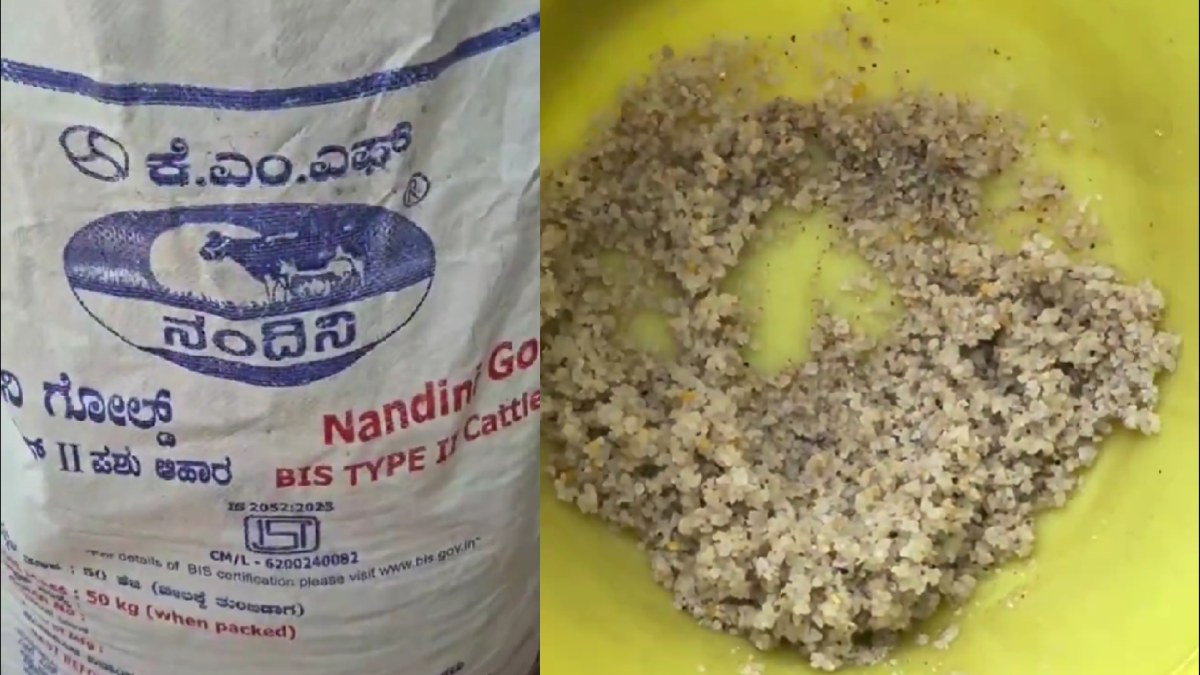
KMF (Karnataka Milk Federation) is now held accountable for quality issues with governance and public communication; they say milk and dairy operations of milk and dairy products marketed under the Nandini brand have also been under increased scrutiny. This has raised an important question for Karnataka: is there anyone who needs to be held accountable if people start questioning a brand they have trusted for years?
Is the responsibility of KMF itself, its administrative management or the Karnataka government, being run by the Congress party? What role each has to play in product quality, oversight and public confidence with regard to the production of products and management of the company’s products?
Quality concerns should be addressed with evidence.
Nandini products were under attack in 2026 from social media and KMF was forced to defend the safety of its products against accusations that it called “incorrect”. Public concern quickly spreads when people are uncertain about how ingredients and quality of everyday food products can cause a lot of people to be worried about the food product and how healthy it is.
In addition, an alleged adulteration case involving skimmed milk powder at Mandya District Cooperative Milk Producers' Union (known as MANMUL) led to a police investigation and food safety inspections across KMF-affiliated milk unions.
Trust in KMF is declining day by day. Who is responsible for this growing loss of public confidence KMF itself, its administration, or the Karnataka Congress government? The people of Karnataka deserve transparency, accountability, and quality they can trust. @DKSureshINC #KMF #Karnataka
— ಸನಾತನ (सनातन) (@sanatan_kannada) October 21, 2026
We must differentiate those developments carefully. The allegations that a particular facility or product is unsafe will not make all Nandini products unsafe. And similarly, claims made online must not be regarded as proven without credible testing and evidence.
But such controversies make transparent communication and independent verification of data crucial. Consumers should have access to clear information about laboratory testing, applicable food safety standards and the action taken when a violation is detected.
I mean the goal should not be to create panic or dismiss concerns automatically. It should be to make them crystal clear, and to communicate them openly.
What is KMF responsible for?
KMF has a direct responsibility to maintain quality controls in procurement, processing, storage and distribution as the Nandini brand.
It should have quality assurance systems that are in place that work, complaints are picked up quickly and any violations are taken up for corrective action.
The federation should also communicate with consumers in a clear and accessible manner. When there is concern, a detailed explanation backed by reliable test results can do more to protect public confidence than a statement simply denying allegations.
Transparency needs to go beyond product safety. Where possible, the information about quality inspections, rejected batches, corrective measures and disciplinary action in proven cases should be available.
For a cooperative organization that represents dairy farmers and serves consumers in Karnataka, accountability is not only administrative responsibility. It is central to the brand’s safety and that of consumers who depend on it.
What is the KMF Administration about?
The administration must follow the procedures as per the written procedure, responsibilities are clearly defined and problems are solved before they become larger controversies.
If quality checks are not done properly, complaints remain unresolved or information is not disclosed with proper justification, the administration must explain what went wrong and what steps are being taken to correct it.
A good administrative system should also make it possible to identify responsibility at every stage, from milk procurement to the finished product reaching a retailer.
The public should not be forced to depend solely on social media posts or unofficial claims to know if there’s a concern. When reliable information comes from the institution and the relevant regulatory bodies, it should be taken straight to the public.
Effective leadership is that which makes sure that leaders are open to criticism and correction and can be seen as having improved on outcomes.
Does Karnataka Congress government play a role?
The state government also has a responsibility, especially where public oversight, food safety enforcement and the governance of cooperative institutions are concerned.
KMF is a cooperative federation and its day-to-day operations should not be confused with direct government management of every decision. Nonetheless, the government and the relevant authorities have important oversight responsibilities under the applicable legal and regulatory framework.
The Karnataka government should ensure food safety rules are enforced, investigations are allowed to proceed properly and any proven wrongdoing is addressed without political interference.
It should also be made certain that administrative appointments, cooperative governance and public accountability are given proper attention.
If a public institution under scrutiny doesn’t answer the questions, it can’t simply distance itself from the problem. It should explain what oversight measures are in place and whether further action is needed.
At the same time, responsibility must be established by evidence rather than political assumptions. The fact that the Congress party runs the state government does not in and of itself imply that it caused a particular quality or administrative problem.
Consumers and dairy farmers deserve answers.
KMF’s accountability extends to two groups that are crucial to its success: consumers who buy Nandini products and dairy farmers who provide milk.
Consumers want products that are safe and quality products, accurate information and a clear procedure to file complaints.
Farmers deserve a cooperative system that works fairly, utilizes resources wisely and is in the best interest of their long term. Financial issues, procurement issues and cost fluctuations in production will have to be addressed as well without affecting quality.
These responsibilities are connected. The cooperative that retains consumer confidence will be better positioned to protect its market and maintain demand for the milk supplied by farmers.
So the priority should be to resolve quality problems, enhance oversight and be open with both groups.
Transparency Is Key To Rebuilding Confidence
If public confidence in KMF is under pressure, restoring it will require more than statements or political exchanges. It will require evidence, consistent quality control and visible accountability.
KMF should give clear information about testing and corrective action. Its administration should demonstrate that complaints are handled properly. The state government and relevant regulators should make sure that oversight is effective and that the rules as they are currently written apply to everyone.
Independent testing, timely disclosures and credible investigations can help separate verified facts from rumours. Where wrongdoing is established, responsibility should be fixed and appropriate action taken.
Ultimately, it is not just whether KMF, its administration or Karnataka Congress government deserves the blame. The question is whether each is fulfilling its responsibility to the public.
The people of Karnataka deserve transparency, accountability and quality they can trust. Protecting the Nandini brand means taking those expectations seriously and demonstrating, through action and evidence, that public confidence matters.






Comments
Leave a Comment