
Google's new flagship smartphone Pixel 11 Pro, which does not have the hardware or software to shine so much as fine tune the experience. It is priced at ₹1,19,999 in India and has a premium, compact design with camera system and bright OLED display, and Google's new AI software. But the minor upgrades and relatively low gaming performance are not high enough for the market with the expansion of the key flagship market.
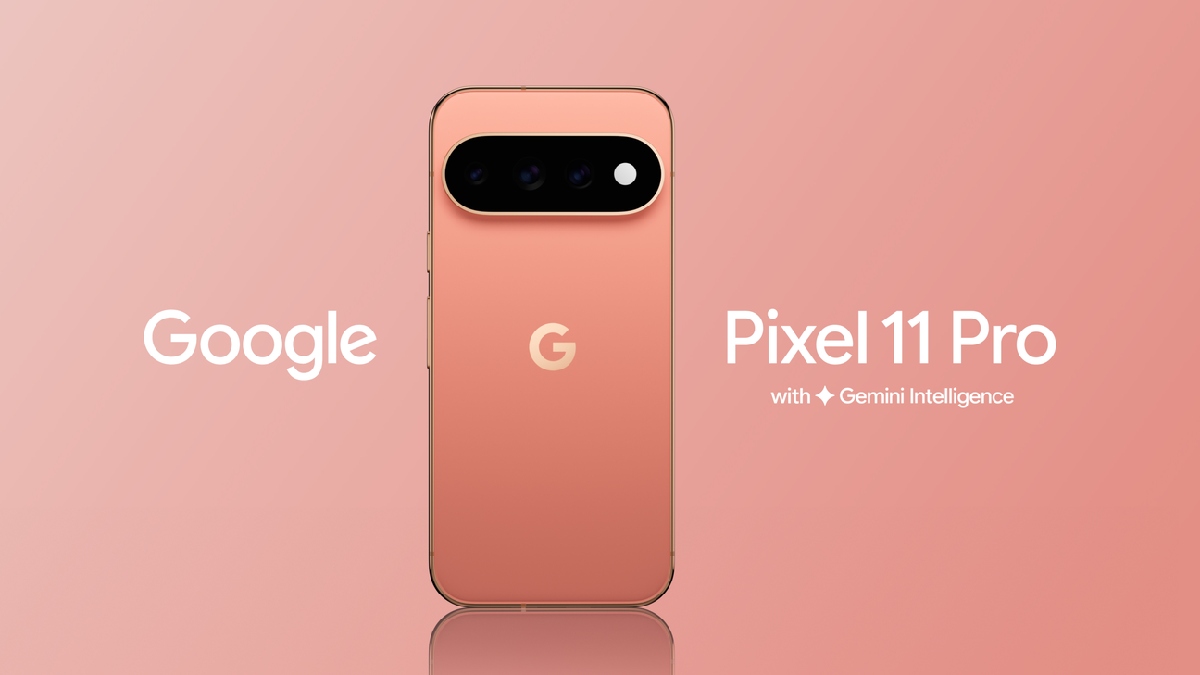
The Pixel 11 Pro is aimed at users who put photography, clean Android software and everyday convenience ahead of raw processing power. The design language of the original Pixel is still present but Google’s chipset, cameras and battery efficiency have been improved. And as a result, it’s a phone that really feels like it’s been around for years and it still provides the same quality of service that you’ve come to expect from the Pixel series.
For a smartphone user who owns a decade old device, the camera upgrades and smart software could make it more palatable. But users already using the Pixel 10 Pro may not have much to get from the device given the high starting price.
Google Pixel 11 Pro price in India and design
The Google Pixel 11 Pro is priced at ₹1,19,999 for the 12GB RAM and 256GB storage version. The high-end version with 16GB RAM and 512GB storage is ₹1,34,999 and it is a ₹10,000 upgrade from the previous generation (as well as from the review).
The smartphone retains a 6.3-inch form factor and is smaller than big flagship phones. This compact size allows easier one-handed use and its smooth construction also adds some polish. The phone is also thinner and lighter than its predecessor though it is still a minor difference.
It's said colour options are Obsidian, Canyon, Olive and Fog. The Obsidian version has a matte rear panel that is said to resist fingerprints. The new camera bar is extended all around the back and looks pretty good but its corners may get dusty over time.
HiLight, which is an RGB LED integrated into the camera area, is another new addition. It will glow in various colours when the phone is placed face down. Although it adds visual flair, with a limited level of customisation, it feels like an experimental add-on, not a big reason to buy the phone.
Bright OLED display remains a major strength
The Pixel 11 Pro's 6.3-inch LTPO OLED display is one of its strongest features. With QHD+ resolution and adaptive refresh rate from 1Hz to 120Hz the screen is set up for sharp visuals, smooth scrolling and efficient power consumption.
The panel reaches a peak brightness of 3,600 nits and outdoor readings around 3,000 nits under the conditions described in the review. This could help users read messages, browse websites and take photographs in bright daylight.
Colours are rich without losing natural-looking tones and HDR content is rich because of contrast and detailed highlights. So watching movies and videos is one of the phone's most enjoyable experiences.
But the absence of an anti-reflective coating can be noticeable under harsh overhead lighting. Reflections can affect visibility in some environments, giving competing premium displays an advantage in this area.
The ultrasonic fingerprint sensor located below the display also contributes to the polish with fast and consistent unlocking.
Tensor G6 performance: Smooth daily use, limited gaming power
The Pixel 11 Pro is powered by Google’s Tensor G6 chipset built on 3nm manufacturing. It is coupled with a Titan M3 security chip, which is said to support quantum-safe security.
And for everyday activities like messaging, web browsing, social media, video streaming and switching between applications, the phone runs smoothly. Google's approach is based on practical performance and AI capabilities, not the best processor available at this time.
The limitations become more apparent during gaming sessions. The review mentioned graphically intensive games like Genshin Impact will have frame drops and inconsistent performance. The lack of hardware ray-tracing on the phone even puts it behind some of its competitors for advanced gaming tasks.
The memory configuration is another issue. The base version is said to have 12GB RAM, down from the 16GB of the base model. For 16GB of RAM, buyers must choose the more expensive 512GB version.
These compromises, for a phone that costs over ₹1 Lakh, might not suit fans who expect flagship performance from every segment. Pixel 11 Pro is not necessarily slow, but it does not prioritize gaming performance in the way such competitors do.
Battery life and charging experience
Battery efficiency is a more positive aspect of the Pixel 11 Pro experience. The device has a 4,850mAh battery which is slightly smaller than the battery in the Pixel 10 Pro.
The review is optimistic that battery life is an improvement and that the phone still provides about 7 hours of screen-on time during intensive daily use and that it’s a good surprise. Specific results will be achieved based on the brightness, network conditions, gaming, camera use and background activity.
Charging speed is still less impressive. The standard Pro model supports 30W wired charging, taking around 24 minutes to reach 50% and about 60 to 70 minutes to discharge. This is relatively modest compared to a number of other smartphones that have faster charging.
I believe the phone supports 25W Qi2.2 magnetic wireless charging, support for Pixel Snap and MagSafe accessories, and has some flexibility for users who prefer wireless charging even if wired charging is still a limitation.
Camera upgrades put photography first
Photography is still a big reason to consider the Pixel 11 Pro. The camera setup, reported by the company is 50MP main sensor with f/1.7 aperture, 48MP ultrawide with autofocus and macro capabilities, and 48MP telephoto with 5x optical zoom.
The main camera is for natural colour, realistic skin tone and balanced exposure. Images are said to retain good shadow detail without overbrightening scenes or over-exposure of colours. And the consistency of the main, ultrawide and telephoto camera is also an added benefit for users who switch perspectives frequently.
Portrait photography benefits from natural-looking background blur and better subject separation. The larger telephoto sensor is also said to help capture depth and improve edge detection around complicated details like hair.
Low-light photography has received much attention with Google’s Instant Night Sight feature apparently recording scenes up to 4.5 times faster. Faster capture can reduce motion blur when photographing moving subjects in dim environments, but using the full 5x telephoto zoom at night still requires a steady hand.
The phone also has zoom capabilities up to 120x. Optical zoom and software processing are said to produce useful results at moderate magnifications, while extreme zoom utilizes generative AI to generate even more detail. While this may make distant objects appear more recognisable, text and fine-grain details may look like a painting rather than just a picture out there.
Other creative options are persistent image profiles, session-based filters and a Pro mode with manual controls for settings such as shutter speed, ISO, focus and white balance.
AI features and software support
Google's software remains one of the biggest differentiators of the Pixel series. The Pixel 11 Pro has a clean Android experience, smooth animations and less unnecessary pre-installed software.
AI tools are integrated in everyday activities rather than just novelty demonstrations. Magic Cue is designed to surface useful information in messages while Gboard's Rambler voice typing can clean up pauses and verbal hesitations to produce more readable text.
Magic Capture is another great addition. It captures video while AI automatically extracts still images, so users can capture memorable moments without having to switch repeatedly between photo and video modes. But it does not support the ultrawide camera in this mode, and the feature doesn’t control the frames saved.
Google’s commitment to up to seven years of operating system and security updates is another plus, which could prolong the phone’s useful life for years. Buyers should look at the official support policy for the region and model before purchasing.
Google Pixel 11 Pro verdict: Who should buy it?
The Pixel 11 Pro is the best camera smartphone you see, that is small and has the best software and practical AI tools to use. The display is wonderful, the camera system can work and battery efficiency is very good in everyday use.
But its ₹1,19,999 starting price makes its shortcomings harder to ignore. Gaming performance is not as good as the best competitors, wired charging is slow and the price does not translate to a revolutionary upgrade.
Owners of the Pixel 10 Pro will not see enough changes to justify an immediate upgrade at all. Users who are from an older Pixel or other older Android phone will like the brighter display, better camera and a more refined everyday use of the phone.
It’s worth the price tag in terms of software and photography, but the Google Pixel 11 Pro is not just a high-end smartphone for most people in the long run, but for people who want software and photography more than benchmark scores. A great gaming performance or quick charging at this price point must be considered before making a decision.







Comments
Leave a Comment