
Imagine you’re on a sleeper bus. You booked the ticket on an app. You observed the bus’s location and arrival on the same app. You showed your ticket to the conductor on that app. You went to bed then. A few hours later, you wake up, ask the driver “Anna, when is my destination coming in?” and he says “Long since passed it. We announced it.” Doesn’t it raise the question, why did my app not know to wake me?
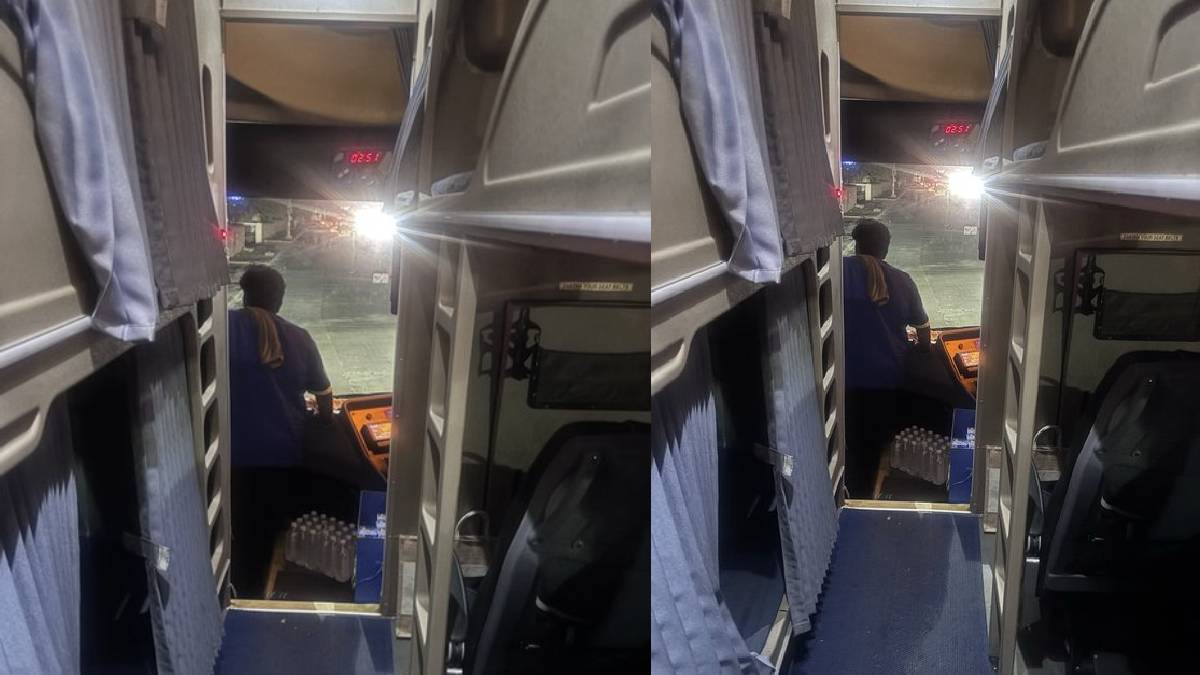
What happened to a man on a bus heading to Bengaluru, at 2:51 am? He woke up, only to realize he had slept beyond Hosur and had to deboard and figure out an alternative route to arrive at his destination.
2:51 AM on an overnight bus to Bengaluru. We were almost at Majestic when a man suddenly came down from the upper berth and asked the driver Anna , “Hosur came?” Driver Anna : Crossed long back… we announced. He had slept through it. Had to get down there and find another bus back towards Hosur. Watching this made me wonder .. why don’t bus booking apps have a “wake me before my stop” feature? 🤔 They already know the drop point we booked and the bus location. Just give me a loud alert 10–15 minutes before my stop. Sleeper buses are made so we can sleep. Missing your stop shouldn’t be the price of actually sleeping.
— Megha (@HeyItsMegha) October 21, 2026
When traveling with a long journey, travellers pay a premium price to buy sleeper tickets to have the feeling of lying down sleeping in the bed. But often this becomes a source of low anxiety where the traveler has to wake up in the morning to check Google Maps to see where they are in fear of missing their stop out of oversleeping.
So what to do? The solution was in front of us from the start.
One Netizen had a very simple, yet potentially very beneficial idea. Since travel apps already have the traveler’s details (e.g., drop off location), a simple “wake me up” system could be implemented. The reminder would be generated around 20 minutes prior to the drop off point and then gradually increase in intensity (beginning with a vibration and going to a very loud alarm). That could be a setting that the user has to enable on the apps.
There would be technical hurdles to overcome with such a feature. The actual parameters would be depending on phone settings, battery usage, connectivity and permissions. Of course, GPS accuracy, availability and traffic conditions would all change the arrival estimates but it would still be a fairly useful safety net. The idea is to give passengers a chance to wake up in time to deboard, not to ensure such incidents never happen.
Most bus booking apps focus on booking a bus, comparing fares, selecting seats, making payments and following a vehicle as it goes through the gate. All these are important but the passenger's journey doesn't end once the ticket has been bought and the bus has departed.
Let’s imagine the reality of an overnight sleeper cabin. Curtains separate sleeping quarters, road noise is competing with announcements and passengers might sleep differently. A driver or conductor may announce a destination, but there’s no guarantee that each passenger who needs to hear that will actually wake up.
Language can also make things more difficult. A passenger who hasn’t spoken the local language will find it hard to understand a rushed announcement, especially when they’re half-asleep. Even someone who knows the language might simply not hear it.
A personal wake-up alert would give passengers something that an announcement in general cannot: a notification made specifically for them and tied to the destination on their ticket. It would also give them a little peace of mind. Instead of checking the time, watching the map or trying to stay awake out of fear, passengers could rest more confidently knowing their phones would alert them when their stop was approaching. That is not just a convenience. It’s a more efficient use of the service that they already pay for.






Comments
Leave a Comment